Location, location, location. Is that the only problem we have when it comes to housing for foreign workers? In Part One of this Special Feature, Stephanie Chok argues that the real ‘housing problem’ is the substandard living conditions thousands of men and women are made to endure daily in this prosperous, globally admired city.
Watch the video before you read the following article.
Stephanie Chok / Pictures by Damien Chng
Liu, 23, from Hebei, China, stayed in the basement of this condominium worksite at Cairnhill Rise for three to four months (see video above). He was sent to another worksite by his employer, Tiong Seng Contractors, around April 2009. (Why was he moved out? Liu was sent from worksite to worksite throughout his time working here, after this he was sent back to a Tuas worksite for a short period, and later to work at the Resorts World Sentosa site.)
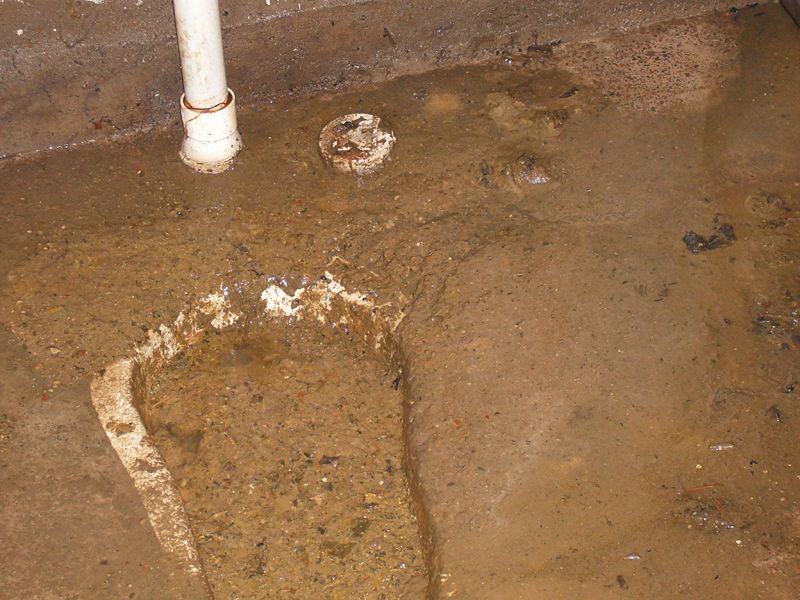
In mid-September, his former co-workers were still living in that decrepit basement, surrounded by pools of “smelly water” [臭水]. Meal times, they gather to eat in makeshift areas, balancing styrofoam boxes on upturned buckets or sitting by their bug-infested beds. Drinking water is drawn from sinks which are lined with scum, sinks close to clogged toilets that remain un-repaired. One can only imagine the stench in this humid, damp basement where up to 200 men eat, live and rest, seven days a week.
Before this, Liu previously lived in a dormitory in Toa Payoh and an on-site container [集装箱] somewhere in Tuas. “These places must be much better than the condo basement, right?” I asked Liu. “They were even worse!” he retorts. Worse? I’m trying to imagine ‘worse’ than a toilet swilling with faeces and sleeping on a damp wooden board crawling with insects.
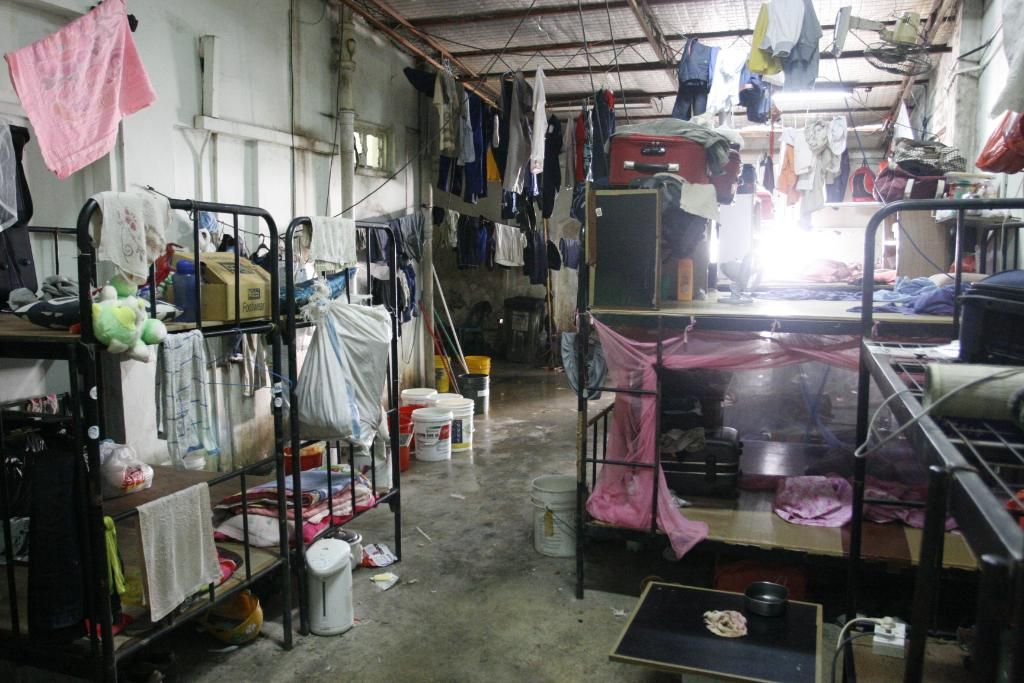
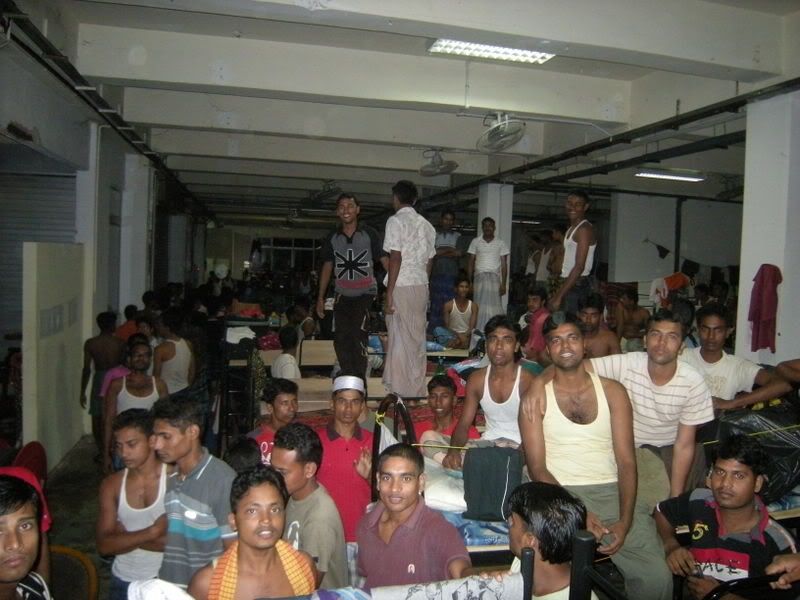
At the Toa Payoh dormitory,100 men were crammed into one big open hall. Bunk beds were lined side by side, with only a narrow path in between for people to walk, single-file. Personal belongings like suitcases were strewn on the bed (the only space available), or sometimes underneath them. “What if there is a fire? There will be casualties,” I said to Liu. He nods in agreement. It will be mayhem as hordes of people try to escape through tight, overloaded spaces. “We were not even told where the fire extinguisher is!”says Liu.
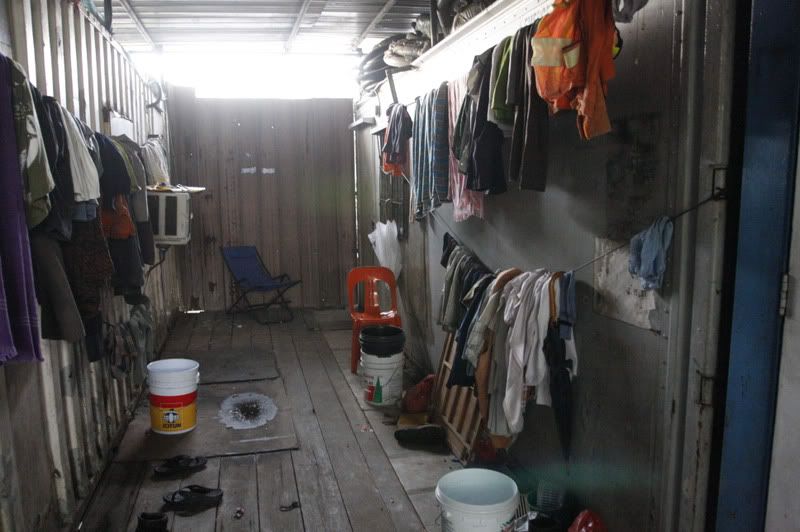
At Tuas, Liu lived in a container. There were 18 men squeezed into each container and cooking is not allowed. If you attempted to do so, you would be fined; if you had cooking utensils, they would be confiscated. How much is the fine? “I don’t know, I didn’t dare to risk it,” Liu smiles ruefully. Instead, $100-$120 is deducted from the workers’ salaries every month for meals that are delivered to the site – workers have no choice in the matter. This is a common practice. Workers complain that the meals delivered are inadequate, poor in quality and sometimes rancid as they are eaten only hours after delivery, causing food poisoning. (Liu has previously found worms in his food.) On-site, there were about 10 toilet stalls shared among 200-300 men from different companies, all living in containers.
The ‘housing problem’
Housing for foreign workers in Singapore is recognized as ‘problematic’. Yet what is often articulated as ‘the problem’ falls into the following categories: shortage of housing, legal versus illegal housing and, of course, where such housing is located. (Basically, the further away from Singaporean residents the better, as demonstrated by the Serangoon Gardens saga). The ‘problem’, however, if you asked the workers forced to live in cramped, ill-ventilated and unsanitary housing, may yield quite a different answer.
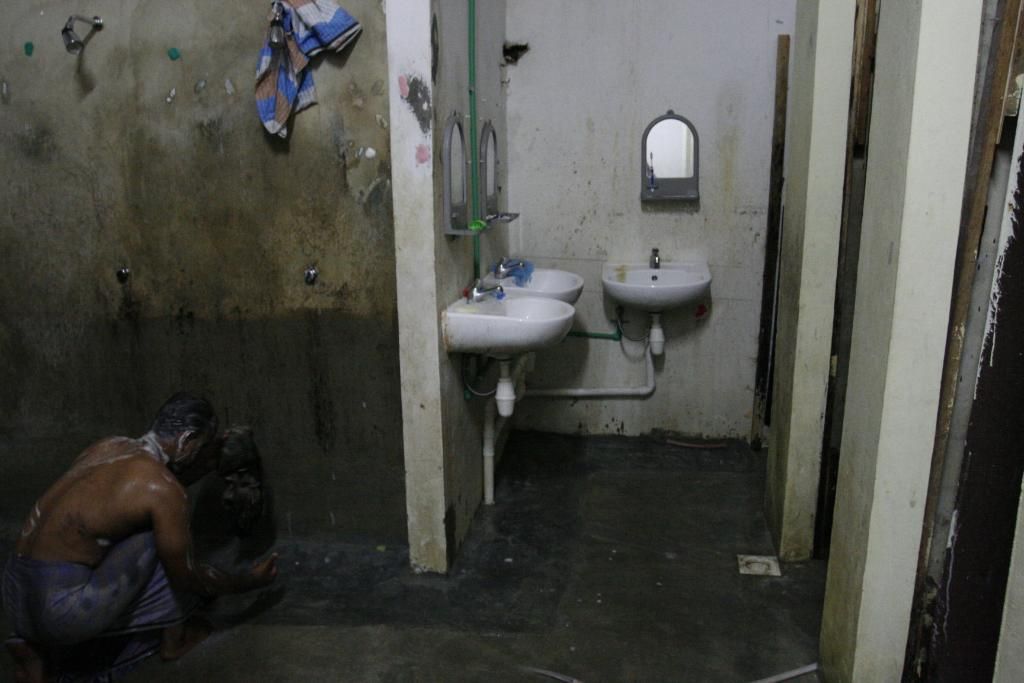
There are situations where bathing means scooping water from a giant communal tank – rain or shine, whether you’re well or running a fever, you are made to stand in the open with everyone else and douse yourself with cold water. Other novel shower routines include collecting water in a bucket so as to soap and rinse yourself while standing about in your underwear. After a 10 to 12 hour work shift, one can wait up to 11pm or midnight (if there is overtime work) just for the opportunity to bathe. This is what happens when you have up to a hundred men and only a few taps.
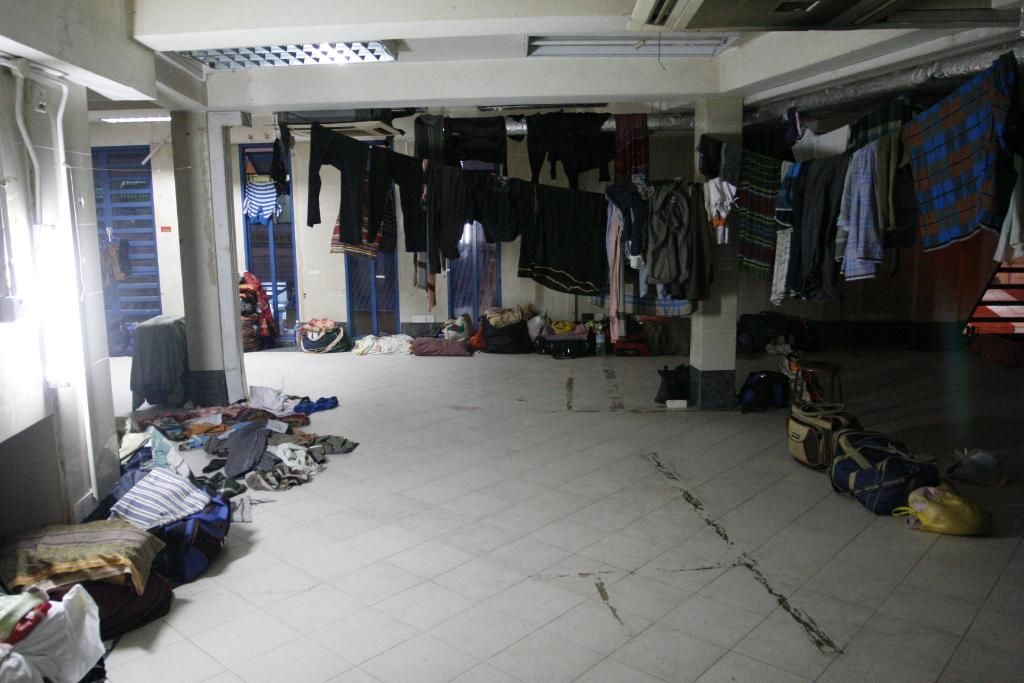
The buckets also serve another purpose – workers hand-wash their clothes in these buckets and put them up to dry wherever they can, stringing up makeshift clothes-lines or hanging damp clothing by their bed-frames. (To add to the indignity, workers’ salaries are deducted for such housing.)

Food storage is another issue. I once gave Guang, a construction worker living in a shophouse dormitory in Lavender, some Chinese New Year goodies. The entire horde was finished that same night! He later explained it was either him finishing it or the rats – there is no fridge nor pantry area to keep perishables and the dorm is rat-infested. “Why not complain to the authorities,” I asked. “They’ve already come before!” he says. According to Guang, conditions improved slightly just before the raid, but reverted to ‘normal’ soon after. “What to do?” he shrugged. No wonder he and his colleagues were dying to return home as soon as possible.
A phrase I’ve heard several times when I asked foreign workers from China about their living conditions is “恶劣” – disgusting. And not just disgusting, mind you, but “非常 恶劣” – exceptionally so. Jiang, 38, a construction worker, stayed in a room with 100 others. Ventilation was poor so it was unbearably hot. (Ever walked into a dormitory without windows? It feels like you’ve just been shoved into an oven and someone slammed the door shut.) The bed bugs, says Jiang, were intolerable, “I couldn’t sleep the whole night”. Jokes Xu, 39, also a construction worker, “Bed bugs, cockroaches and mosquitoes are our ‘close companions’ here in Singapore, they whisper sweet nothings [悄悄话] to us all night.”
The word ‘home’ connotes images of a warm and comfortable dwelling place, a haven in which we unwind, enjoy privacy, leisurely pursuits, and the company of loved ones. The fortunate among us experience this daily, but not enough do (and it’s not just foreign workers). Yet even at its most basic, a home is expected to be functional – a place to cook, eat, sleep, shower. In too many dormitories, even these needs are ill-considered.
There have been comments from some people that since these workers come from ‘Third World’ countries, they should be used to such poor living conditions. On the contrary, ‘it was never this bad back home’, is a sentiment I frequently hear from migrant workers themselves. Liu, for example, has experience as an internal migrant worker, having worked in Beijing doing construction work. While he has stayed on-site in buildings under-going construction, he insists that workers are never placed in the basement because it will be too damp and unsanitary.
There is often also disbelief – many foreign workers have expressed shock that such conditions exist in Singapore, a country they perceived, prior to arriving here, as ‘developed’ and wealthy. But soon comes the realization that such conditions exist here, for those on the margins. Liu is cognizant of the fact that while he and his fellow workers languor in filth at the bottom of this building, when completed, each apartment may be worth a few million dollars.
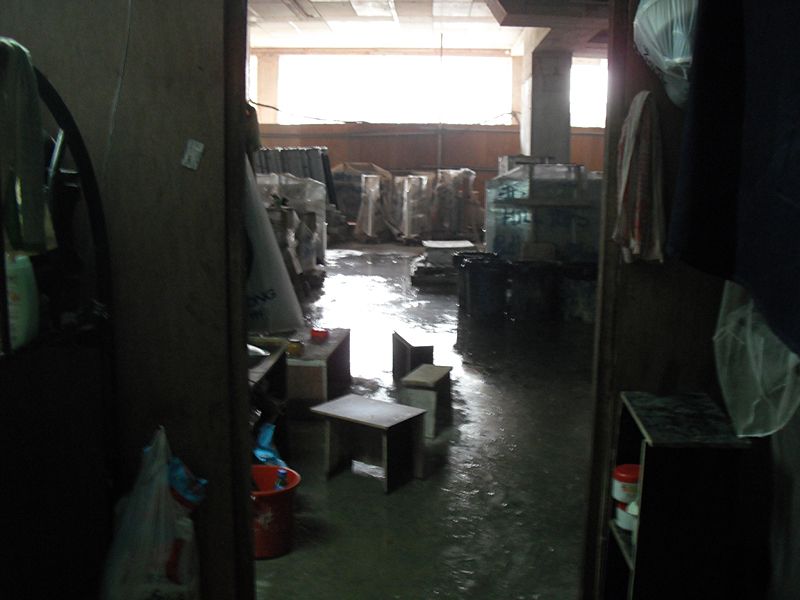
So here is what remains “恶劣” about this situation. The on-site basement that you see in the video is part of a development described as “luxury hilltop living with the privacy and seclusion of an exclusive resort”. The developer has boasted, on its website, of a net profit increase of 57% to $44.5 million for its 2008 financial year. Meanwhile, Liu’s employer, Tiong Seng Contractors, has won an award from the Building and Construction Authority for Construction Excellence. Its website lists a hosts of other awards and accreditations.
If these are profitable companies with business clout, why are they not even fulfilling a basic requirement of housing the workers building its prized projects decently? Workers who toil up to 12 hours a day, sometimes 7 days a week, to complete the projects that keep our economy humming.
——
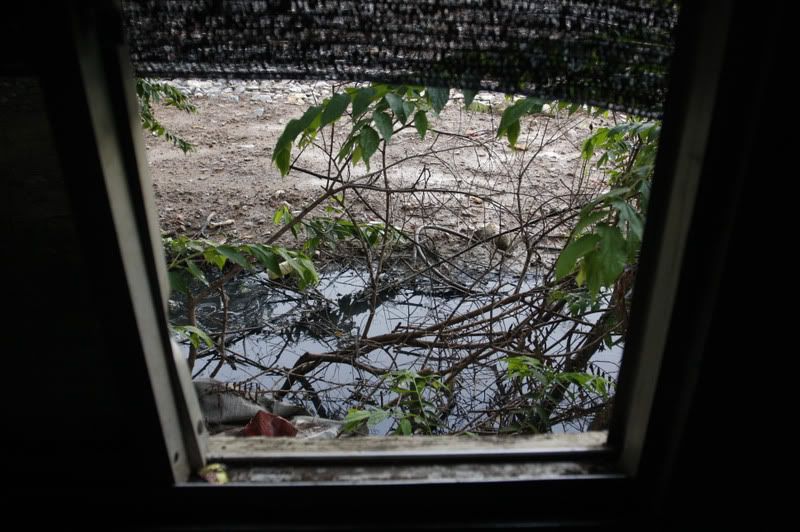
Here are some more examples of the living conditions foreign workers endure:


HELP keep the voice of TOC alive!
If you like this article, please consider a small donation to help theonlinecitizen.com stay alive. Please note that we can only accept donations from Singaporeans. Thank you for your assistance.Do you have a flair for writing? Volunteer with us. Email us your full name and contact details to theonlinecitizen@gmail.com


i suggest sending many FWs back home so the dorms wouldn’t be so packed, overcrowding wouldn’t occur and sanitation facilities will not be overused to the point of becoming faulty! anyway, i’m sure they’ll all be happy cos their life back home will probably be better than 3rd world singapore. i mean why would they even want to come here and work as hard labourers??
alternatively, kind, loving and caring singaporeans (like commenters on this post, including myself) can come together, pool some funds, give them to these labourers so that they can afford to buy houses and luxury goods like us!
ilikecomplaining @102,
Some are conned thousands of dollars from borrowed money to come (this excludes the levies they have to pay the Spore contractors). There is a network of labour ‘trafickers’ who are like a mafia group. The labourers mostly come from countrysides back home wanting to work in cities, they think all that glitters in Spore are gold and there is plenty of gold to pick in the streets of Spore if they work hard, as promised by the trafickers.
Having borrowed the money to come in the thousands of dollars, there is no back tracking. These gangs held their family members back home as ransom. The labourers have to literally work to death and accept any condition. The only people who can help them out of this sh!t now is the Govt of Spore. Exposing the story is the least ordinary people can do to pressure the authorities.
To the TOC team, you are going to make a difference in peoples lives through your writings, the first in Spore! I am sure the satisfaction you get out of it is far more than that of financial gain, which the leaders of this country would never understand. Keep going!
Slum does not differentiate between Singaporeans or foreigners. A slum is a slum.
Don’t know if this is relevant or not…but during the school holidays, MOE announced more support for elite/elitist SAP schools and yet my kids are stuffed 40 to a classroom in a neighbourhood school…and we are talking about 40 Normal Academic and Normal technical students here, the weaker pupils of the cohort! Hey! I had 40 classmates when I was in Primary 1 in 1979!
At least smart Singaporean make smart money from these FWs, Govermen and its law don’t care.
smart sing,
Is that all you know how to do – make money? You can stuff the $$$ down your throat and choke on it!
Those pictures that appear on this Thread make SIN looks
like a Shit Country.
patriot
If you think this is terrible, don’t just sit here and complain. Write to the company and express your indignation!
Anyway, Singaporeans’ attitude towards foreign workers probably will need to change to have an impact on this issue. If Singaporeans don’t welcome them, they will hardly care about their living conditions, will they?
this is singapoor..the foreign talents are brought in under the blessin of ALL the ministers who can sink high praise on them includin leekuanyew himself…
how they lived in quarters is not leekuanyew’s concerned when he himself ensured oxleyrise is a private road..even if you have money do you think you can buy a condo in oxley rise?if this were in britain or in europe..the rulin government would have STEPPED in and charged the employers for unfaIR HUMANE being mistreatment under the employment acts…
Alas if only that were true. Poor foreigners leaving in a cosmopolitan city like London or New York can experience quite bad living conditions. Particularly New York in one of those rent-control tenament buildings in the outer boroughs. Especially if you’re an illegal.
The MOM should know about this report by now. Lets see whether the MOM is willing to do anything about this!
92) Surprise
Entire blocks of one room rental flats where the old lives, were renovated for FREE with brand new bathrooms with elderly friendly features and entire living floor with new tiles, new light fittings and wiring, whole house repainted.
Go to Sago Street/ Sago Lane, the block (dunno block no) just behind the new BuddhistTemple for an example.
Shame on you, Singapore, for not taking care of your foreign workers.
this is so deplorable! but i wonder – do the workers also help in trying to make the place a little more livable by maintaining what they can?
i agree with #109 phillip > we should let more people know about such living conditions. education is the only way we’re going to get people to sit up and pay attention.
i’m not sure if MOM is going to do anything abt this…i don’t have much faith in them. there are hardly any employment laws in SG as there are “guidelines”. everything is a “guideline” when it comes to protecting employees.
anyone with film editing/camera skills want to go shoot this slums and youtube them? if we can generate half th buzz of ris low we can raise awareness and get something done to help these poor people.
I commend TOC and Stephanie and Damien for their excellent efforts in online photo-journalism.
Of course I feel outraged about this happening here. But to get emotional and then point fingers here, there and everywhere about it is useless.
I was once told when I shot my mouth off in criticising one of the high officials in one of the Ministries, “When you watch football, you can see who is playing badly and boo. Can you get into the field and play better football?” Good question. I shut up.
It is so easy to point the fingers at the Gahmen or MIW, and as usual, envy will poke fun at their millions of dollars in earnings. That is beside the point. Just look as see where the fault lies.
It isn’t that the Gahmen don’t know about these conditions. They know or suspect it exists, but don’t know where. You tell them.
Now they know. How can they step in? If they build dorms for these workers, you – the taxpayer- are going to pay for them. If not, the construction company is going to pay for them.
Dorms exist right now — they have to pay $20 per worker! Costs will escalate — they don’t have the money to pay the workers, to whom they will pass on the cost of $20 per month per worker.
Then must find transport from the nice dorms to the worksite. This will cost them (a) transport money (b) lost time in construction.
And time is of the essence. The sooner this condo gets done, the sooner the workers will be released from their hell-holes. If they are late in handing over the project, the contractor or developer must pay money to the purchasers for late delivery. (Speaking as someone who had compensation of $12,000 for 6 months late delivery of a house I bought!)
The contractor, or sub-contractor, who hired the workers should at least provide a working latrine, and teach the workers how to unclog it when it clogs. Come on, they are in the construction line and should know how to handle that!
A friend of mine in a terrace house never dares put tissue paper instead of toilet paper in her toilets. They clog up immediately. What do you think the workers use in place of toilet paper? Probably newspapers. In parts of China, a friend who visited tells me, you don’t put toilet paper into the toilet but into a wastebin next to the toilet. Saves on plumbing problems.
Have you any plans to overcome this problem that you can suggest to the MOM, or developer or construction companies? That would be positive feedback not a negative one – can complain but cannot suggest.
Right now, we want these people well-housed, but please, not in our neighbourhoods. Since they still have my grandfather’s habits (and he, rest his soul, also lived in similar conditions for a start) there is every chance of seeing their habits repeated in the dormitories too. Now to hire an official superviser of the Dorms. More money needed. Whose money? Not mine again, please. More taxes.
Right, back to enjoying ourselves complaining and pointing fingers. In the meantime, be assured the gahmen are looking into this and the solution takes time. In the end they will fine contractors liberally and hugely and then the rich will have to pay $2 million for their condo and not $1 million to cover the costs. I think that is the right solution! Robin Hood had the same idea. Heh-heh!
The main culprits is the contractors/dormitory management.They are responsible
for the workers welfare and health. The authorities should take firm action against them. Lets do it!!
Regards.
118) minerva
I am happy to read your thoughts.
Good to know some of us still live in the real world.
Complain is free.
But there is a cost to fix anytrhing.
And especially when the complainer has to pay for fixing it, suddenly all is silent. : ).
Hi minerva #118,
Ministers and Civil servants are highly paid to solve these problems.
102) ilikecomplaining on September 30th, 2009 2.49 pm
///////. i mean why would they even want to come here and work as hard labourers??///////////
You need a reality check here.
//////////alternatively, kind, loving and caring singaporeans (like commenters on this post, including myself) can come together, pool some funds, give them to these labourers so that they can afford to buy houses and luxury goods like us! //////
please invite Stephanie Chok too.
I do not think they will be thrilled with luxury goods, they came here to get themselves out of their poverty hole theyy are trapped in back home, a Prada handbag cannot feed his hungry family back home.
An excellent expose. There is a slumside to the antiseptic city that fines folks at the drop of a butt. Thanks for an inside look on the seamier, dirty, exploitative side of an otherwise marvellous city-state. Great work Stephanie.
Oh no, the toilets are really poorly taken care of! And some of them looked like rust-buckets carted off from some nuked-out city. I’m horrified that humans are asked to live with this kind of sanitation. Absolutely terrible! And some of the corridors look like they violate the Building Code: their passageways so small, it would cause a stampede if they ever had to evacuate the occupants.
I’m ashamed that contractors from my country treat their workers with such shoddy accommodation! And to make it worse, it’s a major player in the construction industry!
I so badly want all the ministers to experience these conditions for themselves, but it’s a damn shame that it won’t happen because they’re either too busy to bother, or when they do, it’s always a highly planned and orchestrated visit, with the place being scrupulously cleaned up and tidied for their inspection and approval.
No sane minister in our country believes in going undercover to see the conditions for what they are. And that is a fact.
107) Human Being on October 1st, 2009 1.11 am
Thanks for your understand && mis-understand.
I think this is more of a question for the developers to answer… Ultimately, they are the ones who hire the contractors and contractors house them…
Hi friends!
Help speak up for these workers, sign a petition we are sending in to MOM to say “Yes! We care!”
Grace/Kah Yoke.
NUS Social Work Students
Hi friends!
Help speak up for these workers, sign a petition we are sending in to MOM to say “Yes! We care!”
Petition form: http://spreadsheets.google.com/viewform?formkey=dEUtVjh3azltV3pNdy1kbXVwNjlTUUE6MA
Check out our blog for more info.
Yours,
Grace/Kah Yoke.
NUS Social Work Students
Thanks Grace/Kah Yoke, Stephanie Chok/Damien Chng, and TOC.
I have signed the petition and hope things will work out for the better for their welfare.
Good work Stephanie.
I am proud to have met you & briefly worked with you :-)
The pictures tell everything thats wrong here in our lovely country which is so much admired by others the world over. (I do hope they see this piece of journalism. I will circulate it to my overseas friends).
This country is built on the blood, sweat & tears of the Foreign Workers.
Its terribly cruel to prosper on the misery of others.
Be assured the Authorities read TOC.
Be it MOM, REDAS, BCA etc etc & all those involved in property (developers), construction firms…….all these people or organisations are aware of the working & living conditions.
Readers should not assume that such living conditions affect construction workers only.
I am almost certain, foreign workers in the shipyards, garbage collection, grass cutting, coffee shop cleaners, shopping mall cleaners may also face silmilar living conditions…….perhaps not as severe as those in construction.
What can we do as a starter?
I suggest that readers do as suggested in comment 74 above.
You see the website links; do write to the companies involved.
This is a good start.Make them aware that people care.
They will realise that they are mentioned on TOC in a bad light.
Lets see if they respond on TOC (make this a challenge).
WHY has this persisted?
———————————
I have said above that the Authorities (eg MOM, BCA etc) & Companies & groups like REDAS are aware of the existing conditions…….so WHY has it persisted for so long?
Its COSTS stupid! ….as they saying goes.
If they collectively do not implement better housing conditions for the foreign workers, their costs will be lower.
Then the total building cost would be lower; then Singapore becomes a cheaper, a more competitive place to do business as the govt would nicely put it.
(There is also an element of truth as proposed in comment 61 above by Von Hayek).
For years, the cost of living rose (esp 2005-2006-2007 when food prices rocketed) whilst oddly enough salaries for these foreign workers fell or were flat.
They were squeezed to make ends meet.
Why has not MOM introduced a minimum wage for these low level workers?
They just do not care—– as long as the overall costs is kept down to keep Singapore competitive.
MOM’s stance on these workers salaries appears to be that ”its an open market”…….if they want to work in Singapore, they take the market rate even though MOM is aware the market rate is morally too low.
So with such attitudes lingering everywhere in the Authorities, the developers, the construction firms……….these unsavoury living conditions will persist for a long time more.
Kudos to Zaobao (see comment 97) for taking up this issue.They always had guts; admirable.
Sorry to Straits Times who always seem to be in a straits jacket parroting the obvious news.
If I didnt know better, I would have said this article belongs in the same class as this
http://tinyurl.com/blgu4a
or this
http://en.wikipedia.org/wiki/The_Jungle
That comparison wouldnt have been entirely untrue, but this story is separated from those by a whole century and several oceans and continents. And that must mean something.
My opinion ….don’t judge by just a one story.
1) Has anyone seen a completely new dormitory turned to a shithole in just one week by these FWs? Its just their lifestyle….most FWs just don’t give a damn.
2) A condo unit rentd by FTs..looked nice from the outside…but inside, GOD I’d need a respirator to breathe. They dont even bother to flush the toilet! And this is a not a housing provided by employer…its rented by them. I’d pitied the landlord for all the repairworks needed when the lease is over.
3) Anyone had seen Indian/ Bangla workers throwing boxes of “FREE Sunshine buns” given to these FWs during Singtel Roadshow onto the stage and judges just becos they cant see Ms Singtel India/Singapore. These “food” were given to them…and they dont appreciate it. ……..SGs dont get buns when signing for Hi Card :0)
Bottomline, it’s not that the Employers or Gov don’t care…they have tried. These FWs/ FTs don’t appreciate what they have or has been given to them….of course not luxury living, but the FWs or FTs could’nt care less. Just look at the littering problem near the vicinity where they live!
Only they can improve the way they live, their habits……then the Employer or Gahmen will play their part. It has alway been that way…..we cannot afford to spoonfeed.
Thank you for writing this article. I am glad that there are people with a conscience.
As a Singaporean, I am disgusted and embarrassed at the way foreign workers are being treated. They are the backbone behind the building infrastructure that the govt is so proud of. And this is the thanks they get?
I’d like to see if any of the overly paid PAP ministers can rough it out in one of these dormitories and worksites for just a week. Maybe then, the living conditions of these people will improve!
i say lets stop being comfortable with just slamming the PAP and NEA, and put our money where our mouths are. granted they are culpable but so are all of us and we need to get off our arses too.
‘If you are neutral in situations of injustice, you have chosen the side of the oppressor.’
We are should all be appalled at this injustice – and loud in our outrage and disgust.
As an expat in Singapore, I am deeply ashamed that the rights afforded to me as a ‘foreign worker’ are not extended to my fellow human beings as ‘migrant workers’. What is the difference? We are all humans with a right to dignity of life, dignity of person and DIGNITY OF WORK.
Shame on all of us who live here and are quiet or complicit in allowing these disgraceful abuses of human dignity to continue.
Great work Stephanie – keep up the good fight!
Great work people.
MOM ought to be embarassed.
firstly i say we shouldnt have FW, at least not too many. we should be reliant on our own labour as with other countries, despite high labour costs and other factors. but this is the only way to go forward as we also do not have the land and resources or perhaps the conscience to provide sufficient dormatories for these foreign workers. doing so would make us dignify such low skill – but necessary- jobs like how it should be in a developed country, and how it is currently not in our country.
It is the only sustainable solution and it is what other countries are doing. We should forgo all the rapid building and false economic growth and urbanisation- its not meant to be that way if it means more problems are created.
i dont get it, if big countries such as Australia and America or UK can employ their own people for construction work, why cant we? doesnt it mean also we have less area to build buildings or less projects to build and hence we when scaled down everything would be the same as bigger developed nations?