Japanese city closes 94 schools as bear sightings trigger search operation
A series of bear sightings across the Japanese city of Utsunomiya prompted authorities to close 94 public schools, launch a large-scale search operation and urge residents to remain vigilant as officials worked to locate and capture the animal.
- Utsunomiya closed all 94 municipal schools after repeated bear sightings across the city.
- Authorities launched a large-scale search but initially failed to locate the animal.
- The incident reflects a broader increase in bear encounters across Japan.

The Japanese city of Utsunomiya closed all 94 municipal primary and middle schools on Tuesday for a second consecutive day after a bear was sighted multiple times across the city, prompting a large-scale search operation and public safety warnings, local authorities said.
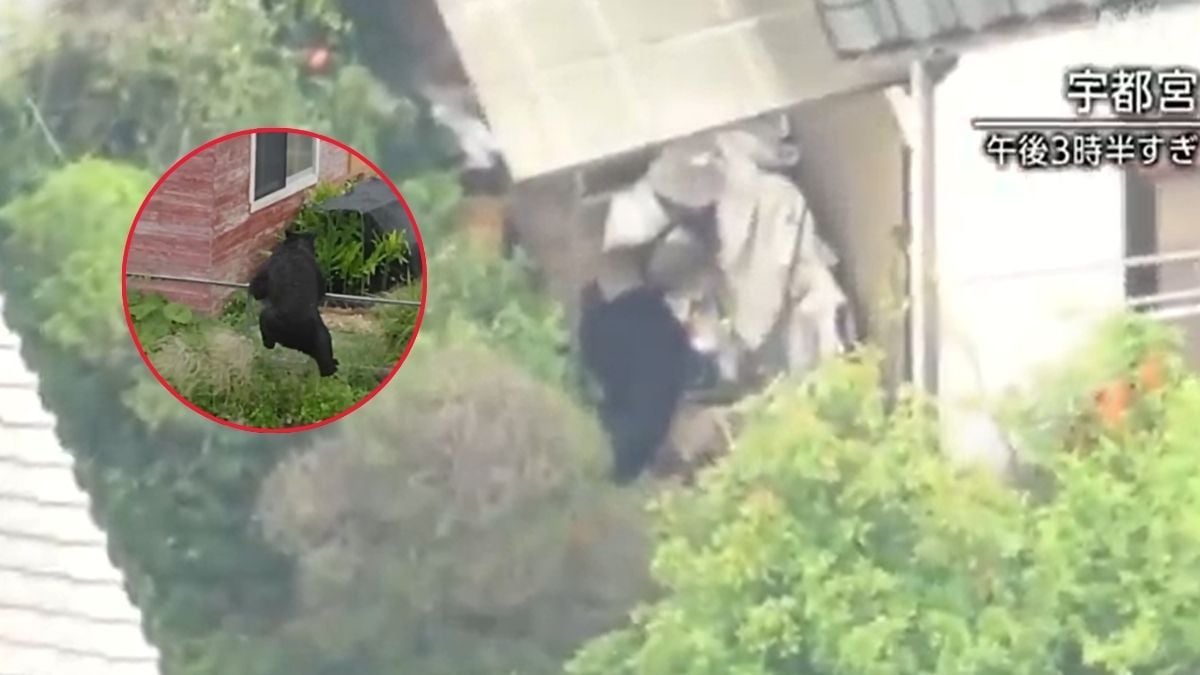
The bear, believed to be an adult Asiatic black bear weighing about 100 kilograms, was last seen early on Tuesday morning near residential areas and close to a university campus in the city of around 500,000 people, located about 100 kilometres north of Tokyo.
The closures followed a series of sightings that began on Saturday evening in what city officials described as the first recorded bear sighting in Utsunomiya.
Utsunomiya city officials received a report at about 5:35 a.m. on Tuesday of a bear being seen on the Mine Campus of Utsunomiya University.
Authorities deployed a drone at around 6:35 a.m. to search the area, but no bear had been located by approximately 8:00 a.m.
The city said the animal was also reported at several locations overnight. Sightings were recorded around 2:00 a.m. roughly 600 metres east of a junior high school in the city's Yonan area, before another report from the parking area of a commercial facility in Joto shortly before 4:30 a.m.
Additional sightings followed near Utsunomiya University at around 5:30 a.m. and in a residential neighbourhood about one kilometre southwest of the campus shortly after 6:00 a.m.
The bear was last seen about 700 metres from the university campus early Tuesday.
Officials have not determined whether all reported sightings involve a single bear or multiple animals.
Schools closed and residents warned
Utsunomiya's board of education ordered all public elementary and junior high schools to close beginning Monday. On Tuesday, city authorities announced that all 94 municipal schools would remain shut, while the number of closed prefectural schools rose to eight.
Police officers, firefighters, municipal and prefectural officials, and members of the local hunters' association continued searching for the animal.
A city official told Reuters that authorities would decide whether to tranquilise, shoot or trap the bear for relocation depending on where it is found.
Officials have urged residents to remain alert, keep doors and windows secured, avoid leaving rubbish outside at night and exercise caution in areas where the bear has been reported.
The sightings also prompted some convenience stores and parcel delivery outlets in the city to switch automatic entrance doors to manual operation as a precaution against the animal entering premises.
Schools closed and residents warned
Utsunomiya's board of education ordered all public elementary and junior high schools to close beginning Monday. On Tuesday, city authorities announced that all 94 municipal schools would remain shut, while the number of closed prefectural schools rose to eight.
Police officers, firefighters, municipal and prefectural officials, and members of the local hunters' association continued searching for the animal.
A city official told Reuters that authorities would decide whether to tranquilise, shoot or trap the bear for relocation depending on where it is found.
Officials have urged residents to remain alert, keep doors and windows secured, avoid leaving rubbish outside at night and exercise caution in areas where the bear has been reported.
The sightings also prompted some convenience stores and parcel delivery outlets in the city to switch automatic entrance doors to manual operation as a precaution against the animal entering premises.
Capture operation launched
On Monday evening, officials and members of a local hunting organisation attempted to capture a bear reported near a wooded area close to a junior high school in Yonan. The operation was unsuccessful after authorities were unable to confirm the animal's location.
Later on Tuesday afternoon, Fuji News Network reported that authorities captured a bear in a residential area of Utsunomiya at around 3:30 p.m. using a tranquilliser gun.
Separately, Japanese news agency JX News reported that social media users had uploaded footage purportedly showing a bear swimming in a river within the city during daylight hours on Tuesday.
The Utsunomiya incident comes amid a broader rise in bear encounters across Japan, including in urban areas.
The Japanese government established a task force this year to reduce casualties linked to bear attacks after incidents reached record levels during the 2025 fiscal year.
The Environment Ministry recorded 238 victims, including 13 deaths, during the fiscal year, the highest figure on record.
Asiatic black bears are classified as a vulnerable species globally, but their population in Japan is estimated to have tripled since 2012, aided in part by declining hunting activity.
Authorities across Japan have increasingly faced encounters involving bears entering populated areas, with videos showing bears roaming school grounds and moving through supermarkets.
Last week, a bear attack at a steel factory in Fukushima, about 170 kilometres from Utsunomiya, injured at least four people. Security footage showed a black bear chasing a worker near the facility entrance and knocking him to the ground, Reuters reported.
NHK reported that three people were killed and another 20 were attacked by bears across at least nine prefectures between April and 2 June.
Several factors have contributed to the increase in encounters, including climate change reducing supplies of natural food sources such as acorns and beechnuts, declining rural populations, abandoned farmland and reduced hunting activity, all of which have encouraged bears to venture closer to human settlements in search of food.