PAS ends cooperation with Bersatu, dealing major blow to Malaysia's opposition alliance before GE16
PAS has announced the termination of its political cooperation with Bersatu, marking the most serious split within Perikatan Nasional since its formation. The move follows months of escalating tensions between the coalition's two largest parties ahead of upcoming state elections and the 16th General Election.
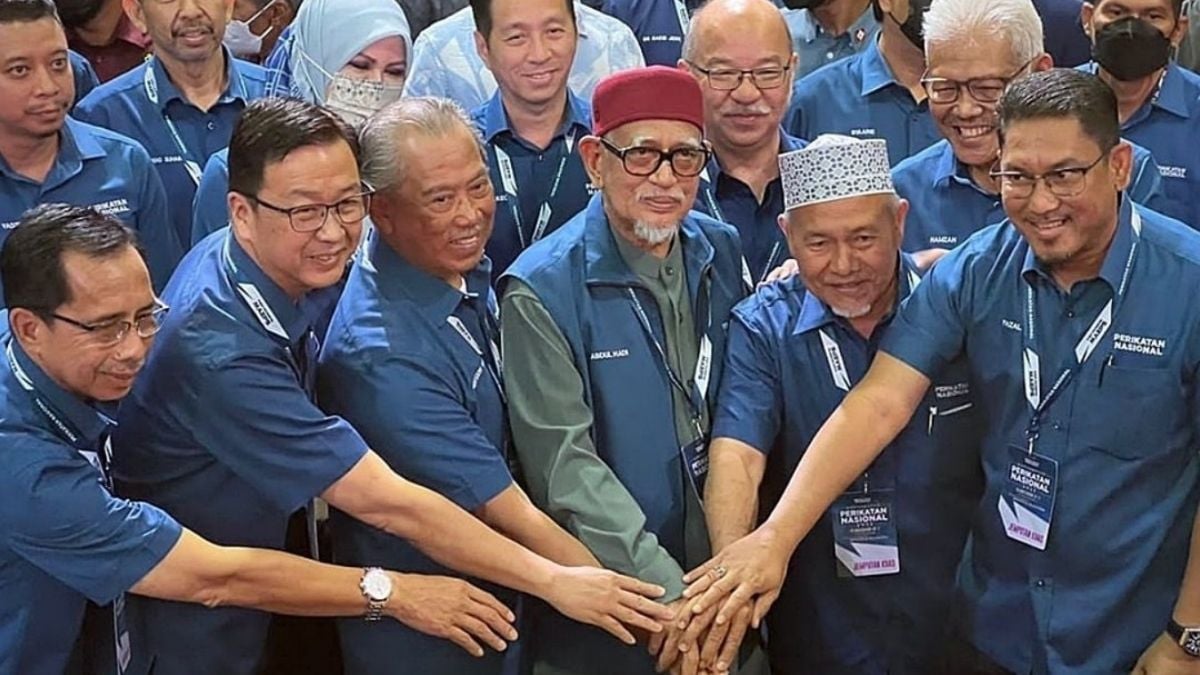
- PAS has officially terminated its political cooperation with Bersatu after months of growing tensions.
- The decision raises fresh questions about the future stability of Perikatan Nasional.
- PAS plans to pursue new electoral arrangements based on its principle of Muslim unity.

KUALA LUMPUR, MALAYSIA: Malaysia's opposition coalition Perikatan Nasional (PN) has suffered its most significant internal rupture to date after Parti Islam Se-Malaysia (PAS) announced it was ending its political cooperation with Parti Pribumi Bersatu Malaysia (Bersatu).
The decision, announced on 9 June 2026, marks a major turning point for the opposition alliance founded by the two parties and raises fresh questions over the future structure of PN ahead of upcoming state elections and the 16th General Election (GE16).
PAS president Tan Sri Abdul Hadi Awang said the decision was made during a special meeting of the party's Central Working Committee held on 8 June.
According to Abdul Hadi, the committee considered reports, studies and assessments regarding the current state of relations between PAS and Bersatu before reaching its decision.
"We have decided to terminate all political cooperation with Bersatu and review the position and future direction of PAS-Bersatu political cooperation based on current reports, studies, and assessments," Abdul Hadi said.
He added that the committee had endorsed a decision made by the PAS Syura Council on 2 June concerning policy, Shariah considerations and public interest matters relating to the party's political cooperation.
The decision, he said, was guided by PAS' long-standing principle of Muslim unity.
Seeking new political arrangements
Despite ending formal political cooperation with Bersatu, PAS indicated that it remains open to pursuing alternative forms of political collaboration.
Abdul Hadi said the party would explore political understandings and electoral pacts aimed at preserving Muslim unity and strengthening preparations for future elections.
"We will explore a form of political understanding and electoral cooperation for the sake of Muslim unity, in preparation for the state elections and the 16th General Election," he said.
He also said PAS welcomed the intention of academics, professionals, political leaders and community activists who wished to join the party.
The statement suggests PAS is seeking to reposition itself politically while maintaining its influence among Malay-Muslim voters ahead of future electoral contests.
Questions over Perikatan Nasional's future
The announcement immediately triggered speculation regarding PAS' future role within Perikatan Nasional.
However, PAS leaders stopped short of announcing a withdrawal from the coalition itself.
PAS information chief Ahmad Fadhli Shaari indicated that the party remains part of PN for the time being.
According to reports by Berita Harian, PAS leadership has remained cautious about publicly discussing the coalition's future structure following the decision.
The ambiguity leaves unanswered questions about how PN will function without political cooperation between its two largest and most influential parties.
Besides PAS and Bersatu, PN also includes Parti Gerakan Rakyat Malaysia (Gerakan) and the Malaysian Indian People's Party (MIPP).
Months of escalating tensions
The latest development follows months of worsening relations between PAS and Bersatu.
Leaders from both parties have been publicly at odds since December 2025, with disagreements emerging over leadership issues, coalition management and the future direction of PN.
One major source of friction involved allegations that Bersatu had attempted to prevent other Malay-Muslim political parties from joining the opposition coalition.
The dispute intensified following political developments in Perlis.
On 22 December 2025, five Bersatu assembly members and three PAS assembly members declared that they had lost confidence in the leadership of the state's Menteri Besar.
The political crisis resulted in the removal of PAS Menteri Besar Mohd Shukri Ramli.
He was subsequently replaced by Bersatu's Abu Bakar Hamzah.
PAS leaders openly criticised Bersatu over the episode, describing it as a breach of trust and cooperation.
The fallout reverberated throughout the coalition and eventually led to Bersatu president Tan Sri Muhyiddin Yassin stepping down as chairman of Perikatan Nasional.
PAS vice-president and Terengganu Menteri Besar Datuk Seri Dr Ahmad Samsuri Mokhtar subsequently assumed the coalition's chairmanship.
Syura Council warning signs
Warning signs of a possible split emerged earlier this month.
On 2 June, PAS Syura Council secretary Datuk Dr Nik Muhammad Zawawi Salleh disclosed that the party had taken serious note of internal disputes and leadership issues within Bersatu.
According to Nik Muhammad Zawawi, those developments were increasingly affecting the stability and effectiveness of Perikatan Nasional.
The Syura Council's concerns ultimately formed part of the basis for the Central Working Committee's decision.
Abdul Hadi reiterated that the committee's action was intended to implement and endorse the Syura Council's recommendation.
Further signs of deteriorating relations emerged on 22 May when Abdul Hadi publicly stated that PAS would review its cooperation with Bersatu.
He alleged that Bersatu had failed to fulfil certain commitments and had also hindered efforts by other political parties to join PN.
Trust deficit deepens
Even as discussions continued between both parties, public statements suggested trust between their leaders had significantly eroded.
On 7 June, Muhyiddin confirmed receiving a letter dated 6 June from PAS secretary-general Datuk Seri Takiyuddin Hassan.
The correspondence reportedly addressed PAS-Bersatu relations and included proposals aimed at strengthening Perikatan Nasional.
Muhyiddin responded by reaffirming Bersatu's commitment to maintaining good relations with PAS.
"I will give the necessary attention to the suggestions made and bring them to the party Supreme Council meeting for a more detailed discussion," he said in a social media post.
However, PAS leaders continued to highlight unresolved grievances.
Ahmad Fadhli pointed to developments in Perlis, particularly Bersatu's decision to submit a candidate for Menteri Besar without consulting PAS.
He suggested that restoring trust required more than statements.
"Only actions can strengthen the trust between both parties," he said.
Asked whether the decision to sever ties had received broad support from senior PAS leaders, Ahmad Fadhli declined to discuss internal deliberations.
"I cannot comment on the meeting process. No, it wasn't heated... the air-conditioning was working well," he remarked on 9 June.
Senior PAS figures, including Ahmad Samsuri Mokhtar, Datuk Seri Shahidan Kassim, Datuk Awang Hashim and Bakri Jamaluddin, were seen leaving PAS headquarters following the meeting.
PAS, Perikatan Nasional and GE2022 performance
PAS, or Parti Islam Se-Malaysia, is Malaysia's largest Islamist political party and has traditionally drawn strong support from Malay-Muslim voters, particularly in the northern and east coast states.
Perikatan Nasional was formed in 2020 and later evolved into a major opposition coalition comprising PAS, Bersatu, Gerakan and MIPP.
In the 2022 General Election, commonly known as GE15, PN recorded its strongest electoral performance since its formation.
PAS emerged as the coalition's biggest winner, securing 49 parliamentary seats and becoming the single largest individual political party in Parliament.
Bersatu won 25 parliamentary seats, while the coalition collectively secured 74 seats in the Dewan Rakyat.
Although PN failed to form the federal government, its strong showing transformed it into the country's principal opposition bloc and significantly expanded PAS' influence at the national level.
The coalition subsequently consolidated power in several Malay-majority states, strengthening perceptions that PAS and Bersatu represented the core pillars of the opposition movement.