Auditor-General's report flags lapses at HDB, MOH and other public agencies
The Auditor-General's Office has flagged possible overpayment of $9.7 million at HDB, contract lapses at a Ministry of Health project, and irregularities at MOM, GRA, URA, IPOS, Sport Singapore, SSG and WSG in its FY2025/26 report.
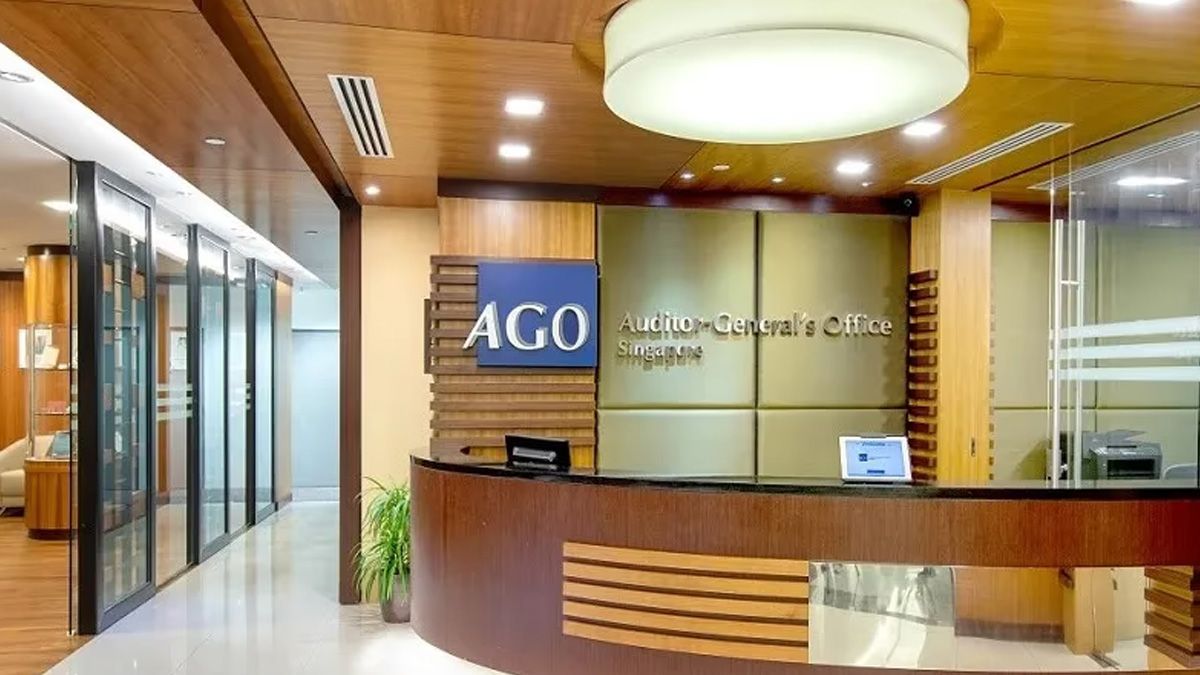

The Auditor-General's Office (AGO) has raised 136 audit findings across Singapore's government ministries, statutory boards and government-owned companies for the financial year 2025/26, with 29 significant observations set out in a report tabled in Parliament on Wednesday (Jul 15).
The Auditor-General, Ng Wai Choong, issued an unmodified opinion on the Government Financial Statements and on the accounts of three statutory boards, four government-owned companies and two other accounts.
Auditors also carried out selective audits of eight statutory boards and a thematic audit of training grants managed by SkillsFuture Singapore Agency (SSG) and Workforce Singapore Agency (WSG).
The Housing and Development Board (HDB) featured most prominently in the report.
Auditors found HDB did not adequately oversee the contractor engaged to patrol and enforce rules at its car parks, uncovering discrepancies such as concurrent clock-ins by the same personnel at different locations.
HDB estimated it may have overpaid the contractor $9.7 million for services not performed, and the contractor has since lodged a police report over compromised IT records.
HDB also approved $24.99 million in season parking and family season parking applications from residents who did not meet eligibility criteria, and undercharged commercial vehicles by an estimated $1 million.
Separately, weaknesses in checks for the Married Child Priority Scheme, the Proximity Housing Grant and the CPF Housing Grant meant flats and grants worth tens of millions of dollars went to applicants whose addresses were not verified against Immigration and Checkpoints Authority records.
The Ministry of Health's (MOH) development of the National Cancer Centre Singapore building, completed in 2022 after a 2013 start, drew the most serious findings on governance.
MOH called and awarded tenders worth $30.83 million before securing required approval, funded items previously rejected by the Development Planning Committee, and left $147.96 million in project savings undeclared to the Ministry of Finance more than seven years past the deadline.
Contract management lapses at MOH Holdings, its appointed agent, led to an estimated $363,300 net overpayment and $2.2 million in unsubstantiated loss and expense claims.
The Ministry of Manpower overcharged foreign worker levies for marine shipyard Work Permit holders by $4.82 million over two months, after revised rates took effect before the subsidiary legislation was updated.
The Gambling Regulatory Authority allowed 120 excluded persons to enter casinos a combined 1,100 times, and left 79 Singapore Pools accounts belonging to excluded persons open, 32 of which placed bets.
Separately, 194 licensed casino employees entered casinos showing signs of possible gambling, in apparent breach of their licence conditions.
The Ministry of Education reported possible falsified approval emails for officer appointments, while the Ministry of Defence found possible irregularities in quotations tied to $4.41 million of payments.
The Urban Redevelopment Authority undercharged $1.76 million in planning fees and flagged possibly non-genuine bids linked to an awarded vendor in IT tenders worth about $600,000.
Two further cases drew less public attention: the Intellectual Property Office of Singapore found staff had backdated quality control reports to auditors, and Sport Singapore uncovered irregular quotations for a small term contract.
A thematic audit, largely absent from earlier coverage, examined $2.62 billion in training grants disbursed by SSG and WSG. Auditors found SSG erroneously disbursed $4.32 million under a small business grant scheme due to a system error, and flagged 15 trainees who attended courses run by their own employers, raising gaming concerns.
At WSG, $1.67 million was paid to 110 ineligible participants in career conversion schemes, while 465 companies with no local employees or unusually high trainee numbers relative to staff received $16.82 million, prompting further review. Both agencies' IT systems also showed weaknesses in account management and password controls.
GIC Private Limited, which manages Singapore's reserves, had gaps in audit logging, an unrestricted root account allowing unlimited login attempts, and unpatched servers running outdated software.
Across government, AGO also flagged recurring weaknesses: procurement evaluation criteria changed after tenders closed at several agencies, incomplete conflict-of-interest declarations at the Land Transport Authority, URA and WSG, and slow follow-up on detected billing errors at MINDEF, IPOS and the LTA.
The Ministry of Finance said in a statement that the government takes AGO's observations seriously, with agencies investigating root causes, recovering overpayments and taking disciplinary action where warranted. "We will act decisively where there are indications of wrongdoing," it said, adding that cases have been referred to the police where grounds exist.