Changi Airport handles record 69.98 million passengers in 2025; China remains top market
Changi Airport handled nearly 70 million passengers in 2025, its highest annual total on record, driven by strong regional demand, China-led growth and expanded connectivity across Asia and beyond, according to Changi Airport Group.
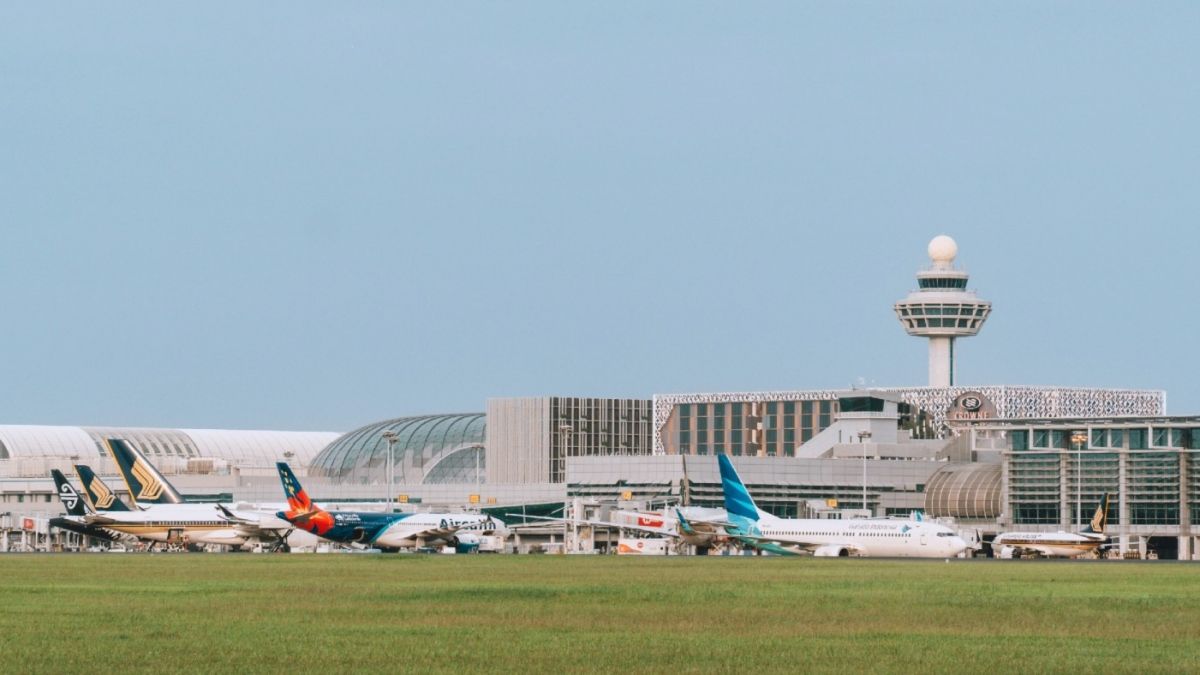
- Changi Airport handled a record 69.98 million passenger movements in 2025, up 3.4 per cent year on year.
- China remained the airport’s largest traffic market for the second consecutive year, with passenger growth of 12.2 per cent.
- The airport recorded strong cargo performance and added a record 13 new city links during the year.

Singapore’s Changi Airport recorded an all-time high of 69.98 million passenger movements in 2025, marking a new milestone in its recovery and growth, according to a media release by Changi Airport Group (CAG) dated 22 January 2026.
The total represented a 3.4 per cent increase compared with 2024, reflecting steady travel demand and expanded air connectivity. Aircraft movements, including landings and take-offs, rose 2.2 per cent year on year to 374,000 movements.
December was the busiest month of the year, with 6.3 million passenger movements recorded.
The single busiest day fell on 20 December, the Saturday before Christmas, when more than 223,000 passengers passed through Changi’s terminals.
China remained Changi Airport’s largest passenger market
China remained Changi Airport’s largest passenger market for the second consecutive year. Passenger movements to and from China grew by 12.2 per cent compared with 2024, the strongest growth among all markets.
The airport’s top five passenger markets for 2025 were China, Indonesia, Malaysia, Australia and India. CAG noted that traffic growth during the year was broad-based across regions.
Vietnam and Japan were also among the fastest-growing markets, recording year-on-year increases of 9.8 per cent and 7 per cent respectively.
These gains reflected rising leisure and business travel demand across Asia.
Busiest routes in 2025
The busiest routes in 2025 were Kuala Lumpur, Bangkok, Jakarta, Denpasar (Bali) and Hong Kong. These routes continued to anchor Changi’s regional network, supported by high-frequency services and strong passenger volumes.
“Traffic growth in 2025 was broad-based, underpinned by steady travel demand and the air hub’s expanded connectivity,” CAG said in its statement.
Airfreight throughput also delivered a strong performance. Changi Airport handled 2.08 million tonnes of air cargo in 2025, exceeding the previous year’s total by 4.5 per cent.
CAG described this as one of the best cargo performances in the airport’s history. Growth was recorded across exports, imports and transshipments.
Changi’s top five air cargo markets including China, US
The strong cargo performance was attributed to front-loading of activities in the first three quarters of the year, as well as robust global semiconductor demand. CAG cited growth linked to artificial intelligence, electric vehicles and cleantech industries.
Changi’s top five air cargo markets in 2025 were China, the US, Australia, Hong Kong and India. The top three growth markets for cargo were China, the US and Taiwan.
Network expansion was another highlight of the year. Changi Airport added 13 new city links in 2025, marking a record year for network growth.
The new destinations included Changchun, Harbin, Lanzhou, Yichang and Zhangjiajie in China; Labuan Bajo, Padang and Semarang in Indonesia; Vienna; Vijayawada; Kota Bharu; Ulaanbaatar; and Nha Trang.
First direct air connection to Mongolia
CAG noted that the Ulaanbaatar service marked Singapore’s first direct air connection to Mongolia.
The new routes in China and Southeast Asia were described as part of efforts to diversify Changi’s Asian network and strengthen its hub competitiveness.
The airport also welcomed two new passenger airlines during the year:
MIAT Mongolian Airlines and Pelita Air. On the cargo front, JD Airlines launched thrice-weekly Shenzhen–Singapore freighter services.
Turkish Cargo reinstated its freighter operations at Changi with a weekly Istanbul–Ho Chi Minh City–Singapore service, enhancing links between China, Europe and Southeast Asia. FedEx Express also expanded its network with new non-stop freighter services to Anchorage.
Mr Yam Kum Weng, Chief Executive Officer of Changi Airport Group, said the strong performance came amid a “volatile global environment”.
“As travel demand in Asia grows, Changi is actively seeking to expand its network in the region, including emerging secondary cities which are witnessing rapid economic and promising tourism developments,” he said.
Looking ahead to 2026, Mr Yam said CAG would continue to create new opportunities for airlines and businesses, while enhancing traveller experience through innovation, higher efficiency and more seamless operations.
As of January 2026, around 100 airlines operate more than 7,300 weekly scheduled flights at Changi Airport.
These services connect Singapore to over 170 cities across 50 countries and territories worldwide, CAG noted.