Jeffrey Siow: All Singapore-registered vehicles must install on-board units from 1 Jan 2027 under ERP 2 shift
Singapore will mandate on-board units for all locally registered vehicles from 1 Jan 2027, enabling the full rollout of the satellite-based ERP 2 system and introducing tougher penalties for vehicle-related offences.
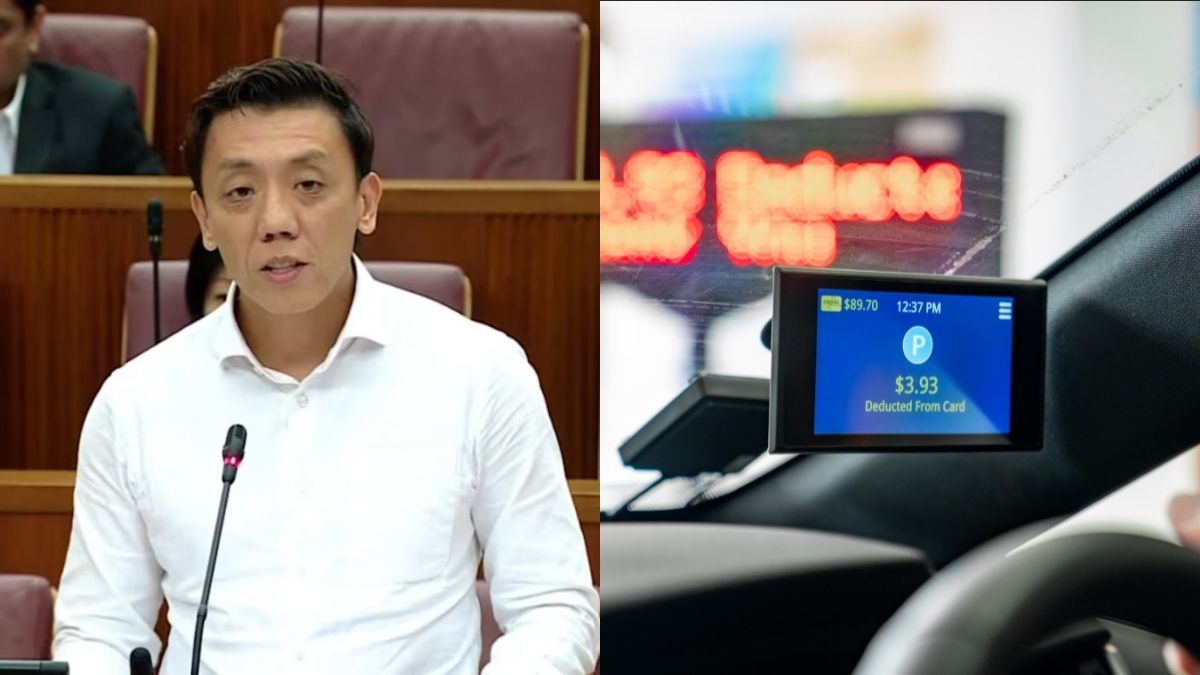
- All Singapore-registered vehicles must be fitted with an on-board unit (OBU) from Jan 1, 2027, when ERP 2 fully replaces the current gantry-based system.
- About 93 per cent of vehicles have installed an OBU, with free installation available until mid-2026.
- The Bill also raises penalties for illegal vehicle modifications and unregistered vehicle use, while decriminalising missed ERP payments.

SINGAPORE: All Singapore-registered vehicles on the roads must be fitted with an on-board unit from 1 January 2027, when the country fully switches to the next-generation Electronic Road Pricing system, known as ERP 2.
Moving the Land Transport and Related Matters Bill for debate on 3 February 2026, Acting Transport Minister Jeffrey Siow said the new system relies on satellite technology rather than physical gantries to determine a vehicle’s location for toll charging.
As a result, an on-board unit will be mandatory for vehicles using Singapore’s roads once the transition is completed, he told Parliament during the Bill’s second reading.
Progress of nationwide installation
About 930,000 vehicles, or 93 per cent of the total vehicle population, have been fitted with an OBU so far, according to figures cited during the debate.
The Land Transport Authority said it is on track to complete the nationwide installation exercise within 2026, ahead of the full ERP 2 rollout the following year.
Vehicle owners who have yet to install an OBU will receive a final reminder from LTA starting on 15 February 2026.
They will be given a three-month window to install the device for free, after which charges will apply.
Installation will cost S$35 for motorcycles and S$70 for all other vehicles once the free period ends, LTA said.
More targeted congestion pricing
Siow said ERP 2 will allow the authorities to target road congestion more precisely than the existing system, which will be decommissioned.
There are currently 95 ERP gantries islandwide, of which 22 are operational at any given time.
Under ERP 2, new toll charging points can be introduced without installing large physical gantries, reducing both costs and visual clutter.
“We can also spread out ERP charges in smaller amounts across several locations, rather than at one location,” Siow said, adding that this would be fairer to motorists.
He reassured drivers that new charging points would be introduced only at persistent congestion hot spots.
No immediate move to distance-based charging
The intent, Siow said, is to ensure a smooth transition so that the ERP 2 experience remains as similar as possible to the current system.
As such, the Government will not introduce distance-based charging in the immediate term after ERP 2 is launched.
“Distance-based charging is something that we will continue to study and explore after motorists have gotten more used to the new system and the situation is more stable,” he said.
Exemptions and special arrangements
Certain categories of vehicles will be exempted from installing an OBU.
These include construction equipment such as tractors, as well as vehicles under the Restricted Use Scheme, including airport and port vehicles.
Classic or vintage vehicles are also exempted, although owners may opt to install a free OBU if a workshop determines it is technically feasible.
From 1 January 2027, classic or vintage vehicles without an OBU will pay a flat daily fee on days they travel on roads where ERP is in operation.
The rate will be S$3 for motorcycles and S$10 for all other vehicles, LTA said.
Owners of foreign-registered vehicles may choose to install an OBU, while those who do not will pay a daily flat-rate ERP fee.
Malaysian taxis, however, will be required to install an OBU for tracking and enforcement purposes while operating in Singapore, Siow said.
Authorised servicing and penalties
The Bill mandates that all OBU-related services be carried out only by authorised technicians.
These include installation, modification, repositioning, repair and advertising.
Unauthorised servicing or tampering with an OBU can attract fines of up to S$20,000, up to 12 months’ imprisonment, or both.
Streamlining missed ERP payments
The proposed legislation also seeks to streamline the handling of missed ERP charges.
Non-payment will be decriminalised and treated as an administrative matter rather than a traffic offence.
Under the new framework, motorists who fail to pay within five days after receiving an SMS notification from LTA will be unable to transact with the authority.
They must settle the missed charge and a S$10 administrative fee before accessing services such as road tax renewal or vehicle ownership transfer.
Tougher stance on illegal vehicle activity
Siow noted that more than 1,000 cases of illegal vehicle modifications are detected each year.
To deter large-scale offences, individuals convicted could face fines of up to S$20,000, up to two years’ jail, or both, with penalties doubled for repeat offenders.
Workshops could be fined up to S$40,000 for a first offence and up to S$80,000 for subsequent offences.
Penalties for keeping or using unregistered or deregistered vehicles will also be increased.
First-time offenders could face fines of up to S$20,000 and/or up to two years’ imprisonment.
Siow said the tougher penalties are necessary amid a growing trend of unregistered vehicles, which are often linked to criminal activity and pose serious road safety risks.
The number of deregistered vehicles detected rose from 40 in 2022 and 39 in 2023 to 75 in 2024, before jumping sharply to 245 cases in 2025.