NTUC to call for advance retrenchment notifications as AI disruption raises PME concerns
NTUC secretary-general Ng Chee Meng will call for mandatory advance retrenchment notifications during the 2026 Budget debates, citing the need to better support workers amid increasing job disruptions driven by AI.
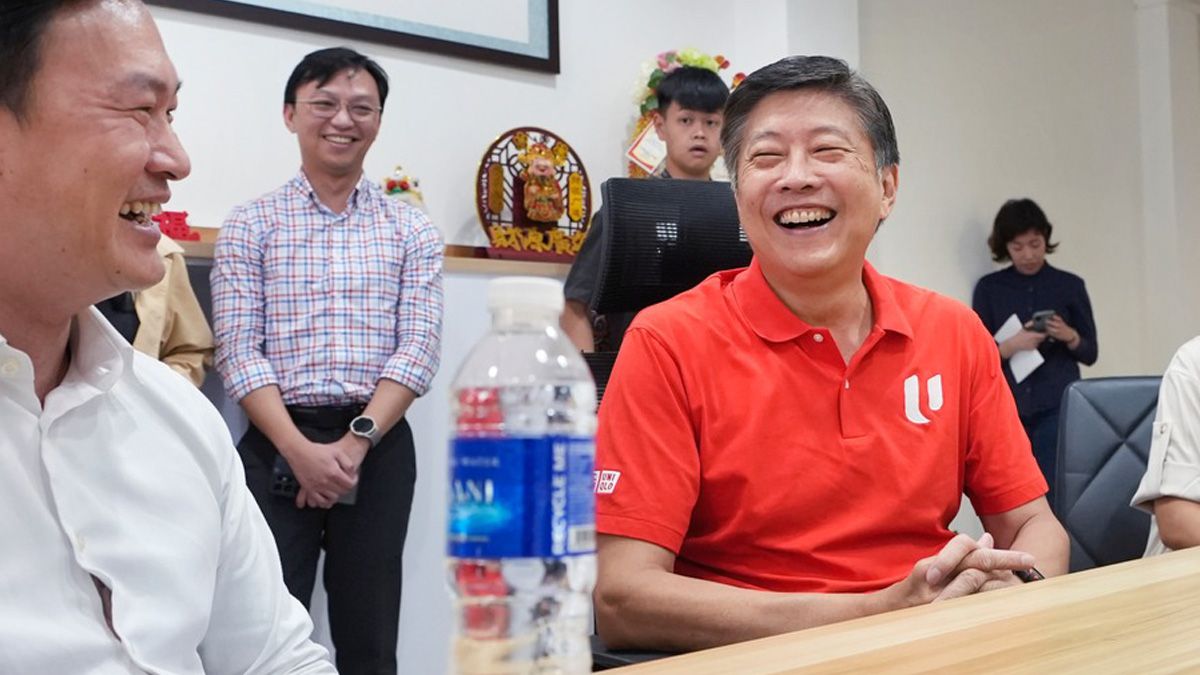
- NTUC secretary-general Ng Chee Meng will advocate for mandatory advance notice of retrenchment during the 2026 Budget debates.
- The proposal aims to bolster early employment support and training for affected workers.
- AI-related job disruptions and PME concerns are central to NTUC’s push for stronger worker protection and skills upgrading.

The National Trades Union Congress (NTUC) will push for a legal requirement for employers to give advance notice before retrenchments, as part of its agenda at Singapore’s 2026 Budget debate, the labour movement said on 9 February.
NTUC secretary-general Ng Chee Meng said the proposal is aimed at supporting workers — particularly professionals, managers and executives (PMEs) — amid mounting concerns about artificial intelligence (AI)-driven job disruptions.
Currently, companies with 10 or more employees must notify the Ministry of Manpower (MOM) within five working days after informing workers about retrenchments. No prior notice to the ministry is required.
According to NTUC, this timeline hampers early intervention efforts to match retrenched workers with new jobs or training. Advance notification, they argue, would enable tripartite partners to provide help sooner.
In a parliamentary question back in November last year, Workers’ Party MP He Ting Ru asked the Manpower Minister for the number of companies that had failed to notify the ministry before retrenching employees since the start of 2025.
In his written reply, Dr Tan See Leng did not address how many such cases there were. Instead, he emphasised that employers are not required to submit a Mandatory Retrenchment Notification (MRN) prior to retrenchment under current rules.
Dr Tan cited the case of travel platform Agoda, which retrenched staff in August 2025. He noted that the company complied with existing rules by submitting its MRN within the required five working days after informing affected employees.
The Minister reiterated that this approach strikes a balance — allowing employers time to finalise decisions and prepare the necessary information for MOM, while still enabling timely support for displaced workers.
Despite this, NTUC believes stronger safeguards are needed. Past incidents involving companies such as Twelve Cupcakes and Lazada, where employees reportedly received no warning, have highlighted gaps in the current framework.
In addition to advocating advance notice, Ng will also call for enhanced government support for retrenched workers, particularly through schemes such as the Jobseeker Support Scheme.
Ng noted that PMEs, who make up 45 per cent of NTUC’s 1.4 million members, are especially concerned about AI’s long-term impact on employment. A 2025 NTUC survey found 56 per cent of PMEs felt the need to upskill to stay relevant.
“We know that our PMEs are worried about AI impact on their jobs,” Ng said. “We know too that many are very willing to adapt, upskill.”
To address this, NTUC is expanding its Company Training Committees (CTCs), which bring together union leaders and company management to craft business transformation and workforce development strategies.
As of December 2025, over 800 projects had been approved under a S$70 million grant, benefiting nearly 10,000 workers. Close to one in six of these projects relate to finance, accounting and procurement functions, impacting around 1,700 workers.
During a visit to public accounting firm SIN Assurance PAC, Ng observed how the firm leveraged the CTC grant to introduce AI-enabled tools for audit processes. These improvements have helped reduce manual tasks and boost audit quality.
Audit manager Eer Jia Han said staff were now able to focus on more complex and high-risk work, strengthening professional outcomes. Managing partner Dax Teo added: “We do not regard AI and automation as threats to employment but as enablers of higher-value work.”
“By embracing technology and harnessing its capabilities as a force multiplier, we can transform disruption into opportunity,” Teo said.
Singapore’s 2026 Budget will be delivered on 12 February, with parliamentary debates to follow. NTUC’s proposals are expected to feature prominently in employment-related discussions.