Singapore ranked third least corrupt globally for second year in a row
Singapore retained its position as the world’s third least corrupt country in 2025, according to Transparency International, maintaining its top ranking in Asia Pacific and reinforcing its long-standing reputation for strong public sector integrity.

- Singapore ranked third least corrupt globally in Transparency International’s 2025 index, maintaining its score of 84.
- The country remained top in the Asia Pacific region and the only Asian economy consistently in the global top 10 since 1995.
- Separate indices highlighted Singapore’s strong institutional integrity.

Singapore was ranked the world’s third least corrupt country for the second consecutive year in 2025, according to Transparency International’s Corruption Perceptions Index (TI-CPI).
The country also topped the Asia Pacific region for the second year in a row, maintaining a score of 84 points on the index.
Singapore remains the only Asian economy to have been placed in the global top 10 consistently since the index was first published in 1995.
The TI-CPI ranks 182 countries and territories based on perceived levels of public sector corruption, measured on a scale from 0, indicating highly corrupt, to 100, indicating very clean.
The 2025 index draws on 13 expert assessments and business surveys, according to Transparency International (ti).
Singapore previously ranked fifth in 2022 and 2023, fourth in 2019 and 2021, and third in 2018, 2020, 2024 and 2025.
According to TI, however, high CPI scores do not guarantee that countries are corruption-free, as several top-scoring nations enable corruption in other countries by facilitating the laundering and transfer of proceeds of corruption across borders, which the CPI does not cover.
The orginasation noted that Switzerland and Singapore are among the top scorers, but have faced scrutiny for facilitating the movement of dirty money.
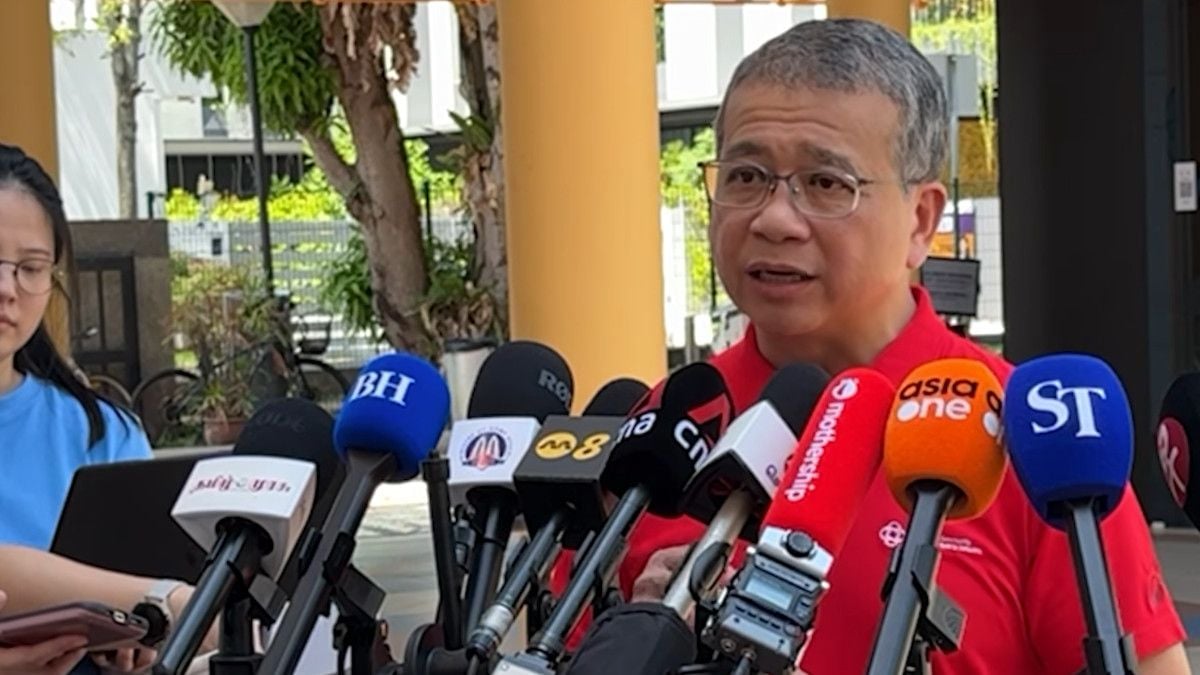
In a press release issued on 10 February 2026, the Corrupt Practices Investigation Bureau said Singapore’s corruption situation remains “firmly under control”.
The bureau cited a consistently low number of public sector corruption cases and strong institutional safeguards.
According to CPIB, public perception surveys conducted by the bureau show strong public support and confidence in Singapore’s corruption control efforts.
It added that Singapore’s performance in the 2025 TI-CPI was underpinned by “robust legislations, effective enforcement, and a vigilant society united by a shared commitment to integrity”.
CPIB said Singapore’s zero-tolerance stance towards corruption and collective determination to uphold ethical standards remain central to its reputation as a clean and corruption-free nation.
Beyond the TI-CPI, the bureau pointed to other international assessments that reinforced Singapore’s standing.
Singapore ranked first out of 16 economies in the Political and Economic Risk Consultancy’s 2025 report on corruption in Asia, the United States and Australia, according to CPIB.
The country also placed second globally out of 143 jurisdictions and first in Asia for absence of corruption in the World Justice Project Rule of Law Index 2025.
These results, CPIB said, demonstrate the strength of Singapore’s governance framework and the effectiveness of its enforcement institutions.
Singapore ranks 4th on The Economist’s 2023 crony-capitalism index
In 2023, Singapore was ranked fourth in the crony-capitalism index published by The Economist, behind Russia, the Czech Republic and Malaysia.
The index assesses the extent to which wealth in capitalist economies is derived from industries that benefit from state favouritism and rent-seeking behaviour.
The Economist compiled the index using data from Forbes, which listed 2,640 billionaires worldwide with a combined net worth of about US$12 trillion.
Most of these individuals were assessed not to operate in rent-seeking sectors, according to the analysis.
The publication classified sources of wealth into rent-seeking and non-rent-seeking categories, focusing on industries such as construction, real estate, natural resources and utilities.
The index covered 43 economies with gross domestic product exceeding US$250 billion.
According to the chart cited in the report, Singapore’s billionaire wealth linked to crony sectors amounted to more than 10 per cent of its GDP.
The index contrasted Singapore’s position with developments in China, where crony wealth was reported to have fallen sharply.
The Economist attributed this decline to President Xi Jinping’s crackdown on private capital and anti-corruption drive.
More than 1.5 million people in China have reportedly been punished under the campaign, with several high-profile tycoons facing increased scrutiny.
The article noted that the Chinese government’s emphasis on “common prosperity” has also had regional spillover effects.
It said the number of Chinese family offices in Singapore rose from 33 in 2019 to an estimated 750 by the end of 2022.