K Shanmugam: Singapore will take action against any citizen who fights in overseas conflicts
K Shanmugam says Singapore will act against citizens who fight in overseas conflicts, following reports alleging two Singapore passport holders served in the IDF during the Gaza war.
- K Shanmugam says Singapore will act against citizens involved in overseas conflicts.
- MHA has not verified claims that two Singapore passport holders served in the IDF.
- Authorities stress racial and religious harmony amid global tensions.

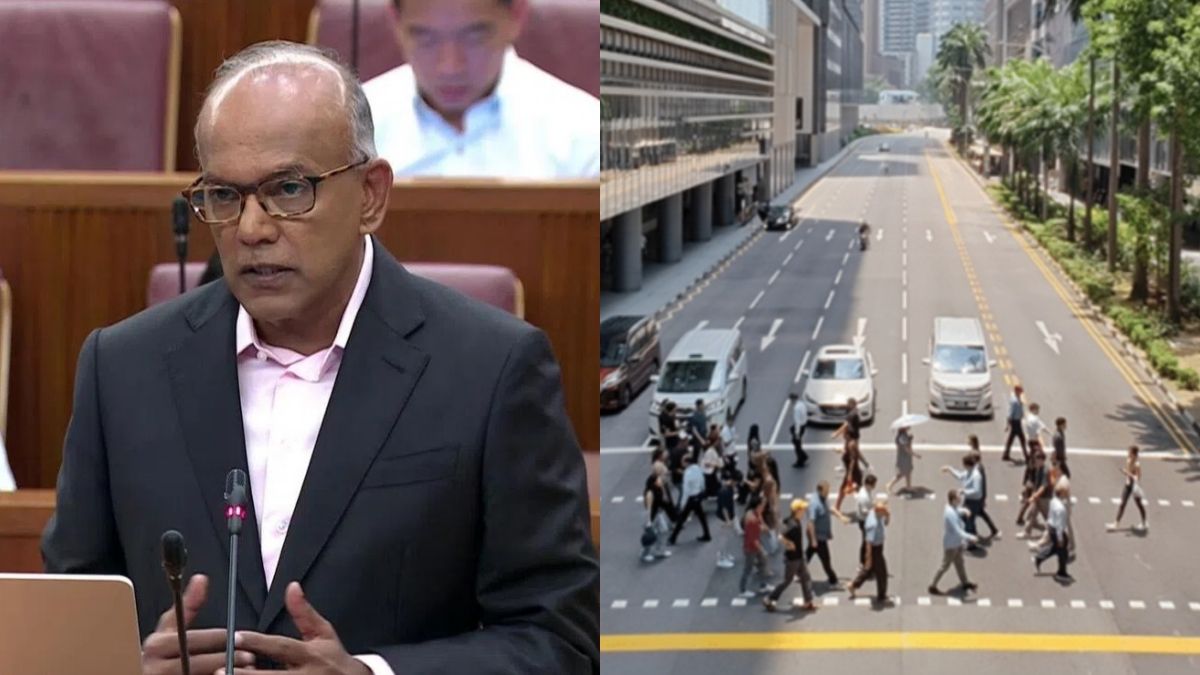
Singapore will take action against any citizen who fights in overseas conflicts, Coordinating Minister for National Security and Minister for Home Affairs K Shanmugam said on 23 February 2026, amid reports alleging two Singapore passport holders served in the Israel Defense Forces during the Gaza war.
Speaking at a fast-breaking session co-organised by Khadijah Mosque and the Religious Rehabilitation Group, he stressed that Singapore law prohibits citizens from engaging in violence abroad, regardless of the cause.
“They are not allowed to go and fight overseas, in foreign causes, whether for countries or for organisations like Islamic State, whether they fight in Ukraine or Russia or Gaza, for any side. That will be contrary to our laws and action will be taken,” he said.
He added that while online claims can be unreliable, authorities would act if a Singaporean were identified as participating in overseas conflicts.
“If they are in Singapore, ISD will detain them, and we have done so before,” he said.
Mr Shanmugam emphasised that Singapore extends humanitarian assistance abroad where possible and appropriate, but draws a clear distinction between aid and participation in armed violence.
Singapore’s MHA says it has no verified information on claims Singaporeans served in IDF
The remarks followed a 19 February 2026 statement by the Ministry of Home Affairs, which said it was aware of a foreign report claiming two Singapore passport holders were among personnel of the Israel Defense Forces involved in the Gaza conflict.
In response to media queries, MHA said it “does not have any substantiated information at this point that any Singaporean is/was fighting as part of the IDF”.
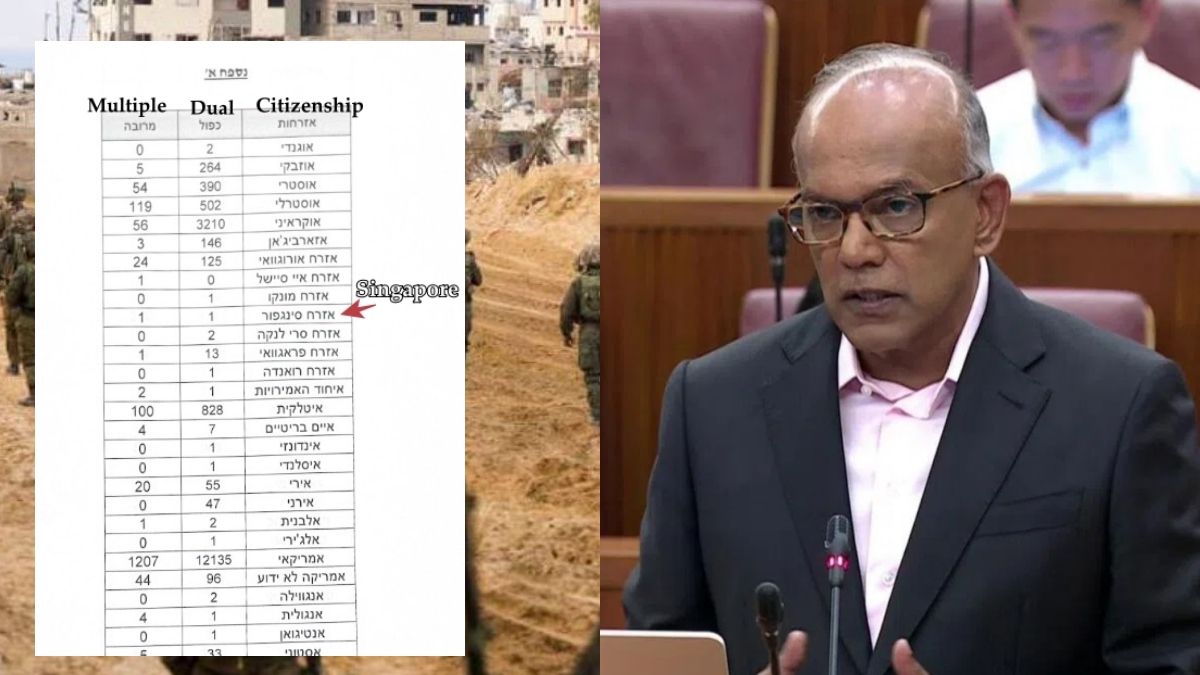
The claim originated from a report published on 11 February 2026 by British investigative outlet Declassified UK.
The report cited IDF data indicating more than 50,000 soldiers holding Israeli and at least one other nationality had taken part in the conflict.
According to Declassified UK, the dataset included two Singapore passport holders.
One was recorded as an Israeli citizen with Singapore nationality, while another was listed as holding multiple nationalities including Singaporean and Israeli citizenship.
The report did not identify the individuals, specify their roles, or indicate when they served, limiting what conclusions can be drawn.
Declassified UK said the data was obtained through a freedom of information request submitted to the IDF under Israel’s Freedom of Information Law by lawyer Elad Man, who is associated with Israeli non-governmental organisation Hatzlacha.
The issue gained wider attention locally after former Senior Parliamentary Secretary for Home Affairs Amrin Amin posted on Facebook on 18 February 2026 that the development was “concerning and needs clarification”.
He pointed to Singapore’s longstanding position against dual citizenship, saying public confidence depends on clear facts and transparent clarification if the claims are inaccurate.
The Declassified UK report focused broadly on foreign nationals in the IDF, stating that the largest cohorts of dual or multi-national soldiers came from countries such as the United States and France.
Separate media reports have summarised similar figures, while noting that the IDF has cautioned soldiers with multiple citizenships may be counted more than once in certain tallies.
At the 23 February event, Mr Shanmugam framed the issue within broader global tensions, describing the current period as one of significant political and economic stress worldwide.
“In the middle of all of this, we remain a small oasis of peace,” he said, attributing this to Singapore’s focus on key fundamentals, including racial and religious harmony.
He warned that if harmony were undermined, broader stability could be affected. “Whatever happens externally, in the world, we try not to bring those problems in here,” he said.
The minister also highlighted the critical role of religious and community leaders in promoting unity, compassion and service across faiths, particularly in a digital age where young people are searching for identity and belonging.
He cited the case of a 14-year-old boy who was self-radicalised online and aspired to join ISIS, noting that three 14-year-olds had been dealt with under the Internal Security Act in the past two years.
Describing such cases as deeply troubling, he stressed the need for trusted adults and mentors to guide vulnerable youths before extremist ideologies take root.
He also underscored the work of the Religious Rehabilitation Group in countering extremist narratives through interfaith engagement and credible counter-arguments.
Their “winning hearts and minds” approach, he said, strengthens rehabilitation, prevention and reintegration efforts, and reinforces Singapore’s broader commitment to maintaining social cohesion amid external pressures.