WP’s Abdul Muhaimin presses for fairer family support in Budget 2026 debate
At the Budget 2026 debate on 25 February 2026, Workers’ Party MP Abdul Muhaimin bin Abdul Malik backed new family support measures but questioned gaps in flexible help for older children, the scale of ComLink+, and delays to preschool subsidy changes.
- Abdul Muhaimin welcomed S$500 Child LifeSG Credits for children aged 12 and under, but argued Budget 2026 lacks equivalent flexible support for families with older children.
- He endorsed ComLink+ as a model, but asked for transparent estimates of eligible families, a coverage target and funding for coach recruitment and training.
- He supported planned subsidy expansions from January 2027, yet pressed for earlier implementation or a bridging measure for families caught between old and new thresholds.

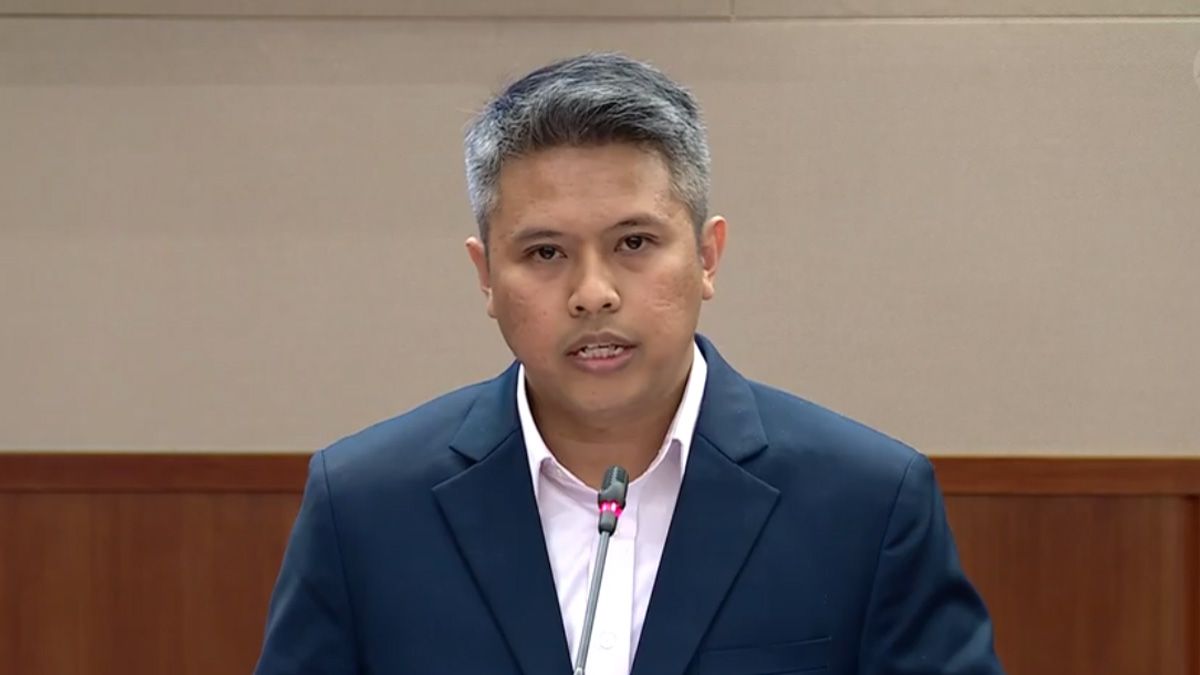
Abdul Muhaimin bin Abdul Malik of the Workers’ Party told Parliament that families were not merely listening for new promises in Budget 2026, but judging whether the support would reach those who need it, in time and with sufficient certainty to shape major life decisions.
Speaking during the Budget 2026 debate on 25 February 2026, the MP for Sengkang GRC said the design of schemes matters: who receives support, when it arrives, how much is provided, and whether households can reliably count on it from year to year.
He framed his speech around what he described as a gap between “stepping in the right direction” and “closing the distance”, arguing that policy details can determine whether support is practical relief or a promise that “falls short in practice”.
Abdul Muhaimin laid out three areas for scrutiny: equity across childhood stages, the scale of ComLink+, and the implementation gap between announcements and actual delivery.
On equity, he highlighted Budget 2026’s S$500 Child LifeSG Credits for every Singaporean child aged 12 and under, describing the credits as flexible and usable for groceries, pharmacy items, transport, and other daily household expenses.
However, he argued there was “no equivalent measure” for families once children move beyond primary school, with “no corresponding credit, no top-up, and no new flexible support” despite household costs continuing to accumulate as children grow older.
He underscored what he called an abrupt cliff edge: a child receives flexible relief at age 12, yet “for the same child one year later, there is nothing new in this Budget”.
Abdul Muhaimin stressed he was not claiming older children receive no support, noting that Edusave contributions continue and can be used for approved educational expenses.
But he argued Edusave is ring-fenced and cannot be used for broader cost-of-living pressures such as transport, groceries, utilities, or household bills, which do not disappear when a child enters secondary school.
Anticipating a possible Government response that early childhood support may be developmentally prioritised, he said his question was not about developmental strategy but about household affordability across stages of parenting.
He asked the Ministry to clarify whether limiting flexible credits to children aged 12 and below was a conscious policy decision, and if so, to explain the rationale.
If the gap had not been revisited as family expenses evolved, he urged the Government to review whether flexible household support for families with older children should be introduced in future Budgets.
In that context, he echoed a suggestion by Shawn Loh that LifeSG credits be extended systematically to parents with children up to age 16, positioning this as a way to align support with ongoing household costs.
His second focus was ComLink+, which the Ministry has reported as supporting around 10,000 families in public rental housing.
He described ComLink+ as “serious and thoughtful”, praising the family coach model of proactive outreach, co-created action plans, and multi-agency coordination as a shift from passive assistance to active empowerment.
Yet he said the central issue was scale, not programme design. He argued that the relevant comparison is not the entire public rental housing population, but households with at least one child under 21 assessed as requiring sustained support under ComLink+ criteria.
Abdul Muhaimin asked the Minister to disclose estimates of how many families are eligible under current criteria, implying the eligible pool is “significantly larger” than the 10,000 currently served.
He said Budget 2026 enhances Progress Packages for families already inside the programme, with higher quarterly payouts, improved milestone incentives, and more flexible disbursements.
But he argued these improvements only help those who already have a family coach, deepening support for existing participants “without widening” coverage to eligible families not yet reached.
Acknowledging that scaling intensive coaching cannot happen overnight and that training takes time, he said this did not justify the absence of a stated coverage target in Budget 2026.
He asked three questions: how many eligible families are not yet served; what coverage target the Government aims to reach and by which year; and what investment in recruitment and training is included to meet that target.
He argued the coverage gap matters because ComLink+ relies on early intervention, helping families before difficulties compound, school attendance deteriorates, or debt becomes unmanageable.
His third point concerned implementation timing for announced expansions. Abdul Muhaimin backed the Prime Minister’s announcement that from January 2027 the preschool subsidy income ceiling will rise from S$12,000 to S$15,000 a month, and the student care fee assistance ceiling will rise from S$4,500 to S$6,500.
He noted that fee cap reductions for Anchor Operator and Partner Operator preschools took effect in January 2026, offering interim relief to some middle-income families.
Even so, he highlighted households earning S$13,500 a month: above the current ceiling but below the incoming one, and therefore facing “another nine months” of fees that the Budget has already conceded should be lower.
He provided an illustrative range, saying a household with two young children paying S$1,200 to S$1,800 a month in childcare fees would continue bearing that burden for nine more months.
He asked whether a transitional bridging measure could be introduced for families between the old and new thresholds during the interim period.
Pressing the January 2027 start date, he noted Singapore’s financial year begins on 1 April, and that the means-testing and disbursement infrastructure already exists within MOE and ECDA, suggesting implementation could be feasible earlier.
He asked what specifically requires waiting until January 2027 rather than starting at the beginning of the financial year on April 2026, and said if this is a deliberate choice, it effectively extends families’ financial burden.
To argue that bridging tools are practical, he cited how offset packages were timed around the GST increase and how CDC vouchers have been deployed at short notice, proposing similarly targeted, time-limited support until new thresholds begin.
Abdul Muhaimin then summarised his arguments in Malay, restating the three themes: the gap for families with children older than 12, the limited reach of ComLink+, and the time lag between subsidy announcements and implementation.
In closing, he said the debate should be about equity and predictability, arguing that support the Government has already acknowledged as deserved should be delivered without arbitrary age cut-offs, prolonged gaps, or reliance on being among the families already assigned a coach.
He reiterated three “specific and proportionate” asks: a published review of support structures for families with post-primary-aged children; a stated coverage target and coach investment plan for ComLink+; and an explanation for the January 2027 start date, alongside a bridging measure if earlier timing is not feasible.
He also linked family support design to wider social signals about family formation, citing a Straits Times report that 2025 recorded the lowest number of marriages since 2020 and a third consecutive annual decline.
Abdul Muhaimin said researchers point to longer-term shifts in perceptions of marriage, alongside concerns that policy can address more directly, including cost of living, economic uncertainty, and the need to be financially stable before starting a family.
He argued that taken together, flexible support that ends at age cut-offs, programmes whose reach falls short of eligible need, and subsidy expansions arriving later than necessary risk reinforcing hesitation about forming families, rather than reducing it.