Govt declines to issue POFMA directions over AI-generated videos targeting PM Wong
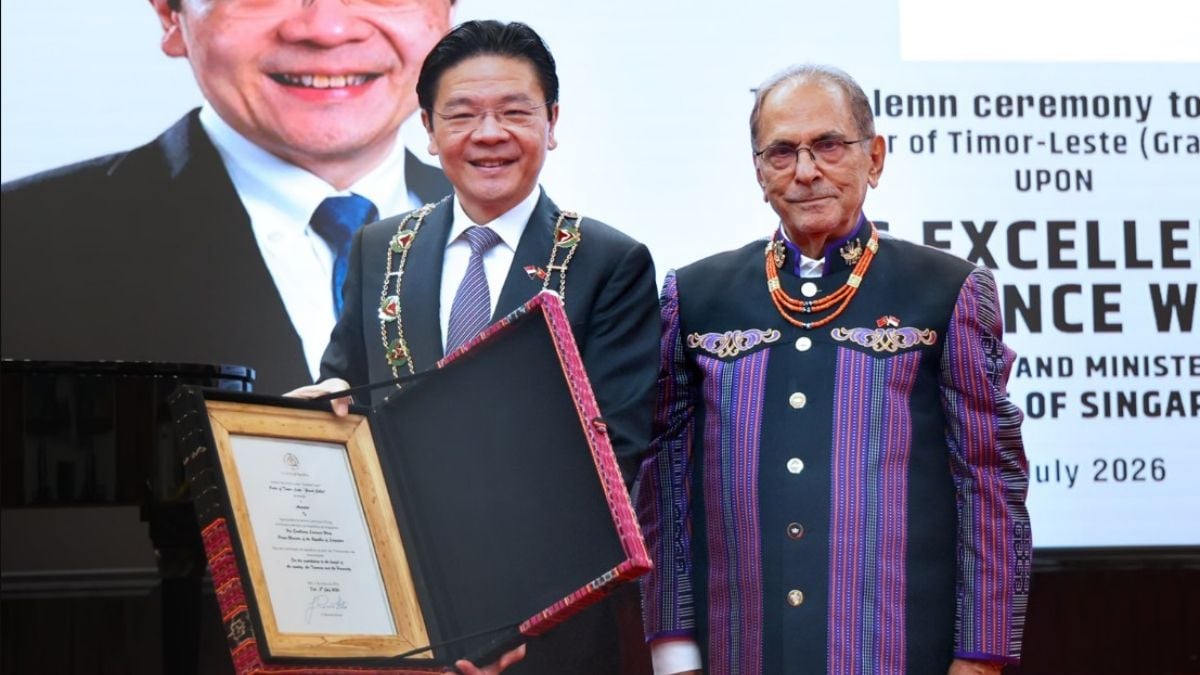
Singapore's government has declined to invoke POFMA against nearly 300 AI-generated YouTube videos falsely depicting PM Lawrence Wong as politically vulnerable, with Minister Josephine Teo citing YouTube's own removal of the accounts as sufficient action.

- The government declined to invoke POFMA after YouTube independently removed most offending accounts.
- Nearly 300 AI-generated Chinese-language videos falsely depicted PM Wong as politically imperilled.
- Since 2019, POFMA has been invoked in 89 cases, predominantly targeting politicians, independent media, and activists.

Singapore's government has declined to issue correction directions under the Protection from Online Falsehoods and Manipulation Act 2019 (POFMA) against a large-scale AI-generated disinformation campaign targeting Prime Minister (PM) Lawrence Wong, citing YouTube's independent removal of most offending accounts.
The decision was explained in Parliament by Minister for Digital Development and Information Josephine Teo, in response to a question by Workers' Party Member of Parliament for Aljunied GRC Fadli Fawzi.
Fadli had asked why no POFMA direction had been issued against videos claiming that "Singapore's Lawrence Wong's resignation is a foregone conclusion", which had circulated on YouTube from 17 January 2026. He also asked whether authorities would investigate the source of the content.
Josephine Teo responded that the claims would be apparent to Singaporeans and residents as entirely fabricated.
She stated that most accounts the government was aware of had already been removed by YouTube for violating its community guidelines against misinformation and spam, making formal POFMA directions unnecessary in this instance.
She acknowledged that similar videos and accounts have since resurfaced, as is typical of such campaigns, and said the government would continue working with platforms to review and investigate the content.
Josephine Teo urged Singaporeans to consult official sources for accurate information and to refrain from sharing content from unknown or unverified accounts, describing a well-informed and vigilant public as the first line of defence.
The Ministry of Digital Development and Information (MDDI) separately described the videos' claims as "wholly fabricated and outlandish", reiterating that public discernment remains the most critical layer of protection against misinformation.
Scale and nature of the campaign
The parliamentary question from the WP MP follows investigative reporting that exposed the full scope of the disinformation operation.
The campaign was first reported by Chinese-language newspaper Lianhe Zaobao, with Channel NewsAsia (CNA) subsequently revealing the depth of the coordinated activity.
Nearly 300 AI-generated, Chinese-language YouTube videos have surfaced over several weeks, accumulating millions of views since first appearing in late 2024.
Seven in 10 videos specifically target PM Wong, fabricating narratives about his leadership being under threat. Titles described him as the "shortest-serving PM" and declared he had "fallen from power". No factual basis exists for any of these claims.
Among the fabricated narratives was a conspiracy theory alleging that PM Wong was to be dismissed by Senior Minister (SM) Lee Hsien Loong. Other videos falsely claimed Singapore's trade standing was threatened by a rival Hainan port and alleged a "mass exodus" of Fortune 500 companies from the city-state.
Official data directly contradicts the latter: the Port of Singapore handled a record 44.66 million containers in 2025, retaining its status as the world's second-busiest container port.
Google terminated several flagged accounts within 12 hours of being notified. Investigators found, however, that fresh videos and replacement channels continued to emerge rapidly in their place.
POFMA's original purpose and its track record since 2019
The government's decision not to invoke POFMA in this instance sits in notable tension with the stated intent of the law when it was passed in Parliament in May 2019.
During the Second Reading of the Protection from Online Falsehoods and Manipulation Bill, then-Law Minister K Shanmugam was explicit about the primary targets the legislation was designed to address. He told Parliament that the Bill was focused principally on large tech platforms and not on ordinary individuals, and described bots, trolls, fake accounts, and foreign state actors operating on an industrial scale as the core threat.
Shanmugam warned Parliament that Singapore was a specific and vulnerable target for foreign information operations, citing evidence of such activity already under way. He described how coordinated disinformation campaigns could manufacture public opinion, erode institutional trust, and destabilise societies — often without a single shot being fired.
Then-Senior Minister of State for Law Edwin Tong, who now serves as Law Minister, reinforced this framing in his address during the same debate.
Tong told Parliament that the large majority of the Bill's toolkit was designed for platforms and coordinated bad actors, not individual publishers. He described how falsehoods amplified by bots and fake accounts could reach hundreds of thousands within hours and mobilise real-world consequences before any correction could take hold.
The campaign targeting PM Wong — involving AI-generated content, synthetic avatars, coordinated channel creation, and suspected foreign or well-funded backing — fits squarely within the threat profile ministers described to Parliament when making the case for the law.
Yet in practice, the law's application since 2019 has followed a different pattern. According to official data from the POFMA Office, the law has been invoked in 89 cases to date, resulting in 143 Correction Directions, 39 Targeted Correction Directions, and five General Correction Directions, among other instruments. Five Access Blocking Orders and three Access Disabling Orders have also been issued, and 25 online locations have been designated as Declared Online Locations, of which 13 have since expired.
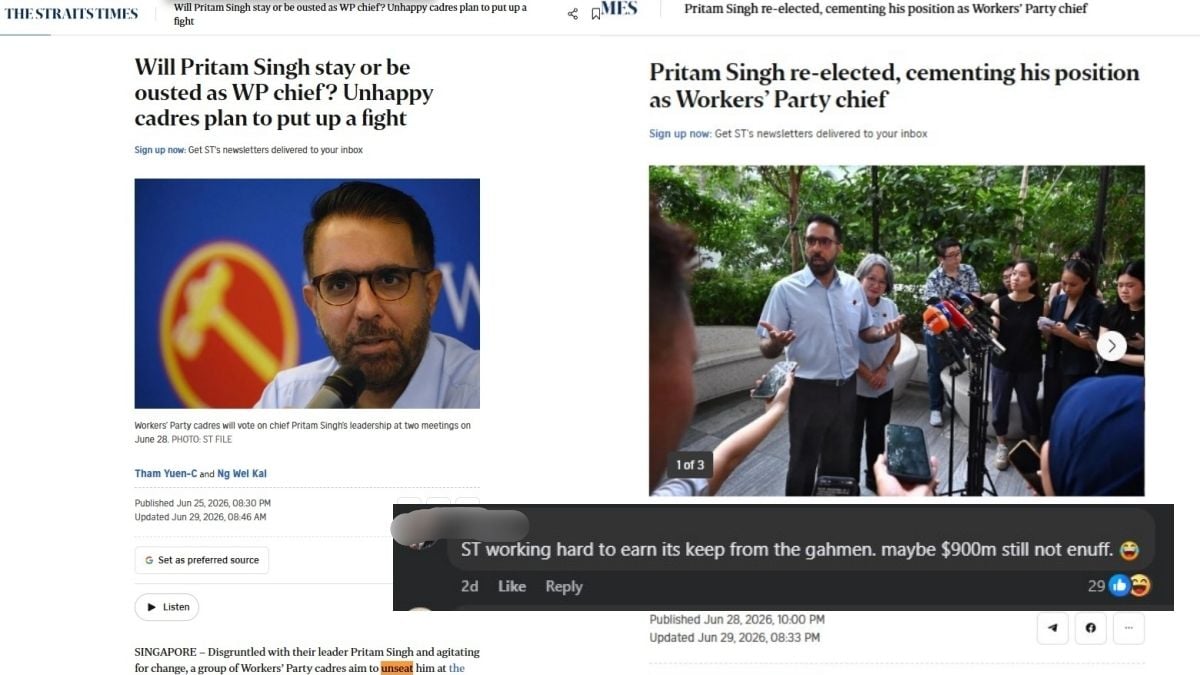
The overwhelming majority of POFMA cases have been directed at politicians, independent media outlets, and civil society activists — not at the anonymous, algorithmically amplified, or foreign-operated disinformation networks that ministers had foregrounded in their 2019 parliamentary speeches.
The current campaign, in which the government has instead relied on YouTube's own community guidelines enforcement and appeals to public discernment, marks one of the most prominent instances where the law has been set aside in the face of a large-scale coordinated operation.