Indonesian coalition challenges US$20b school meals programme over education budget allocation dispute
A coalition of civil society groups and teachers has filed a judicial review challenging Indonesia’s 2026 state budget, arguing that the Free Nutritious Meals programme improperly draws from the constitutionally mandated education allocation.
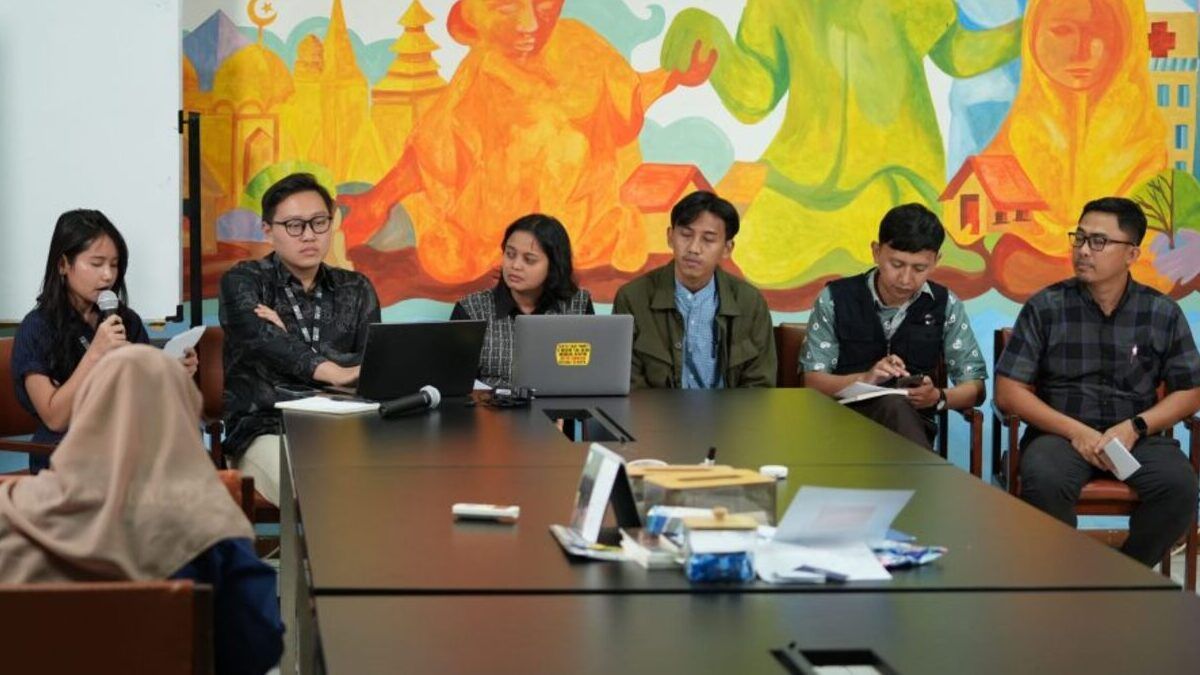
- Civil society groups and teachers have filed a constitutional challenge against the 2026 State Budget Law over the Free Nutritious Meals programme.
- Petitioners argue the programme improperly counts as education spending, reducing funds for education administration and teachers.
- Critics also raise concerns about governance, targeting, and the programme’s Rp335 trillion budget scale.

A coalition of Indonesian civil society organisations, teachers and activists has filed a judicial review with the Constitutional Court challenging the 2026 State Budget Law over the allocation for the government’s Free Nutritious Meals programme.
The Save Indonesian Education Coalition (KOSPI), together with teachers and civil society groups, submitted the petition arguing that the programme has been included within the national education budget, thereby reducing funds intended for the administration of education.
The legal challenge comes amid intensifying public debate over the Free Nutritious Meals programme, known locally as Makan Bergizi Gratis (MBG).
In recent weeks, the policy has drawn widespread scrutiny across Indonesia, circulating widely on social media, in newsrooms and among policy analysts.
Part of the renewed criticism has been driven by public frustration that the programme continued to operate and draw on state funds even while schools across Indonesia were closed for nearly three weeks during the year-end holidays from mid-December to early January.
Many citizens questioned the urgency of maintaining a costly school-based programme during a period when students were largely absent.
The backlash has also coincided with public calls for the government to prioritise recovery efforts following floods and landslides in Sumatra, where aid distribution and rehabilitation have been widely perceived as slow.
Despite the recent surge of criticism, the programme’s budget was formally approved by the House of Representatives in September 2025 as part of the 2026 Draft State Budget.
A major component of the 2026 state budget
The 2026 State Budget places the Free Nutritious Meals programme at the centre of fiscal policy. With a total allocation of Rp335 trillion (around US$19.8 billion), the initiative has become one of the largest spending items in the national budget.
The allocation represents a sharp increase from about Rp 71 trillion in the previous year. It also absorbs a large share of Indonesia’s education spending.
Of the Rp 769.1 trillion allocated to the education sector in 2026, about Rp223 trillion — nearly 30 per cent — is channelled to the programme alone.
By comparison, scholarship programmes for school and university students receive Rp57.7 trillion (approx. US$3.41 billion), while funding for non-civil servant teachers, regional civil servants and lecturers totals Rp 91.4 trillion.
The programme’s scale has drawn attention from policy analysts because it exceeds the budgets of several ministries and is significantly larger than many other human capital programmes.
Government data show that 83.4 per cent of MBG funding is sourced from the education sector, with the remainder coming from health spending (9.2 per cent) and economic programmes (7.4 per cent).
Nearly all of the funds—around Rp 261 trillion, or 97.7 per cent—are classified as goods expenditure, mainly for food procurement. Personnel costs and capital spending account for less than three per cent.
Officials at the National Nutrition Agency (BGN), which manages the programme, have also acknowledged challenges in budget absorption. The agency has reported that Rp 9.1 trillion remains unused while simultaneously projecting additional funding needs of Rp 50 trillion and relying on Rp 100 trillion in standby funds set aside by the President.
Some economists have questioned the programme’s fiscal scale. Economist Lili Yan Ing has argued that based on population data the programme should cost no more than Rp8 trillion, given that students represent roughly four per cent of the population and the programme provides only one meal per day.
Data from Indonesia’s National Socio-Economic Survey indicate that about seven per cent of students are undernourished, raising questions among analysts about the effectiveness of a universal rather than targeted approach.
Indonesia’s poverty distribution also varies widely across regions. Provinces in Papua and eastern Indonesia record poverty rates exceeding 20 per cent, while regions such as Jakarta, Bali and parts of Kalimantan have rates below five per cent.
However, official data show that Nutrition Fulfilment Service Units supporting the programme are concentrated largely on Java, a region with comparatively lower poverty levels.
Legal challenge over the education budget
Daniel Winarta of the Jakarta Legal Aid Institute said the coalition’s petition challenges Article 22 paragraph (3) and its explanatory section in the 2026 State Budget Law.
Under the law, the education budget exceeds Rp 769 trillion, representing 20 per cent of the total state budget. Article 22 paragraph (3) includes the Free Nutritious Meals programme as part of education operational funding within that allocation.
Presidential Regulation No. 118 of 2025 counts Rp 223 trillion allocated to the National Nutrition Agency as part of the education budget.
Winarta said this policy deviates from the intended purpose of education spending because programmes not directly related to educational administration are included within the allocation.
According to him, the effective education budget falls from 20 per cent to around 14.2 per cent once the programme is excluded.
He argued that the policy violates provisions of the 1945 Constitution, including Articles 1(3), 28D(1), 28D(2), 31(1) and 31(4), which require the state to allocate at least 20 per cent of the national budget to education.
Teachers raise welfare concerns
Reza Sudrajat, an honorary teacher and one of the petitioners, said he filed the lawsuit because the teaching profession has become increasingly uncertain while hundreds of trillions of rupiah are being prepared for the programme.
“This allocation should be questioned as to whether it is properly targeted or whether it creates other victims,” he said.
He noted that under the PPPK contract teacher scheme, some educators have seen their monthly salaries fall from Rp2 million to Rp1 million, with some receiving as little as Rp100,000, while others earn about Rp400,000 per month.
Reza said these conditions make the profession less attractive and raise concerns about the future of education.
He had previously filed a separate judicial review at the Constitutional Court in Case No. 55/PUU-XXIV/2026, challenging Article 22 paragraphs (2) and (3) and their explanatory sections.
During a preliminary hearing on 12 February 2026, he said the policy had caused constitutional harm by obscuring the right to adequate educational funding.
Reza said the programme uses Rp268 trillion of the Rp769 trillion education budget. Excluding that allocation, he said, the education budget would stand at around 11.9 per cent of the state budget.
Concerns over implementation and governance
Iman Zanatul Haeri of the Education and Teachers Association said the implementation of the education budget has also affected transfers to regional governments, with allocations to more than 500 districts declining under the 2026 budget.
According to him, the situation has worsened teachers’ welfare, particularly for PPPK teachers and part-time PPPK teachers who receive low salaries and lack benefits such as holiday allowances.
He said the programme also adds administrative responsibilities for teachers, disrupts teaching activities and reduces students’ learning hours.
Iman added that the programme does not align with the academic calendar or the school curriculum. There have also been reports of intimidation against teachers and students who post about the programme on social media.
Eva Nurcahyani of Indonesia Corruption Watch raised concerns about governance issues in the programme’s implementation, including indications that political affiliates or campaign teams may be involved in managing meal preparation facilities in several regions.
She said procurement processes could be less transparent because the programme has been classified as a national strategic project, allowing certain tenders to be conducted through direct appointments.
Edy Kurniawan of the Indonesian Legal Aid Foundation said the structure of Article 22 paragraph (3) and its explanatory section indicates that non-education components have again been included within the education budget.
He noted that the Constitutional Court has previously ruled that the minimum allocation of 20 per cent for education is mandatory.
Muhammad Isnur, chairman of the Indonesian Legal Aid Foundation (YLBHI), said the coalition also challenged several other provisions in Law No. 17 of 2025 on the 2026 State Budget, arguing that they contain budgetary provisions with unclear legal foundations.
The petition seeks judicial review of several articles, including Article 8 paragraph (5), Article 9 paragraph (4), Article 11 paragraph (2), Article 13 paragraph (4), Article 14 paragraph (1), Article 20 paragraph (1) and Article 29 paragraph (1).
Former Corruption Eradication Commission chairman Busyro Muqoddas, who is also a petitioner in the case, said the judicial review was filed because the governance of the programme has become increasingly uncontrolled.
“As a result, the MBG project is harming and burdening the public on a wide scale,” he said.
The coalition has called on the public, civil society organisations and the media to monitor the judicial review process at the Constitutional Court to ensure that education funds are used solely for the administration of national education.
Indonesia Corruption Watch has also opened a constitutional complaint channel for teachers at various levels to monitor education funding, particularly in relation to teachers’ welfare, with the information expected to support the advocacy process.