Anime gesture by Japan’s Sanae Takaichi and France’s Macron goes viral during Tokyo summit
A light-hearted anime gesture between Japan’s Prime Minister Sanae Takaichi and France’s President Emmanuel Macron during a Tokyo summit has drawn global attention online. Both leaders also held talks on security and Middle East tensions.

- Japan and France held summit talks in Tokyo, reaffirming strategic cooperation and addressing Middle East tensions
- A Dragon Ball “Kamehameha” gesture between the leaders went viral, drawing global attention
- Fans criticised Emmanuel Macron’s “fusion” caption, saying it confused it with the Kamehameha pose

JAPAN: A brief anime-themed interaction between Japan’s Prime Minister Sanae Takaichi and France’s President Emmanuel Macron has drawn widespread attention online, following their official meeting in Tokyo.
The exchange took place on 1 April 2026 during Macron’s official visit to Japan, where both leaders were scheduled to hold talks on bilateral cooperation and global security issues.
While the summit focused on strategic discussions, it was the informal gesture between the two leaders that quickly gained traction across social media platforms.
Viral anime moment during official visit
During the engagement, Takaichi initiated a gesture associated with the Japanese anime series Dragon Ball, commonly referred to as the “Kamehameha” pose.
Macron responded by mirroring the gesture, creating a brief, light-hearted moment during an otherwise formal diplomatic visit.
The interaction was later shared online, where it spread widely and prompted varied responses from international audiences.
Macron posted a clip of the moment on X with a Japanese caption reading “フュージョン!”, referencing another element from the same anime series which translated to "Fusion."
Fans highlight reference mix-up
The caption quickly drew attention from fans of the franchise, some of whom pointed out a perceived mix-up between the “fusion” concept and the “Kamehameha” pose.
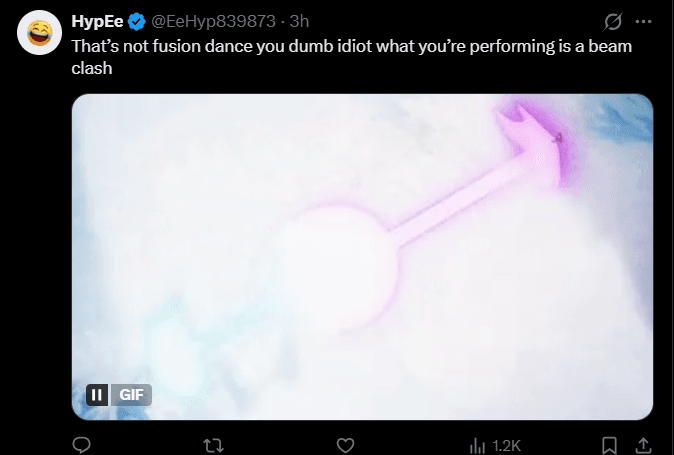
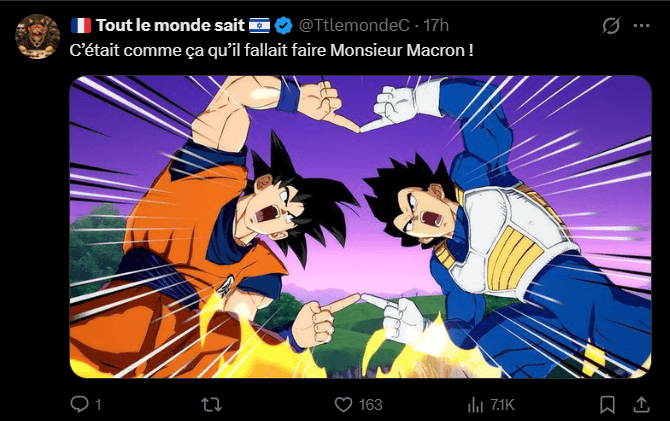

Several users commented that the gesture performed by the leaders did not correspond to “fusion”, but rather to a well-known attack move popularised by the character Goku.
Some fans expressed dissatisfaction with the apparent confusion, while others responded more light-heartedly, treating it as a minor mistake.
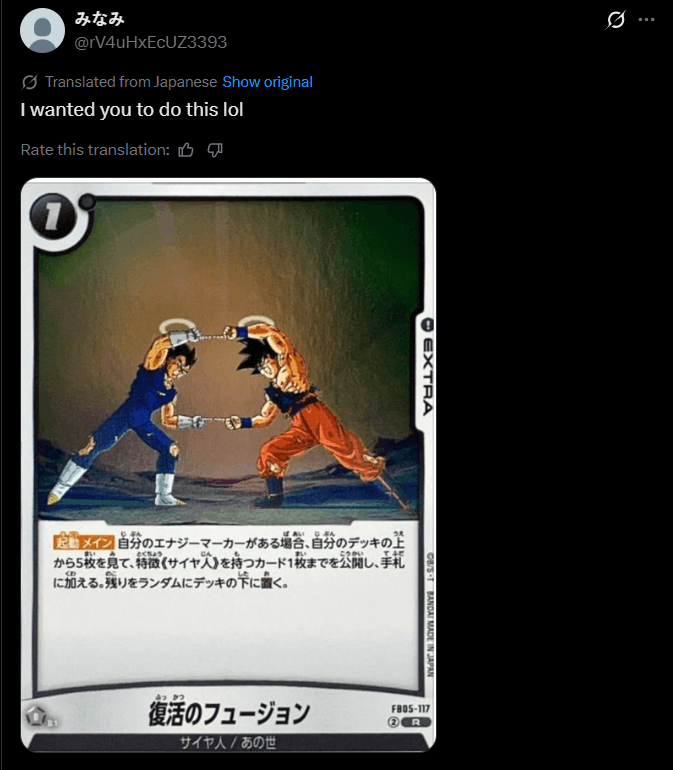
The reactions formed part of a broader online response to the clip, particularly among viewers familiar with the anime.


Online reactions range from praise to criticism
Beyond fan discussions, the exchange drew mixed reactions more widely.
Some users described the moment as an example of cultural diplomacy, highlighting the global influence of Japanese popular culture.

Others said the interaction offered a more relatable image of political leaders, contrasting with the formal nature of diplomatic engagements.

However, some commentators questioned the appropriateness of the gesture, particularly in light of ongoing geopolitical tensions.
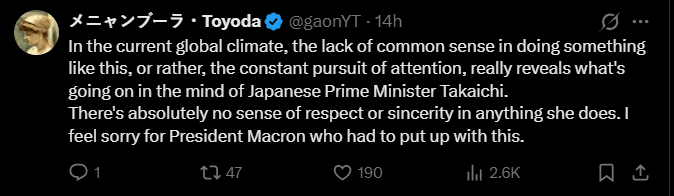
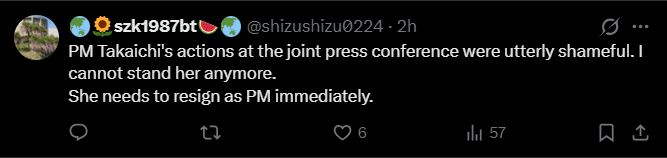
Critics suggested the moment appeared out of place given the seriousness of international issues being discussed during the visit.
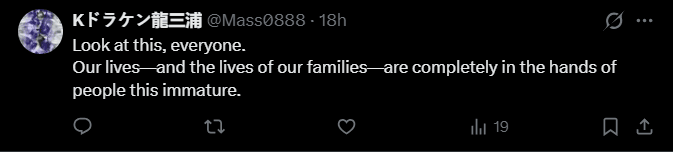
Summit discussions continue alongside public attention
Despite the online focus on the interaction, the summit itself addressed key global concerns, including tensions in the Middle East.
According to NHK WORLD-JAPAN, both leaders called for de-escalation in the region and stressed the importance of maintaining stability in the Strait of Hormuz.
Macron said both countries support “a return to peace, a ceasefire, calm, and free passage through the Strait of Hormuz”, as reported by Japan Today.
Takaichi also emphasised the need to ensure the safety of the waterway and the steady flow of goods.
Broader cooperation between Japan and France
Beyond security issues, the leaders agreed to expand cooperation in areas such as defence, rare earth resources, nuclear energy and space.
Both sides reaffirmed their commitment to strengthening what they described as an “Exceptional Partnership”.
Takaichi noted that France shares common values and principles with Japan, including support for the rules-based international order.