CCS flags three online retailers over fake urgency tactics and misleading online sales claims
Singapore’s consumer watchdog has flagged three online retailers for using “dark patterns” including fake countdowns, false scarcity claims and fabricated visitor numbers to pressure shoppers into purchases.
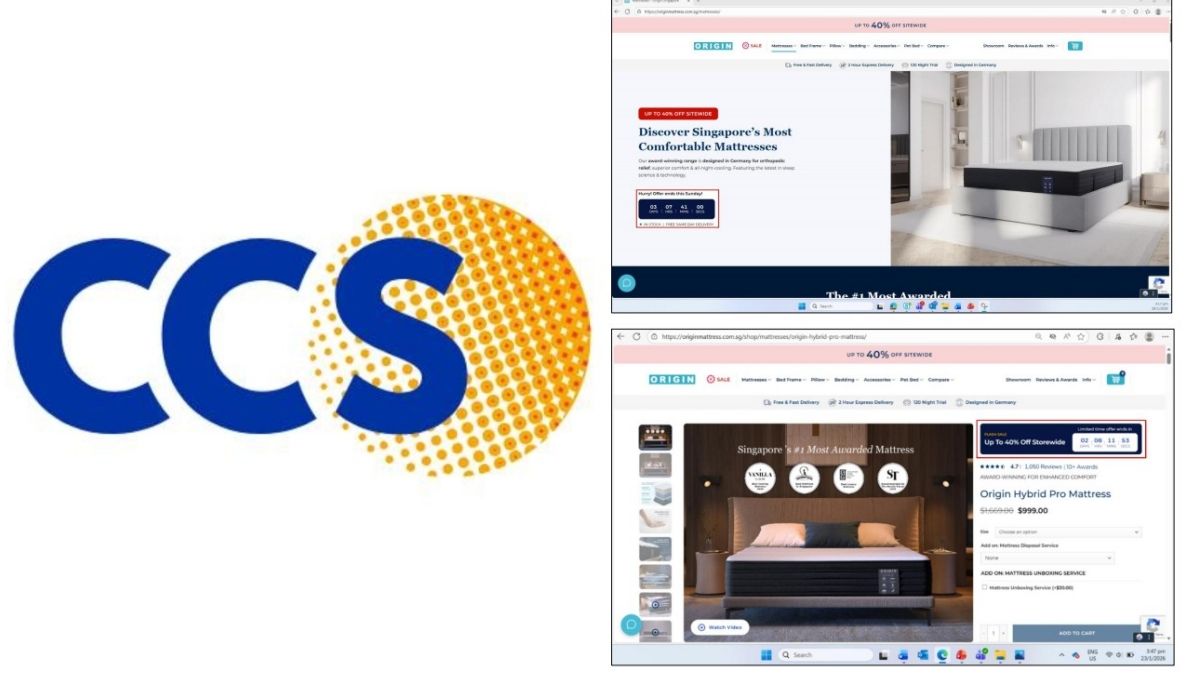
- CCS found three online retailers used misleading online sales tactics to pressure consumers into purchases.
- The practices included fake visitor counts, false scarcity warnings and fabricated discount claims.
- All three retailers stopped the practices and committed to avoid unfair trade practices in future.

Singapore’s consumer watchdog has flagged three online retailers for using misleading website features known as “dark patterns” to pressure shoppers into making purchases.
In a statement issued on 18 May 2026, the Competition and Consumer Commission of Singapore (CCS) said the companies used deceptive online sales tactics including fake visitor counts, fabricated countdown timers and misleading discount claims to create false urgency and demand around products.
The retailers identified were Seager, which operates lifestyle travel store Boarding Gate, mattress retailer Origin Sleep and clothing company Light In The Box.
CCS said all three companies have ceased the practices and provided formal undertakings to the regulator.
Misleading visitor activity claims
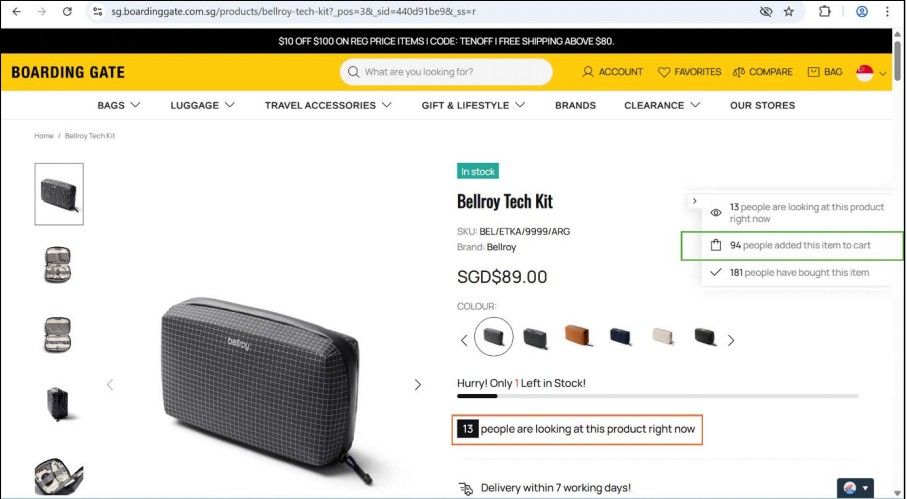
According to CCS, Boarding Gate’s website displayed messages claiming to show how many people were viewing certain products in real time.
The regulator said these statements gave shoppers the impression of high demand and active customer interest.
However, CCS said an examination of the website’s source code revealed the visitor numbers were randomly generated.
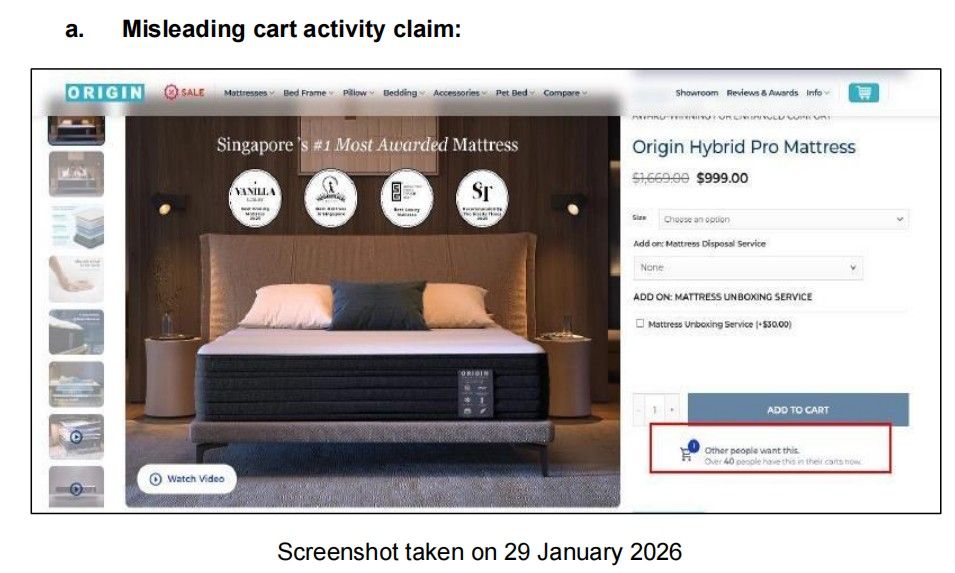
The website also displayed messages showing how many shoppers had added products to their carts despite there being no evidence supporting the claims.
Origin Sleep was found to have used similar statements on its website claiming to show live visitor activity.
The mattress retailer also displayed countdown timers on checkout pages urging customers to complete purchases quickly because products were supposedly reserved only for a limited period.
CCS said the timers implied purchases had to be completed before expiry to secure the products.
In reality, the regulator said the messages and countdown timers had no effect on product availability or consumers’ ability to complete purchases.
False urgency and extended “flash sales”
CCS also found that Origin Sleep operated what appeared to be limited-time promotional campaigns over a prolonged period.
Investigations showed the retailer continuously rotated the names of its sales campaigns while maintaining ongoing discounts for nearly two years.
“What started as a ‘Flash Sale’ in January that was supposed to last for only a week seamlessly became a ‘Valentine’s Day Sale’ in February, then a ‘CNY Sale’, followed by a ‘3.3. Mega Sale’, and so on,” CCS said.
The regulator said such practices created misleading impressions that consumers had only a short period to secure discounted prices.
In the case of Light In The Box, CCS said the retailer’s website displayed warnings suggesting products were almost sold out.
The statements were intended to create a sense of scarcity and urgency among shoppers.
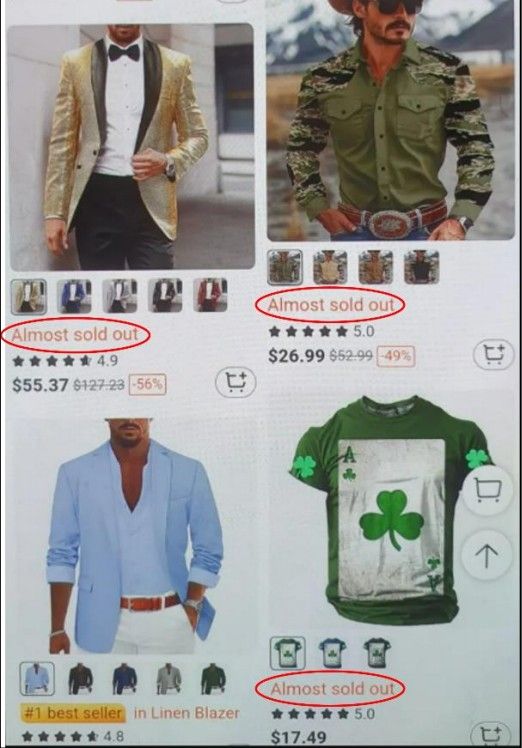
However, CCS said the company operated using a made-to-order procurement model and maintained little or no standing inventory.
“In reality, these scarcity labels were applied randomly for promotional effect,” CCS said.
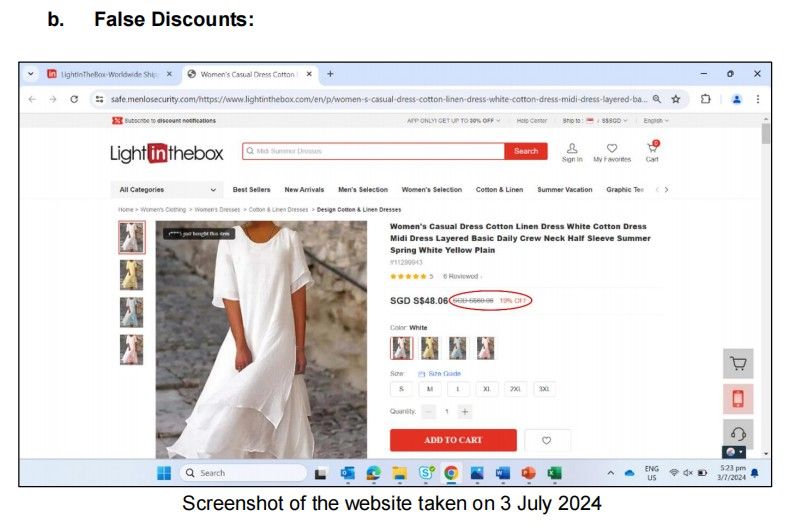
The regulator also found that Light In The Box displayed discounted prices against higher “original” prices that were never genuinely offered to customers.
CCS said this created false impressions of savings and discounts.
Businesses remain responsible
Investigations found that one retailer claimed its website design was based on a template purchased from an overseas vendor.
CCS stressed that companies could not avoid responsibility for unfair trade practices by relying on third-party web design templates or external service providers.
The regulator said businesses remained responsible for ensuring compliance with consumer protection laws regardless of whether websites were developed internally or sourced externally.
Besides giving formal undertakings to CCS, all three retailers have stopped using the misleading features and committed to avoiding unfair trade practices in future.
Light In The Box also removed the misleading claims from both its Singapore-facing and European-facing websites and mobile application.
CCS chief executive Alvin Koh said deceptive online design practices undermined consumer confidence in digital commerce.
“Dark patterns are insidious as they are difficult to detect and erode consumer trust in the digital marketplace,” Alvin Koh said.
“CCS will continue taking firm action to protect consumer trust and honest businesses from those who choose to compete unfairly.”
Consumers who encounter unfair trade practices may report the matter to the Consumers Association of Singapore through its complaints portal or hotline.