High Court publishes grounds overturning acquittal of 'Letters for Palestine' organisers
Singapore's High Court has published its written grounds overturning the acquittal of three women who organised a group letter delivery to the Istana in February 2024, setting out a two-stage legal test for procession offences under the Public Order Act.
- High Court published written grounds Thursday overturning acquittal of three 'Letters for Palestine' organisers.
- Judgment sets binding two-stage test for "ought reasonably to know" under the Public Order Act.
- Each woman fined S$3,000 after court found they wilfully failed to make reasonable enquiries.

Singapore's High Court published its written grounds on Thursday in the appeal against the acquittal of three women who organised a group letter delivery to the Istana on 2 February 2024.
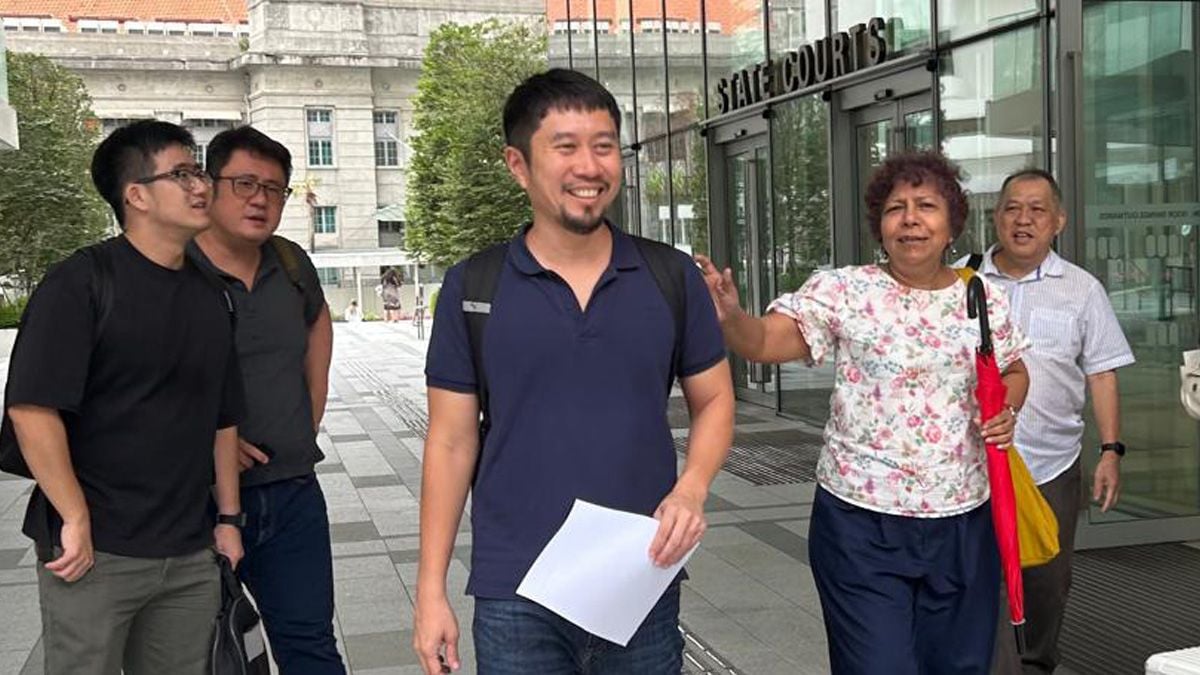
The judgment, [2026] SGHC 121, was authored by Justice See Kee Oon of the Appellate Division and sets out the legal basis for the court's earlier decision on 30 April 2026 to convict Mossammad Sobikun Nahar, 26, Siti Amirah Binte Mohamed Asrori, 31, and Annamalai Kokila Parvathi, 37, of organising a procession in a prohibited area under s 15(1) of the Public Order Act 2009 (POA).
Each woman was fined S$3,000 (approximately US$2,340), with one week's imprisonment in default.
Background to the event
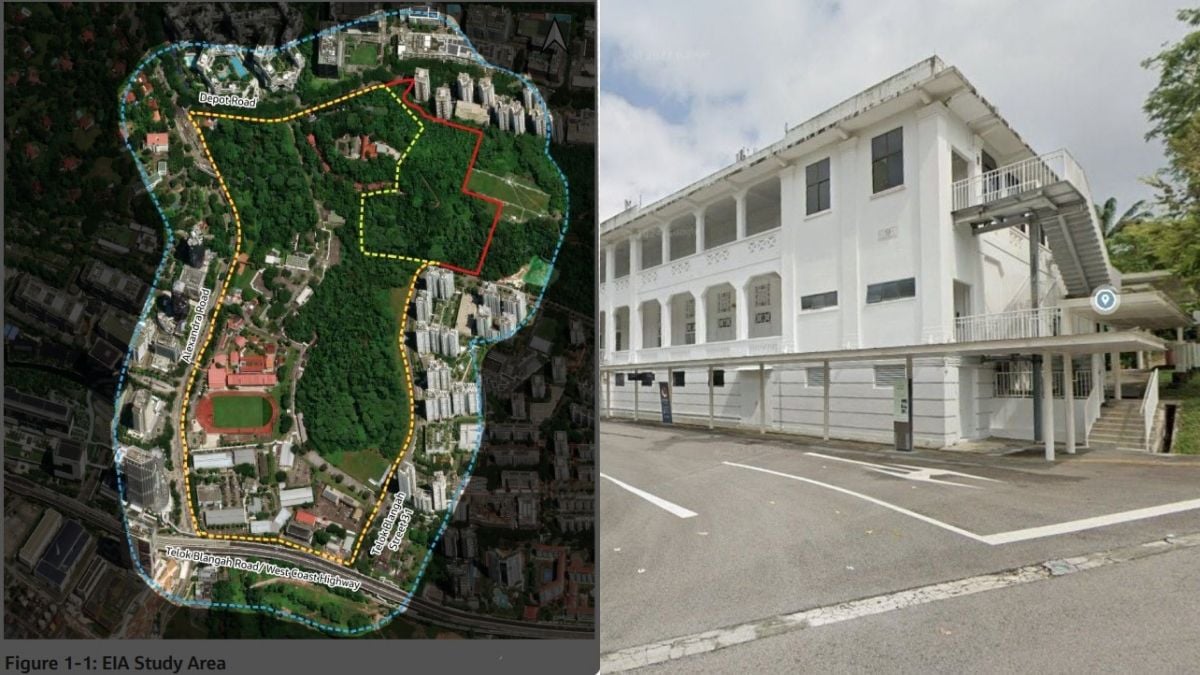
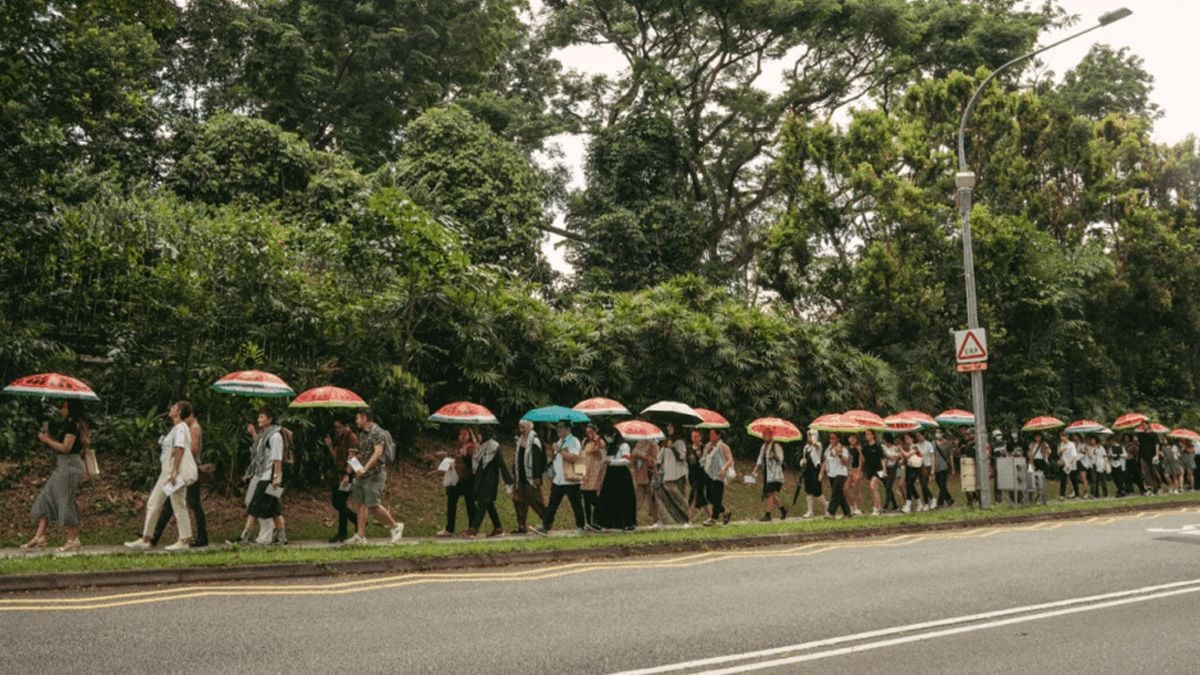
The three women were among a group of approximately 70 people who gathered outside Plaza Singapura on 2 February 2024 before walking to the Istana's rear gate to deliver letters addressed to then-Prime Minister Lee Hsien Loong's office.
The activity was organised under the banner of "Letters for Palestine" and was linked to the ongoing Israel-Palestine conflict. Participants carried umbrellas painted with watermelon motifs, a symbol widely associated with Palestinian solidarity.
Sobikun and Siti were identified as the principal organisers. Sobikun drafted the confirmation email sent to participants, while Siti created publicity materials for the event. Kokila provided advice based on prior experience delivering letters to the Istana and helped gather participants on the day.
The three were charged in June 2024. Their trial began on 18 September 2024.
District court acquittal
District Judge John Ng acquitted all three on 21 October 2025, finding that the prosecution had not proved they knew, or ought to have known, that the route they took fell within a prohibited area under the POA.
Judge Ng accepted that the actus reus elements of the charge had been established. However, he held that the mens rea element had not been proved beyond a reasonable doubt.
He relied on three factors: that the route taken was a public pavement regularly used by members of the public; that there were no signs along the path indicating it was a prohibited area; and that previous letter-delivery walks along the same route had proceeded without legal consequence.
The Attorney General's Chambers (AGC) subsequently filed a notice of appeal.
The High Court appeal
Justice See allowed the appeal, finding that the district judge had erred in law by applying an incomplete version of the legal test for the "ought reasonably to know" mens rea limb under s 15(1) of the POA.
The written grounds published Thursday set out that test in full detail for the first time, and are likely to bind future proceedings under the Act.
The two-stage test
Drawing on the Court of Appeal's earlier analysis in Public Prosecutor v Teo Ai Nee [1995], Justice See confirmed that the phrase "ought reasonably to know" encompasses two limbs: knowledge of circumstances that would put an honest and reasonable person on inquiry, and wilfully and recklessly failing to make the inquiries that such a person would have made.
The court set out a two-stage framework. At the first stage, the court identifies the actual circumstances that would have put an honest and reasonable person on notice that the procession was taking place in a prohibited area.
At the second stage, the court determines what inquiries a reasonable person would have made in those circumstances, and whether the accused wilfully and recklessly failed to make them.
Justice See illustrated the test using a COVID-19 circuit breaker hypothetical: a group of eight friends who knew restrictions were in place but proceeded with a cycling trip after hearing that another group had cycled without facing enforcement. He held that reliance on others' past experiences of not being caught was not a substitute for making reasonable inquiries.
The district judge's reasoning dismantled
Justice See found that none of the three factors the district judge had relied upon should have carried any weight.
On the public pavement point, the court held that all prohibited areas under the POA are by their nature publicly accessible spaces. Accepting this reasoning would allow any procession organiser in a prohibited area to escape liability simply by pointing to the public character of the location — a result that would defeat the purpose of the Act.
On the absence of signage, the court found this to be a neutral factor at best. While the presence of signs might support a finding of knowledge, their absence could not lead to the opposite conclusion. Imposing such a requirement would also place an unworkable obligation on the authorities to erect signs across all prohibited areas.
On prior walks without consequence, the court held there was no evidence about the specific circumstances of those earlier walks — whether they constituted processions under the POA, or whether police reports had been filed.
More fundamentally, the absence of prior enforcement action could not establish that the conduct was lawful. As Justice See put it, a motorist who consistently speeds without being caught does not thereby make speeding legal.
The police advisory as a red flag
Central to the court's findings was the Singapore Police Force advisory issued on 18 October 2023, referred to in the judgment as P14.
P14 stated that the police would not grant any permit for events or assemblies relating to the Israel-Hamas conflict, and explicitly reminded members of the public that organising or participating in a public assembly without a police permit constituted an offence under the POA.
Justice See found it was undisputed that all three respondents were aware of P14 at the material time.
Kokila had herself raised P14 during a discussion with Sobikun in late January 2024, when Sobikun sought her advice on how to avoid contravening the law. The court found the only reasonable inference was that Kokila was concerned P14 may have applied to the event, yet wilfully and recklessly failed to conduct further checks.
Siti acknowledged before the trial that the POA would restrict public assemblies and processions. Her claim that it was not her responsibility to check the POA because that was Sobikun's role was rejected by the court. Justice See held that as an organiser, she was personally obliged to satisfy herself that the event was lawful.
Sobikun's sole basis for discounting P14 was that it referred only to assemblies and processions, not to letter-delivery actions. The court found this amounted to a concession that P14 would and should have put someone intending to organise a procession on notice — and that her failure to inquire further was equally wilful and reckless.
Justice See held that P14 ought to have prompted each of the respondents to make further enquiries — whether by checking the POA and the Public Order (Prohibited Areas) Order 2009, or by making direct enquiries with law enforcement — before proceeding. Their failure to do so satisfied the mens rea requirement, and the charge was proved beyond a reasonable doubt against each of them.
A procedural observation
The written grounds also noted a procedural irregularity at the district court level. Justice See observed that the district judge's brief oral grounds, delivered at the close of the trial, were longer and more comprehensive than the full written grounds of decision that followed. He described this as curious, noting that the reverse would ordinarily be expected when a written decision is issued.
Justice See stated he was nevertheless satisfied that the basis for the district judge's findings was sufficiently discernible from both versions, but that the district judge had clearly erred in reaching several of his conclusions.
Sentence
The prosecution did not press for a custodial sentence. Counsel for the respondents sought a fine of S$3,000 for each woman, which Justice See imposed.
In arriving at the sentence, the court benchmarked against Public Prosecutor v Wham Kwok Han Jolovan [2022] SGMC 14, in which a S$3,000 fine was imposed for a charge under s 15(2) of the POA. Justice See noted that the present convictions were under s 15(1), which carries a maximum fine double that prescribed under s 15(2).
Taking the different sentencing ranges into account, the court found that S$3,000 remained appropriate. The court noted that, unlike Wham, the three women did not have actual knowledge that the procession took place in a prohibited area, which placed their culpability at a lower level.
Under s 15(1) of the POA, organising a procession in a prohibited area carries a maximum penalty of a S$10,000 fine, six months' imprisonment, or both.