Thailand consumer body sues Meta, Line and banks over online scam failures
Thailand's consumer watchdog has filed civil suits against Meta, Line Corporation, Apple and several banks, alleging their systems enabled fraudsters to deceive 10 victims of more than 230 million baht in losses, with eight further cases in preparation.
- Thailand Consumers Council filed suits against Meta, Line, Apple and banks over scam-linked losses exceeding 230 million baht.
- Plaintiffs argue platforms and banks failed their legal duty to detect and prevent fraudulent activity.
- Cases are structured as pilot litigation targeting overseas parent companies, not just local subsidiaries.

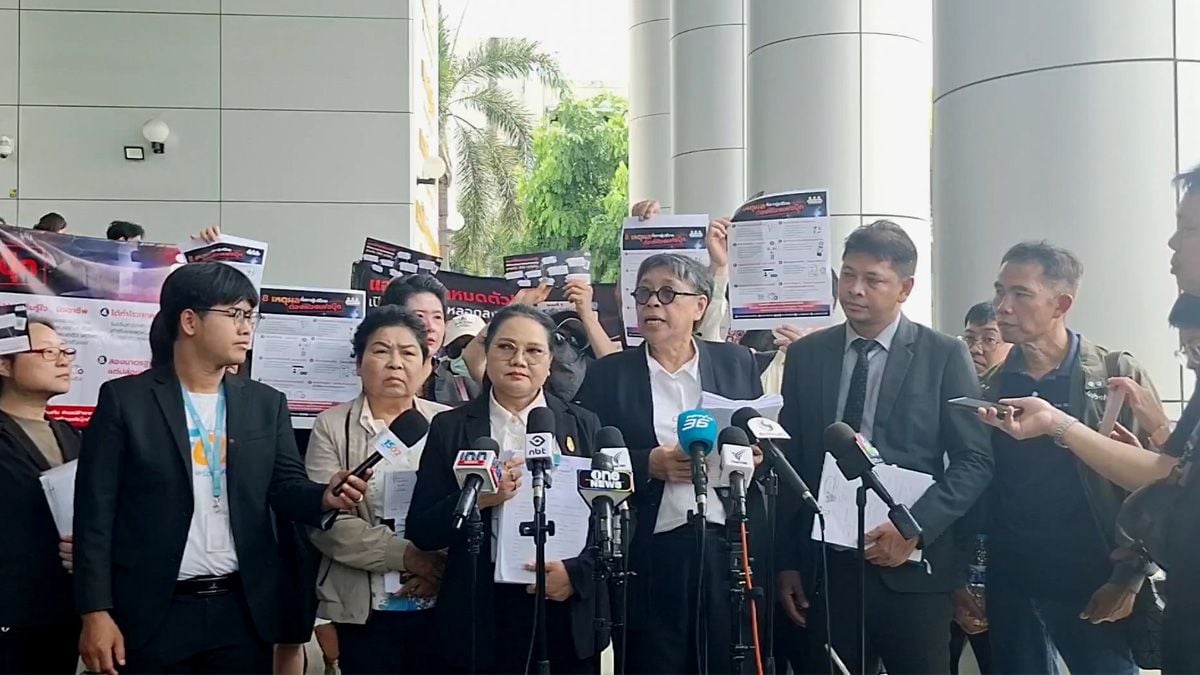
The Thailand Consumers Council (TCC) filed civil lawsuits at the Civil Court on Ratchadaphisek Road on 8 June 2026, targeting online platform operators and financial institutions over their alleged roles in enabling large-scale investment fraud against Thai consumers.
The suits name two groups of defendants. The first comprises platform operators including Meta Platforms, Inc, the parent company of Facebook, Line Corporation and Apple. The second group consists of financial institutions linked to the transaction routes used in the fraudulent schemes.
Combined claimed damages across the 10 initial complainants exceed 230 million baht (US$7 million). One of the 10 complainants has since died, but their case is continuing.
The lawsuits were filed alongside lawyers and representatives of affected victims. Nannaphatsorn Techapanyapipat, the lawyer overseeing the litigation, said all 10 victims had fallen prey to materially similar schemes.
Victims were reportedly lured through scam advertisements and fake investment education pages on social media platforms before being persuaded to transfer funds into accounts controlled by fraudsters.
How the schemes operated
According to the complaints, the fraud began when victims used Facebook to search for stock trading education and investment information. Facebook's algorithm allegedly served them scam advertisements and fake pages impersonating legitimate trading influencers and investment educators.
Victims were then directed into Line chat groups. One such group identified in the complaints had 328 members. Scammers reportedly deployed authentic audio clips and real stock market data to project credibility, before steering victims toward a brokerage firm falsely presented as legitimate.
Victims were instructed to download investment applications through Apple's App Store or the Google Play Store. They subsequently transferred funds into fraudulent accounts.
Nannaphatsorn argued the fraud relied on a chain of interconnected systems: advertising platforms, messaging applications, mobile app distribution channels and banking infrastructure. She stated that if each system had properly fulfilled its professional obligations, the damage would not have occurred.
Why the cases are structured as pilot litigation
TCC secretary-general Saree Aongsomwang said the lawsuits differ from earlier actions because they directly target the overseas parent companies that control advertising systems, revenue structures and global operational policies.
She noted that local Thai subsidiaries largely serve marketing and coordination functions and do not govern the core systems responsible for screening fraudulent advertisements or regulating platform conduct.
A further structural detail distinguishes this litigation from prior cases. Saree said advertising revenue from Meta's Thai operations is structured to flow into accounts held by a Meta entity in Ireland. The TCC has accordingly named that Irish entity as a defendant alongside the parent company and Thai subsidiary, on the basis that it forms part of the financial chain linked to the alleged harm.
The litigation therefore encompasses parent companies with systemic oversight responsibilities, Thai subsidiaries that collect service fees domestically, and the Irish entity through which advertising revenue is routed.
Nannaphatsorn described the suits as strategic litigation. While many victims share broadly similar experiences, the specific factual circumstances of each case differ, which under Thai law prevents them from being consolidated into a class action. The council has therefore chosen to pursue separate pilot cases.
Saree also identified financial institutions as a critical node in the fraud chain, arguing that banks at both the originating and receiving ends of transactions should have detected suspicious patterns through their professional expertise and monitoring obligations.
The council said the legal action is intended not only to secure compensation for affected individuals, but also to push platforms and banks to improve consumer protection standards and to support broader legislative reform. Saree noted that current Thai law lacks clear penalties and adequate redress mechanisms, leaving victims to pursue claims individually.
"Consumer harm must be pursued all the way to those who control the systems and provide the financial services — victims should not be left to bear the damage alone," Saree said.
Eight further cases in preparation
The TCC said it is preparing to file on behalf of an additional eight victims beyond the initial 10. The Civil Court has scheduled the first hearing for two of the cases filed on 8 June 2026 for 3 August 2026.
The council is also inviting other consumers who have been defrauded through online platforms to submit complaints via its website at tcc.or.th.
Platforms respond
Meta said it was not in a position to comment on the legal proceedings directly.
However, the company stated that over the preceding two weeks it had joined leading technology companies and law enforcement agencies to disrupt criminal scam networks operating in Southeast Asia. Meta said the operation disrupted more than a million online assets, including 1.4 million accounts, pages and groups across Facebook and Instagram, along with 20,000 Microsoft accounts and thousands of Starlink kits. The Royal Thai Police arrested 63 individuals in connection with the operation.
Meta added that it had met with the TCC as recently as April 2026 to align on anti-scam education campaigns, and said it continued to work closely with local authorities to protect users and strengthen platform integrity in Thailand.
Line Thailand issued a separate statement acknowledging it had received initial notification of the lawsuit. The company expressed concern for those affected and affirmed respect for the legal process.
Line Thailand said it was investigating the facts and stood ready to cooperate with all relevant parties to ensure continued platform safety. The company said it had consistently provided users with safety education resources and maintained close cooperation with law enforcement agencies and government bodies to prevent cybercrime and clamp down on online scammers.
Apple had not issued a public response at the time of reporting.