Thai Princess Bajrakitiyabha dies at 47 after years in coma
Princess Bajrakitiyabha Mahidol, eldest child of King Maha Vajiralongkorn, has died aged 47, the Bureau of the Royal Household announced, following nearly four years of hospitalisation after a 2022 cardiac collapse.
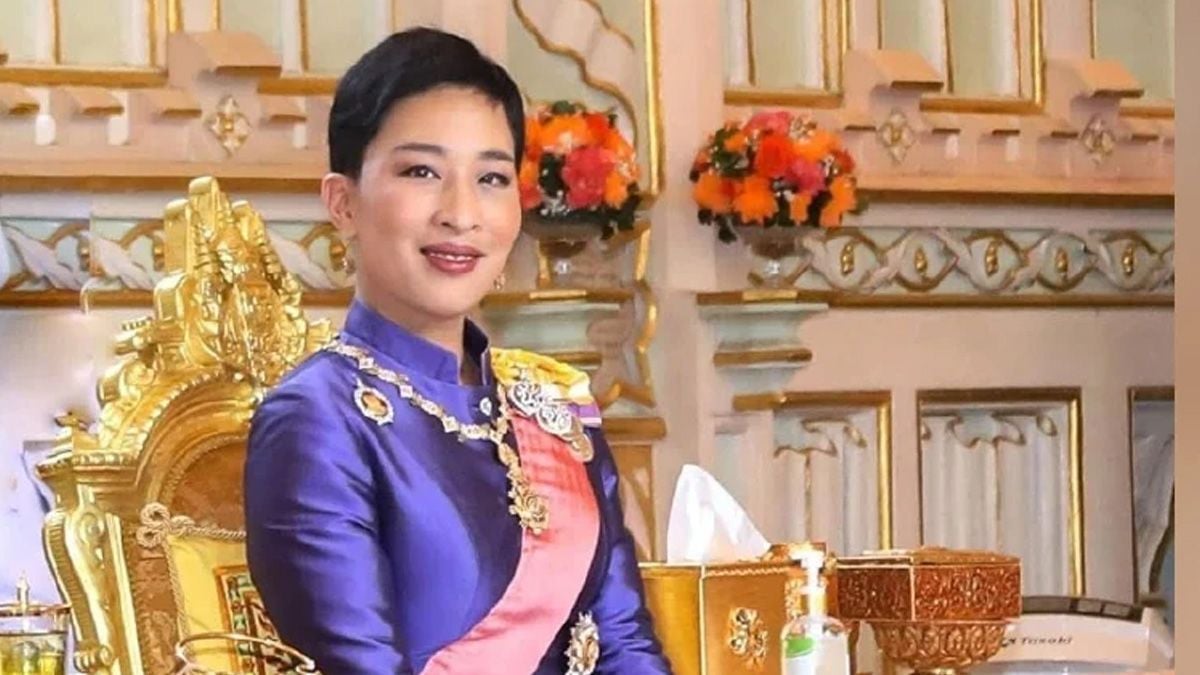
- Princess Bajrakitiyabha dies aged 47 after nearly four years in a coma
- Hospitalised since December 2022 following cardiac collapse during dog training
- Known for justice reform work and the Kamlangjai prison rehabilitation project

Princess Bajrakitiyabha Mahidol, the eldest child of Thailand's King Maha Vajiralongkorn, has died at the age of 47, the Bureau of the Royal Household said in a statement.
The Bureau said the princess passed away peacefully at King Chulalongkorn Memorial Hospital, Thai Red Cross Society, at 7.48pm on Thursday, 11 June 2026.
She had been receiving treatment at the hospital since 15 December 2022, after losing consciousness due to a cardiac condition, the Bureau said in periodic announcements over the intervening years.
According to the Bureau's statement, the princess's condition had deteriorated since 21 May 2026, as a result of an infection in the abdominal cavity caused by inflammation of the large intestine.
The princess also suffered from low blood pressure, an irregular heartbeat and abnormal blood coagulation, the statement said. Despite close treatment by the medical team, her condition continued to worsen gradually.
King Maha Vajiralongkorn has commanded the Bureau of the Royal Household to arrange royal funeral rites and accord the princess the highest honours in accordance with royal tradition. Her body will be enshrined at the Piman Rattaya Throne Hall within the Grand Palace.
Background to hospitalisation
According to previous media reports, the princess fell ill during a military dog training session in December 2022. The Bureau of the Royal Household had said she suffered from a mycoplasma infection, a bacterial infection usually associated with pneumonia.
On 21 May 2026, the Royal Palace issued a statement revealing that her condition had deteriorated due to complications from an infection detected in April.
The infection led to unstable conditions including low blood pressure, irregular heartbeat and abnormal blood clotting, the statement said, adding that she suffered severe and uncontrolled infection affecting several vital organs despite continuous medical support.
King Maha Vajiralongkorn's New Year's greeting card for 2023 showed the King and Queen Suthida dressed in black, which many Thais saw as confirmation of the gravity of the princess's condition, according to a report by the Associated Press (AP).
Early life and career
Princess Bajrakitiyabha was born on 7 December 1978 to then-Crown Prince Vajiralongkorn and his first wife, Princess Soamsawali. She was the first grandchild of King Bhumibol Adulyadej and Queen Sirikit of Thailand.
She studied law at Thammasat University before going to Cornell University in the United States, where she earned a master's degree in law in 2002 and a doctorate in 2005, with a dissertation on the protection of the rights of the accused, according to the AP.
Scholarships to Cornell Law School and a programme for the exchange of legal scholars between Thailand and Cornell were later established in her name.
After working briefly at the Thai Mission to the United Nations (UN) in New York, she returned home to serve as a public prosecutor in the Office of the Attorney General of Thailand.
From 2012 to 2014, she served as Thailand's Ambassador to Austria and Permanent Representative of Thailand to the UN at Vienna.
Justice reform and humanitarian work
The princess was best known for the Kamlangjai, or "Inspire", project, aimed at helping rehabilitate incarcerated Thai women ahead of their release, according to the AP.
She was Chair of the Special Advisory Board of the Thailand Institute of Justice, which is affiliated with the UN.
In September 2008, she was appointed a UN Women National Ambassador to Thailand. In a statement issued by UN Women at the time, the princess said Thailand's support for the global UNIFEM Say NO to Violence against Women Campaign was "second to none".
In 2017, she was appointed Goodwill Ambassador for the Rule of Law in Southeast Asia by the United Nations Office on Drugs and Crime (UNODC).
Her efforts contributed to the UN General Assembly's adoption of the "Bangkok Rules" on the care and conditions of female prisoners, according to the AP.
In a 2013 interview with the AP, the princess said that society could not grow amid instability and injustice, and described the rule of law as a vital pillar of development, economic growth and human rights.
Public perception and succession
Pran Jintrawet, a lecturer in political science and public administration at Chiang Mai University, told The Straits Times that the princess's death would be felt by many in Thailand.
Pran said her absence meant the loss of a publicly adored figure, and that she had made significant contributions to social work.
He added that the princess was widely known for being approachable, and would often converse in English with colleagues and bureaucrats to avoid the use of royal language, which is mandatory for Thai commoners when addressing royalty.
Patrick Jory, who studies Southeast Asian history at the University of Queensland, said Thailand's lèse-majesté law, which prohibits criticism or defamation of the monarchy and carries a sentence of three to fifteen years per charge, has limited public discussion of the princess.
Jory said it was well-known that the princess was close to her father, and that her public appearances suggested he may have been preparing her for an important role, although Thailand's 1924 Palace Law on Succession does not permit a female monarch.
According to the AP, Prince Dipangkorn Rasmijoti, the youngest of the King's children, remains the presumptive heir, as sons take precedence in the line of succession. However, the princess's experience in public service had raised speculation she might hold a significant role in any future succession, potentially as regent to a young monarch.
The princess's death comes less than a year after the death of Queen Sirikit, the King's mother, on 24 October 2025 at the age of 93.
Thailand remains in a one-year mourning period for Queen Sirikit, during which civil servants, state employees and government officials are required to wear mourning attire.
Thailand's longest-reigning monarch, King Bhumibol Adulyadej, died in 2016.
Princess Bajrakitiyabha is survived by her parents and siblings.