Malaysia probes allegations that US$12.7 million paid for elephant transfer to Japan never reached government
Malaysia’s anti-graft agency is investigating allegations that payments linked to the transfer of three Taiping Zoo elephants to Japan failed to reach government coffers. The probe centres on transactions worth about RM53 million and follows complaints from wildlife advocates.
- MACC is investigating allegations that RM53 million linked to the elephant transfer failed to reach government accounts.
- The probe covers the Ministry of Natural Resources and Environmental Sustainability, the wildlife department and involved agents.
- Animal welfare groups continue pressing for the return of the elephants despite official assurances about their condition.

KUALA LUMPUR, MALAYSIA: The Malaysian Anti-Corruption Commission (MACC) has launched an investigation into allegations that payments connected to the transfer of three elephants from Zoo Taiping & Night Safari to Japan failed to reach the government, amid claims involving transactions worth about RM53 million (approx. US$12.7 million).
The anti-graft agency said its investigation focuses on the relocation of Dara, Amoi and Kelat to Tennoji Zoo in Osaka under a 25-year conservation and research partnership that was originally promoted as an international collaboration on elephant conservation and breeding.
According to MACC, the investigation centres on the Ministry of Natural Resources and Environmental Sustainability, the Department of Wildlife and National Parks and agents involved in facilitating the transfer.
“The investigation is focused on the national resources and environmental sustainability ministry, the wildlife and national parks department, and the agents involved in the elephants’ transfer,” the commission was quoted as saying by local media Free Malaysia Today on 22 June 2026.
Examining allegations of financial leakages
The investigation follows a call by wildlife advocacy group Hak Asasi Hidupan Liar Malaysia on 18 June for authorities to scrutinise the transfer arrangements.
MACC said the group alleged that several payments associated with the relocation did not reach the government as intended and linked several individuals to transactions valued at approximately RM53 million.
“MACC is investigating allegations of leakage and looking into the possibility of bribery, misappropriation, or abuse of power,” the commission said, while urging the public not to speculate because inquiries remain at an early stage.
The complaint reportedly drew on information provided by a whistleblower who alleged that funds connected with the transfer had been diverted instead of being channelled into government coffers.
Conservation partnership faces growing scrutiny
The transfer traces its origins to discussions between Taiping Zoo & Night Safari and Osaka’s Tennoji Zoo in 2021, with the arrangements formalised through a memorandum of understanding in 2022.
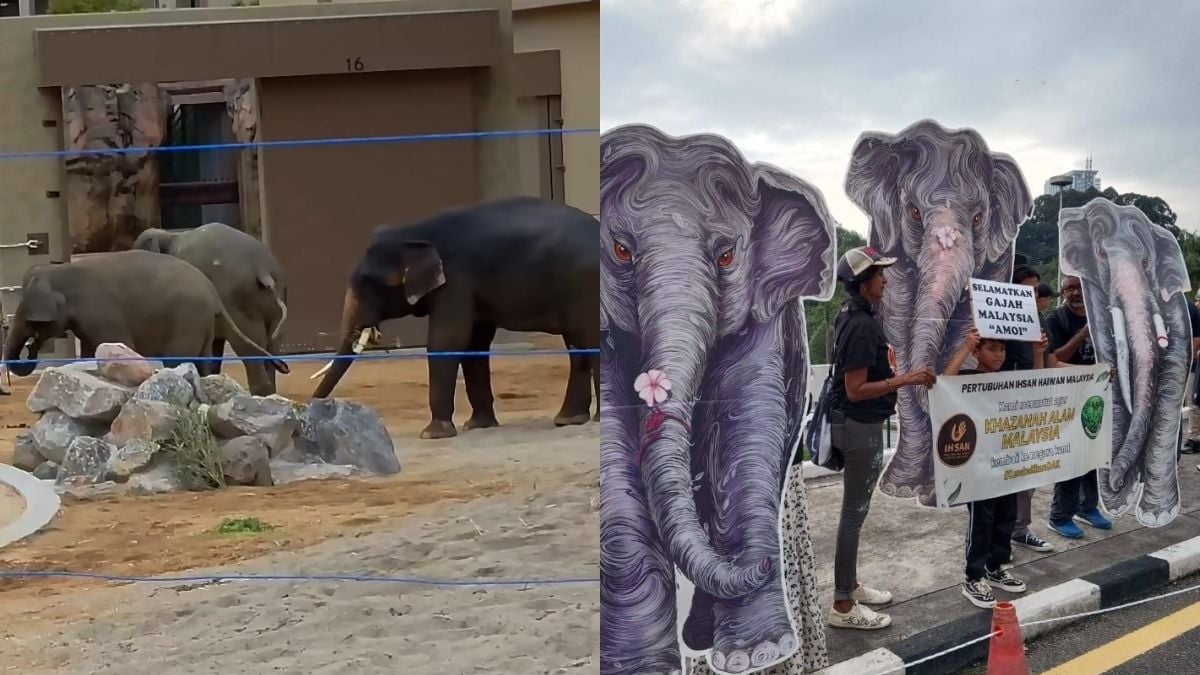
On 11 March 2026, the three Asian elephants arrived in Osaka as part of what Malaysian authorities described as a non-commercial, long-term conservation, research and breeding collaboration under the Malaysian Elephant Conservation Programme.
View this post on Instagram
Officials have consistently maintained that ownership of Dara, Amoi and Kelat remains with Taiping Zoo despite their relocation to Japan.
The elephants are also the first to reside at Tennoji Zoo since the death of its previous elephant, Hiroko, in 2018.
Public concern over welfare
Even before the transfer was completed, the plan attracted significant opposition from conservationists and members of the public.
Online petitions opposing the relocation gathered more than 87,500 signatures, while organisations including Sekretariat Bahana Kesetiaan Negara and Pertubuhan Pelindung Khazanah Alam Malaysia questioned aspects of the arrangement.
Critics raised concerns about whether the elephants had originally been captured from the wild, whether an urban zoo environment was appropriate for animals native to tropical forests and whether sufficient legal safeguards existed once they were transferred overseas.
In response to public concern, the Ministry of Natural Resources and Environmental Sustainability dispatched three Malaysian mahouts to Japan to assist with the elephants’ care.
By May 2026, Deputy Minister Syed Ibrahim Syed Noh stated that any attempt to repatriate the elephants “cannot be rushed” because of bilateral procedures and animal safety considerations.
Campaign for return gains momentum
Public attention intensified again on 22 June as Pertubuhan Ihsan Haiwan Malaysia organised a peaceful gathering outside Parliament calling for the immediate return of the elephants.
The “Kembalikan DAK” campaign gathered support after videos of Dara, Amoi and Kelat in Osaka circulated widely on social media, prompting renewed debate about their welfare and suitability for captivity in Japan’s temperate climate.
“We demand that Malaysia’s natural heritage be returned to our country,” read a banner displayed during the protest.
Campaigners argue that Japanese zoo conditions are unsuitable for Malaysian elephants accustomed to tropical environments and should not replace protected natural habitats.
The Taiping Municipal Council has defended the arrangement, citing monitoring data indicating that the elephants have experienced steady weight gain since arriving in Japan. However, animal welfare groups remain unconvinced and continue to call for their repatriation.
The campaign has also attracted wider public participation. On 17 June, activist Neow Choo Seong ran from Taiping to Parliament to deliver a memorandum urging lawmakers to debate the future of Malaysian elephants housed in Japanese zoos.
Various supporters joined sections of the journey, including former health minister Khairy Jamaluddin.