Contractor and supervisor issued warnings over illegal tree clearance at Lower Peirce Reservoir
A contractor and project supervisor have been issued 24-month conditional warnings after illegally clearing around 40 saplings planted for a critically endangered primate species at Lower Peirce Reservoir in Singapore.

Singapore's National Parks Board (NParks) has issued 24-month conditional warnings to a contractor and project supervisor responsible for the unauthorised clearance of trees at Lower Peirce Reservoir, within the Central Catchment Nature Reserve.
NParks announced the outcome of its investigations on 1 July 2026, nearly a month after dozens of saplings planted under the OneMillionTrees movement were found cleared without approval.
The two individuals were issued conditional warnings as it was their first offence. Should either party commit another offence within the 24-month period, both may be charged in court for the original and new offences, NParks' group director for enforcement and investigation Jessica Kwok said to CNA.
Under Singapore law, it is an offence to cut, collect or displace any tree or plant within any national park or nature reserve without permission from the Commissioner of Parks and Recreation. Offenders face up to six months' imprisonment, a fine of up to S$50,000 (US$38,575), or both.
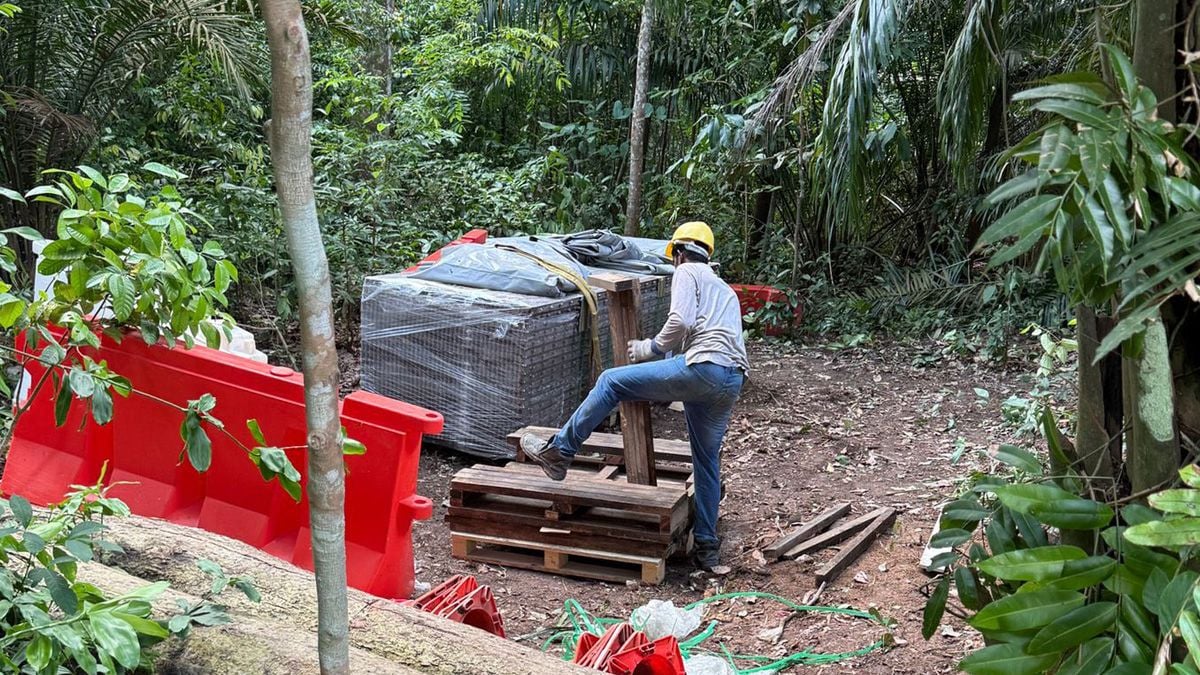
The incident came to public attention on 2 June 2026, when a member of the public posted photographs on social media showing contractors moving construction materials onto flattened soil and felled saplings at the site.
The contractor had been engaged to carry out cyclical replacement of the boardwalk at Lower Peirce Reservoir, and sought a location near the trail entrance to store materials.
Kwok said NParks had communicated to the site supervisor that the proposed storage location — the planting site — was unsuitable, and had identified an alternative site on the condition that no trees or plants would be affected.
Investigations revealed that the clearance was caused by a miscommunication. The site supervisor was on overseas leave and had delegated duties to a project supervisor, who misunderstood the instructions and stored materials at the location NParks had earlier assessed as unsuitable.
"Although the site supervisor had communicated NParks' directions to him, the project supervisor had misunderstood the instructions," Kwok said.
Approximately 40 saplings and shrubs — covering 40.5 square metres of a 165.5sqm planting site — were cleared on 29 May 2026. When NParks discovered the clearance and confronted the contractor, both the contractor and project supervisor admitted their error.
The pair have agreed to bear the cost of replanting and maintaining the cleared plot. NParks completed replanting of the affected area on 9 June 2026, introducing 60 new plants comprising species from the original 2025 planting as well as three new species — food plants for the Raffles' banded langur and a variety of forest birds.
The site had originally been planted on 22 January 2025 by citizen scientists from the Raffles' Banded Langur Working Group, as part of the OneMillionTrees movement, which aims to plant one million trees across Singapore between 2020 and 2030.
Of the five native species originally planted, two were selected as food sources for the langurs: Canthiumera robusta (Green Coffee), which is endangered, and Vitex pinnata (Malayan Teak). The remaining three were the critically endangered Kopsia singapurensis (White Kopsia), as well as Horsfieldia polyspherula and Ixora congesta (Malayan Ixora).
The Raffles' banded langur is one of only two monkey species native to Singapore and is classified as critically endangered.
Primatologist Andie Ang, chairperson of the working group, had organised the planting as part of celebrations ahead of the group's 10th anniversary in 2026. Following the discovery of the clearance, she posted a message to volunteers expressing sorrow.
"To all the volunteers who took extra care in planting each of the saplings, hoping they get to survive and provide shelter and food for our wild animals, I am very, very sorry. We will get an answer," she wrote.
Ang described the volunteers' reaction as one of shock and disbelief. She said the cleared trees had direct value for wildlife habitat and forest connectivity, and that the exercise had given citizen scientists a tangible link between data collection work and conservation action.
While Ang said she would continue supporting such planting exercises, she expressed "mixed and conflicted feelings" following the incident. She questioned whether saplings planted under the OneMillionTrees movement are being actively monitored, and whether the contractor had been suspended.