Singapore launches first national standard for urban tree pruning
Singapore's National Parks Board has launched SS 724, the country's first national standard for tree pruning, requiring contractors on NParks projects to comply from 1 July 2026 or face penalties.
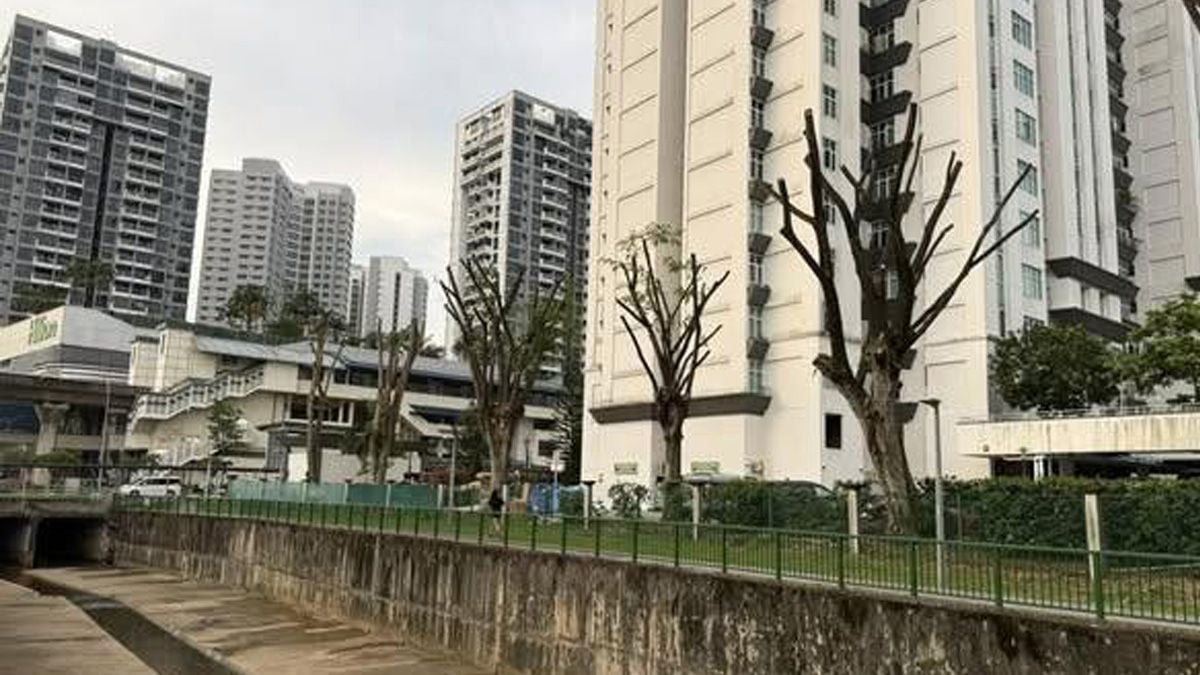
- SS 724 is Singapore's first national standard on tree management, launched 30 June 2026.
- Contractors on new NParks arboriculture contracts from 1 July 2026 must comply with SS 724 or face administrative penalties.
- Thirteen agencies and organisations have committed to voluntary adoption of the standard.

Singapore has launched its first national standard for the pruning of urban trees, aimed at eliminating harmful arboriculture practices that weaken trees and raise the risk of falling branches and toppling trunks — though the move has drawn criticism from community advocates who warn that without legal teeth, the standard may go the way of earlier guidance that was widely ignored.
The Singapore Standard "Code of Practice for Pruning of Trees in Tropical Urban Landscapes" (SS 724) was officially unveiled on 30 June 2026. From 1 July, contractors signing new arboriculture contracts with the National Parks Board (NParks) must comply with the standard or risk administrative charges, a tarnished track record and other penalties.
NParks' group director for streetscape, Oh Cheow Sheng, told media on 30 June that the standard would help a diverse group of tree owners avoid over-pruning — a practice that can structurally compromise trees and increase the likelihood of failure during severe weather events.
Singapore is projected to face heavier rainfall and more intense winds in the coming years as a result of climate change. Oh said SS 724 would ensure that the right pruning interventions are applied, allowing trees to retain stronger structures capable of weathering such conditions.
NParks is responsible for approximately six million trees across the island and outsources most ground maintenance of greenery to contractors. The agency said that without a common standard, levels of expertise and understanding of best practices varied considerably across the industry.
"For instance, some tree owners may request frequent or harsh pruning to deter pest animals or reduce leaf litter," NParks said. Excessive pruning to achieve such objectives, it noted, weakens trees over time.
Martin Tay, a council member of the Landscape Industry Association (Singapore) (LIAS) and a Certified Arborist, said he had observed haphazard pruning across the island over the course of his two decades in the landscaping sector, though the situation had gradually improved in recent years.
"Pruning more doesn't mean it's good for the tree. In fact, actually, the less you prune, the better it is," said Tay.
Developing the standard
The workgroup that developed SS 724 was convened in June 2025 by Enterprise Singapore through the Singapore Standards Council. It was jointly led by NParks and LIAS, and comprised around 20 members drawn from government agencies, town councils, private property owners, arboriculture professionals, landscape companies and training providers.
The workgroup conducted focus group discussions with around 60 industry stakeholders, including landscape companies, facilities managers and managing agents. A public consultation period ran from 7 November 2025 to 8 January 2026 via the Singapore Standards eShop website, with feedback incorporated where feasible.
The result is a set of science-based guidelines covering crown and structural management, pruning techniques and pruning operations. SS 724 addresses how to maintain crown form, manage structural defects such as codominant stems and lion-tailed branches, and execute proper branch removal and reduction cuts, including a three-step method for large branches. Guidelines also cover biosecurity practices to prevent the spread of plant pests and pathogens.
Unlike existing international standards — which are largely developed for temperate climates and species — SS 724 was specifically designed with tropical urban environments in mind. NParks said the standard also positions Singapore as a regional resource for tree care practitioners managing tropical trees elsewhere in the region.
Minister of State for National Development Alvin Tan welcomed the launch in a Facebook post on 30 June, noting that the process had been under way since at least October 2025.
"SS 724 sets out common best practices for tree pruning, tailored specifically to our tropical urban environment. This matters because pruning practices from temperate climates don't always work for our trees here," he wrote. Tan added that the launch affirmed Singapore's regional leadership in arboriculture as the country works towards its City in Nature vision.
Industry adoption
Beyond NParks' mandatory requirements for its own contracts, a further group of government agencies and organisations have committed to voluntarily adopting SS 724 by incorporating it into new tender requirements for arboriculture works.
They include the Defence Science and Technology Agency (DSTA), JTC Corporation (JTC), the National Environment Agency (NEA), Sentosa Development Corporation, the Singapore Land Authority (SLA), Sport Singapore (SportSG), Changi Airport Group, Gardens by the Bay, the Institute of Technical Education (ITE), Lendlease Retail and Ngee Ann Polytechnic.
NParks and LIAS said they would continue engaging facilities managers and management corporation strata titles to encourage adoption of SS 724 for trees on private properties.
To support compliance, both agencies have lined up training programmes including hands-on pruning workshops, updated Workforce Skills Qualifications (WSQ) courses and webinars for arboriculture workers, supervisors, greenery managers and certified arborists. NParks and LIAS will also work with ITE and Ngee Ann Polytechnic to embed the standard into their landscape- and arboriculture-related curricula.
Concerns over enforcement
Not everyone is convinced the standard will deliver meaningful change. Simon John Longman, a private resident who has written extensively on arboriculture issues in Singapore, argued in a series of Facebook posts that SS 724 lacks the legal authority needed to drive real compliance.
As a Code of Practice, the standard carries no statutory or regulatory authority. Compliance outside NParks contracts remains entirely voluntary and depends on individual tree owners writing SS 724 into their own tender documents.
Longman noted that in many cases there may not even be a formal contract — parties may agree on works verbally and informally, without anticipating malpractice. "Without legal teeth, many contractors prioritise speed and cost over proper tree care," he wrote.
Longman drew an unfavourable comparison to the LIAS General Advisory on Tree Pruning, issued in August 2024, which discouraged practices such as topping, lion-tailing and flush cutting but was reportedly ignored across the industry. He warned that SS 724 risked "the same fate as the toothless LIAS advisory, ridiculed in social media in 2025."
He also identified a structural problem at the worker level: even where a certified arborist is engaged to oversee a job, the actual chainsaw operators and bucket crane handlers are often third or fourth-party subcontractors with no formal arboricultural training. Standing supervision, he said, had in many cases been outsourced as well, creating a gap between what a contract may require and what happens on the ground.
Longman further argued that existing legislation may already provide a basis for enforcement that has not been fully utilised. The Parks and Trees Act prohibits acts that cause alteration, damage or destruction to trees within public parks, and he contended that the spirit and letter of the law are clear. However, he suggested that encoding SS 724 into the Act through parliamentary action — which would require amending the legislation — faced a particular obstacle: authorities might then find themselves liable for the actions of their own contractors.
"To permanently stop improper tree care, lack of standing supervision, and malpractices, local advocacy groups continue to push for the legal codification of strict malpractice bans within Singaporean statutory frameworks like the Parks and Trees Act," Longman wrote.
NParks said it is exploring standards in other areas of greenery management, including tree inspection. SS 724 is available for purchase at the Singapore Standards eShop (www.singaporestandardseshop.sg).
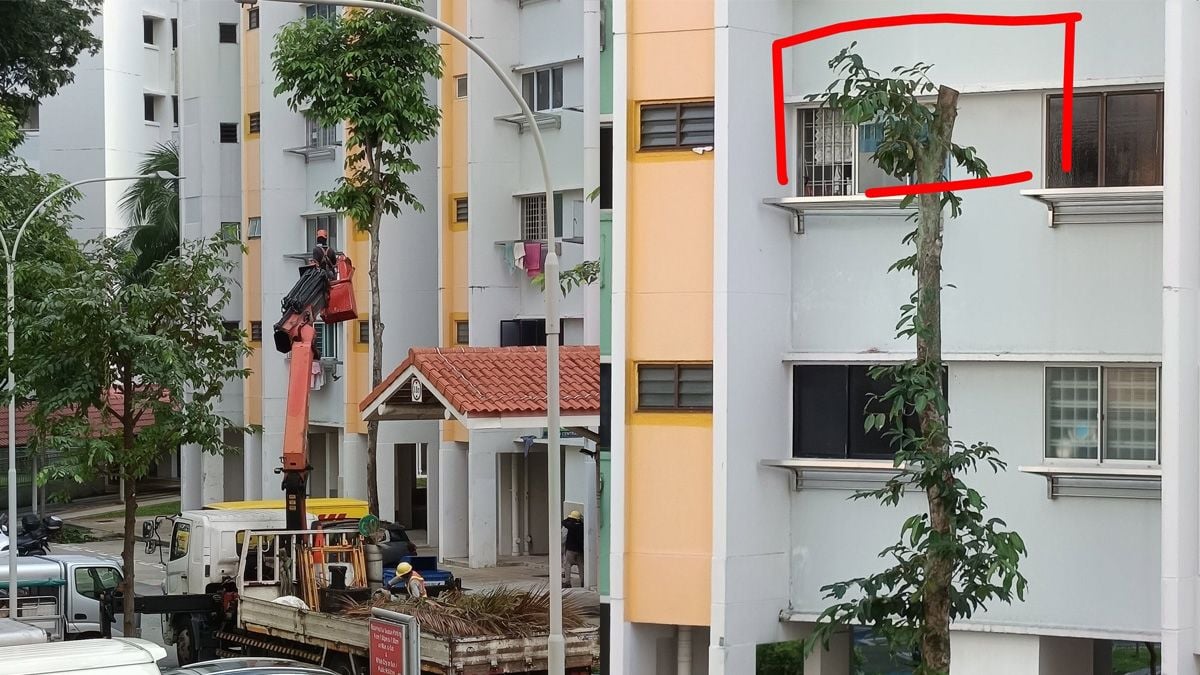
(A tree outside an HDB block photographed before and after contractors removed its crown. The images were posted to a Facebook community group and sent to the local town council and Member of Parliament in June 2026, highlighting concerns over improper pruning practices in public housing estates.)