What the LOO dispute reveals about discretion, legitimacy and “integrity” politics in Singapore
Is the Leader of the Opposition role a stable institution grounded in elections—or a designation that exists at the government’s discretion? A new episode of Politically Speaking explores the political, structural, and moral fault lines exposed by the Pritam Singh case and WP’s refusal to nominate a replacement.
- The podcast frames the Leader of the Opposition (LO) vacancy not as a symbolic absence but as a deeper test of Singapore’s political structure and power dynamics.
- Panelists argue that the integrity narrative used to justify Pritam Singh’s removal is selectively applied and can function as a political tool.
- The discussion questions whether the LO role is grounded in electoral legitimacy or controlled through executive discretion, raising concerns about institutional fairness.

The Prime Minister’s Office has confirmed that the position of Leader of the Opposition (LO) will remain vacant for now, after the Workers’ Party (WP) declined to nominate a replacement following Pritam Singh’s removal from the role. The headlines have largely focused on whether it was “right” or “useful” for WP to nominate someone else—and on the larger claim that the dispute is fundamentally about accountability and integrity in Parliament.
But in the latest episode of Politically Speaking: Parliament, Power, and the Opposition, the panel treated the LO saga as something bigger than a vacancy. The conversation focused on what the LO role actually represents in Singapore’s system, who ultimately controls it, and how “integrity” language functions both as a moral standard and as a political lever.
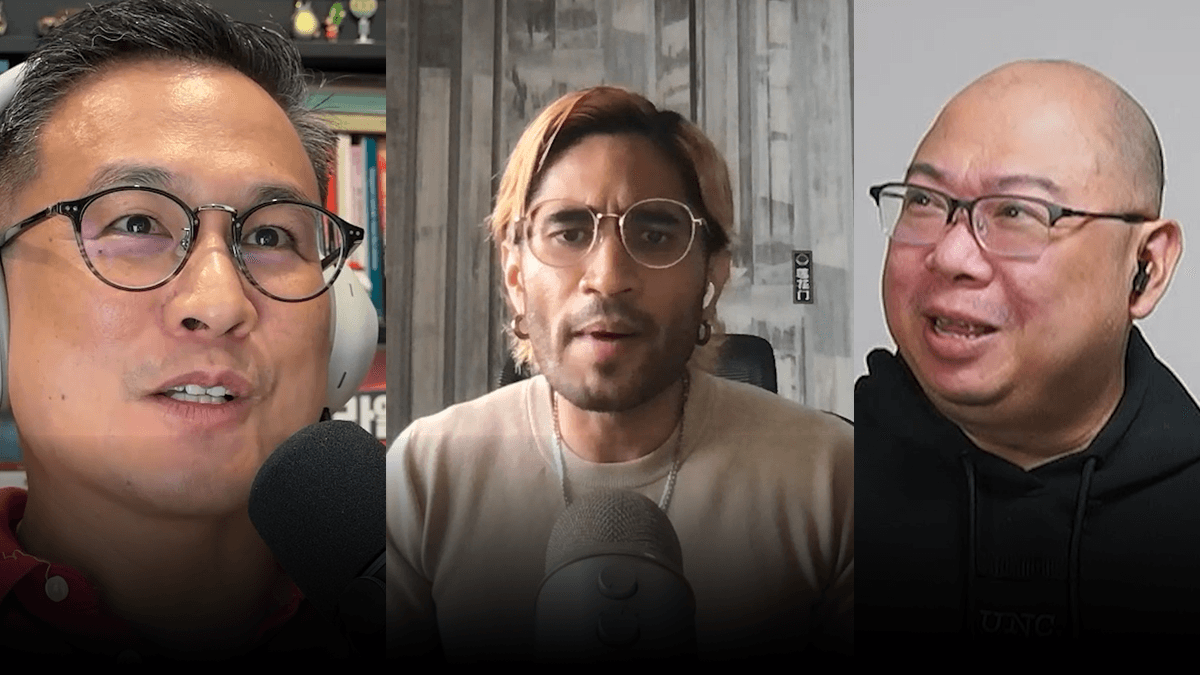
Hosted by Sean Francis Han, and joined by Terry Xu (Editor of The Online Citizen) and Dr Thum Ping Tjin (historian and co-founder of New Naratif), the episode framed the LO issue as a stress test for Singapore’s institutional design, not just a dispute about one individual’s suitability.
Editor’s note: This episode was recorded just before WP issued its statement confirming it would not nominate a replacement LO.
The LO role: not symbolic, and not neutral
The episode opened by emphasising that the LO role is not simply a label. It comes with tangible advantages that matter in practice—particularly in a system where the ruling party sets the tempo of Parliament and the Opposition has limited institutional resources.
Sean Francis Han set out the practical benefits bluntly:
“And while there is a strong symbolic and legitimate dimension of the LO, the designation does come with real advantages. The LO has double parliamentary speaking time, first right of reply, extra staff support, and an office in parliament… as well as additional allowances… and access to confidential briefings on select issues.”
In other words, the LO designation is an operational amplifier. It affects visibility, capacity, and the Opposition’s ability to execute scrutiny as an organised parliamentary bloc.
But the discussion then pushed into a deeper—and more consequential—point: because the LO role in Singapore is not constitutionally entrenched, its existence and its privileges are inseparable from how it is granted, and on whose authority.
That origin matters because it creates structural ambiguity: is the LO a parliamentary institution grounded in electoral legitimacy, or a discretionary designation that can be conditioned, withdrawn, and redesigned by the executive?
Integrity as a principle, and integrity as a weapon
The panel’s central dispute was not whether integrity matters; it was whether “integrity” is being deployed consistently—or selectively, as a political instrument.
Sean posed the key question directly:
“Do you think that this is really about safeguarding Parliament’s integrity or more about politically weakening the opposition’s institutional standing or maybe some mix of both?”
Terry Xu’s response was uncompromising, arguing that the integrity framing collapses if standards appear unevenly applied. He referenced parliamentary exchanges and contrasted how the system treats different controversies:
“So if PAP is not willing to steps to address this issue that everyone has been harping about, then it is really hypocritical. It’s just pure hypocrisy that PAP is saying that… what they are doing towards the Pritam Singh is simply because they want to safeguard integrity and accountability in the parliament, Singapore parliament.”
Terry’s underlying argument was about institutional credibility.
A political system can demand high standards—but if it is seen to enforce them asymmetrically, then “integrity” becomes less a shared baseline and more a selectively activated narrative.
The risk, as implied in the discussion, is that voters begin to treat integrity rhetoric as performative rather than principled.
“What exactly was he convicted of?” — and why that question drives everything else
Dr Thum’s contribution focused on how the case is popularly understood versus how he argued it should be understood. He argued that many people speak as if the conviction is a simple, broad verdict—“he lied to the COP”—but that the conviction turned on something narrower and more contestable.
He began by challenging the common shorthand:
“The first is that what was Pritam convicted of? I think a lot of people aren’t quite clear on this…”
He then laid out his view of the core issue, stressing that it was not, in his telling, about one particular phrase (“take it to the grave”) as the main point of conviction:
“That’s not what he was convicted on… What he was convicted on was his intention for whether she should clarify her lie… The difference between the intentions, which is so small and so marginal.”
And he emphasised the evidentiary dilemma he sees at the heart of it:
“And also, how do you determine? Because there’s only two people there… It’s he said she said no one else was in the room where it happened.”
You can disagree with Dr Thum’s characterisation, but it matters because it explains why the panel saw the LO escalation as political rather than merely ethical. If you treat the conviction as a narrow dispute about intention under a highly pressured fact pattern, then elevating it into a decisive disqualification for the LO role looks, at minimum, like a choice—one that has political consequences beyond the legal finding.
The nine-hour grilling argument, and why it matters to perceptions of fairness
Terry also argued that public understanding of the conviction is incomplete without understanding the Committee of Privileges process itself—especially the dynamics of prolonged questioning and how two statements came to be singled out.
He put it this way:
“Pritam… was found to be misrepresentation to the COP was extracted over a course of nine hours of grilling… It was really two statements that the COP comb through the nine hours of grilling…”
And then he went further, arguing that what the public saw was not a neutral inquiry but a process experienced as adversarial:
“You can see from the video… that it was not a fact-finding process, but more of a witch hunt…”
The reason this point matters (within the episode’s internal logic) is that legitimacy is not only legal; it is also perceived procedural fairness.
Even when institutions act within formal rules, the process can still be viewed as politically motivated if it appears prosecutorial in character, especially when paired with a supermajority environment.
The structural fault line: discretion and control over the Opposition’s institutional standing
At the heart of the podcast was a structural claim: Singapore’s LO role is vulnerable precisely because it sits in a space where discretion is not incidental but foundational. The Government can recognise and resource the LO—but that also means the Government can shape the boundaries of that recognition.
The panel treated WP’s refusal to nominate a replacement as an attempt to step out of that discretionary framework rather than “play along” with it. Terry framed that logic as a strategic refusal to operate on the other side’s terms:
“I think the worst thing that one could do is to play a game on the terms of another. If you feel that the whole rules, the whole circumstances is unfair, just step away from it.”
Whether one agrees or not, that view explains why the episode framed the replacement question as a legitimacy question. If the LO role is treated as something conferred by executive invitation, then filling it may be read as accepting that architecture.
Refusing, conversely, is an attempt to reassert that opposition leadership legitimacy should flow from elections and party determination, not executive discretion.
Even the “privileges” are part of the argument
The discussion also questioned whether some of the LO’s touted benefits are genuine institutional empowerment or political packaging.
Dr Thum argued that “extra speaking time” is only meaningful because Parliament’s rules restrict speaking time in the first place:
“Extra speaking time is actually a nonsense privilege… The reason why speaking time is an issue is because of the PAP limiting the opposition from speaking…”
He then characterised certain aspects of Parliament’s operation as a tightly managed set-piece:
“Parliament today is this set piece where everyone gets up, reads a prepared statement, then sits down.”
The rhetorical point here is not merely that the privileges are insufficient—it is that the system can offer “benefits” that are framed as magnanimity while still remaining fundamentally restrictive. In that framing, the LO role can simultaneously function as recognition and containment: it grants the Opposition a defined lane, but within rules and structures set elsewhere.
Where the discussion lands
The episode ultimately returns to a single unresolved question: is the LO in Singapore a stable institution arising from elections, or a role whose existence—and occupant—depends on executive discretion?
The integrity narrative is powerful, and many voters will find it intuitively persuasive. But the panel’s warning is that integrity cannot be separated from institutional power. In a dominant-party system, standards used to discipline opposition leadership must not only be strict; they must be seen as even-handed, and grounded in mechanisms that do not allow one side to function as gatekeeper of the other’s legitimacy.
If Singapore wants the LO office to mature into a durable feature of parliamentary democracy, the podcast suggests the system may eventually have to do what it has thus far avoided: define the role clearly, constrain discretionary control over it, and decide—explicitly—where legitimacy should come from.