Goh Chok Tong warns against losing talent over political pay concerns
Emeritus Senior Minister Goh Chok Tong emphasised that money should not drive political ambition—but must not deter talent from entering politics, citing the need for Singapore’s long-term governance excellence.

- ESM Goh Chok Tong emphasised the need to attract capable individuals into politics despite high personal financial sacrifices.
- His comments follow the formation of a committee reviewing political salaries in Singapore.
- He warned that Singapore’s future depends on forming top-tier Cabinets to avoid democratic decline.

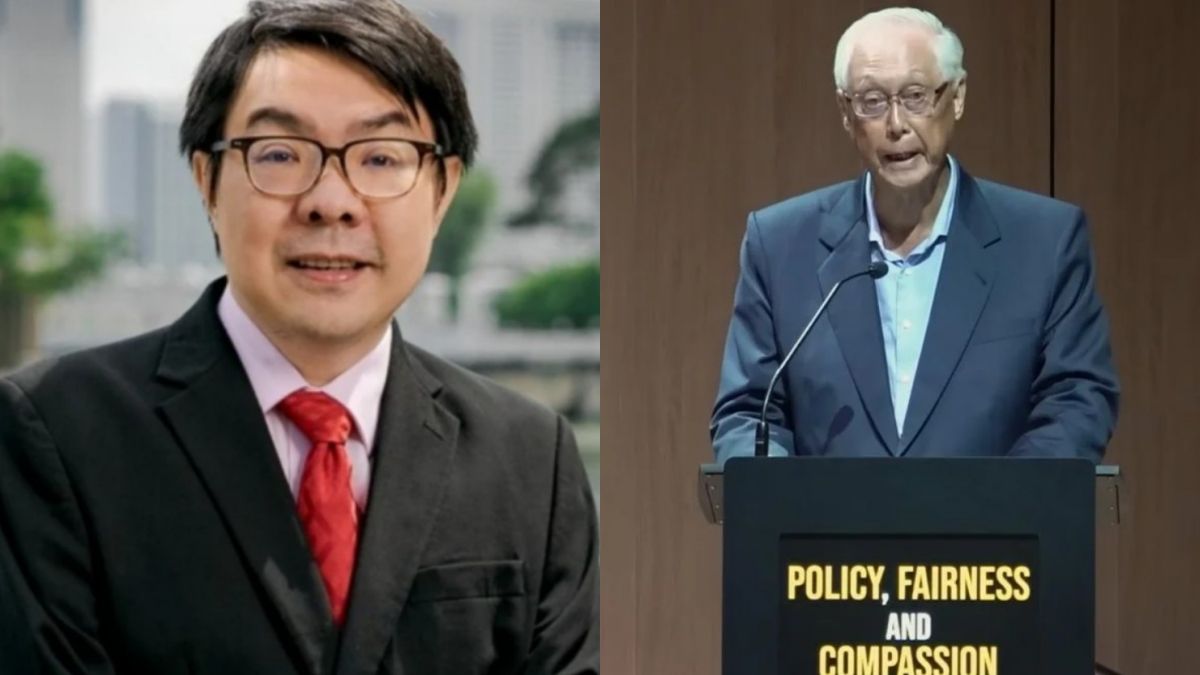
Emeritus Senior Minister Goh Chok Tong has reiterated the importance of attracting the best minds to political leadership, stating that while money must never be the motivation for entering politics, it should not become the deterrent either.
Speaking on 6 February at the launch of a new book by Coordinating Minister for National Security K. Shanmugam, ESM Goh noted that Singapore’s continued success rests on its ability to field the best candidates for public office across generations.
His remarks come shortly after the Government announced a review of political salaries, last adjusted in 2012.
According to ESM Goh, Singapore’s political, economic and social environment has evolved, and it has become increasingly difficult to convince talented individuals at the peak of their careers to join public service.
“It does not bode well for Singapore if the most capable among each generation of Singaporeans shy away from public service,” he warned.
ESM Goh highlighted Shanmugam’s decision to leave a highly lucrative legal career when he entered politics in 2008, driven by a personal understanding of inequality and a strong sense of public duty.
However, he cautioned that similar cases are becoming rare. The financial opportunity cost of public service—particularly at ministerial level—can be in the tens of millions over the span of two decades.
“It will not be easy to find another Shanmugam who is willing to forgo tens of millions of dollars over a 20-year period as minister,” said ESM Goh. “And the Cabinet needs more than one Shanmugam.”
Beyond monetary concerns, potential candidates are deterred by intensifying public scrutiny and social media exposure. Many no longer feel the same obligation to give back to the country as previous generations did, he added.
Some even assume the current system will continue to function effectively regardless of who is in charge, a belief ESM Goh described as risky for Singapore’s future.
He also emphasised that attracting capable individuals to politics must be viewed as a systemic priority, not a political luxury.
“There must be enough of them to form a top-class Cabinet. Without a top rate government, the Singapore story will end badly,” he said.
ESM Goh’s comments coincide with the recent formation of an eight-member committee to review the salaries of political office-holders, including ministers and Members of Parliament.
The committee is chaired by Gan Seow Kee, chairman of Singapore LNG Corporation and alternate member of the Council of Presidential Advisers. The committee’s findings will be submitted to the Government upon completion, said Coordinating Minister for Public Services Chan Chun Sing on 12 January.
The last major revision to political salaries was based on a 2012 review, which resulted in the current framework. A follow-up committee chaired by accountant Gerard Ee in 2018 proposed annual salary adjustments in line with benchmark wages, which had risen 9 per cent since 2012.
Despite this, the Government chose to retain the existing pay structure at the time, citing economic uncertainties.
In a written reply to parliamentary questions on 3 February 2026, Minister-in-Charge of the Public Service Chan Chun Sing stated that the salary framework for political office holders in Singapore has remained unchanged since 2012, with entry-level ministers continuing to receive a norm annual salary of S$1.1 million.
The response was addressed to Workers’ Party Non-Constituency Member of Parliament Eileen Chong Pei Shan, who had asked for details on the total annual compensation range for political office holders between 2018 and 2024, which was sidestepped by Minister Chan in his reply.
ESM Goh noted that public sentiment toward political salaries has often been negative, but warned that avoiding the issue could have long-term consequences.
He referred to Shanmugam’s 2007 parliamentary speech, in which the latter supported competitive wages for ministers despite public unease, stressing that political capital had to be spent for the long-term good.
To maintain the country’s democratic strength, the Government must engage the public on why appropriate remuneration is necessary to sustain quality leadership, said ESM Goh.
He further warned that many developed democracies have become dysfunctional due to leadership deficits, and that Singapore cannot afford a similar fate.