Singapore wholesale sales dip on domestic weakness as foreign demand lifts electronics
Singapore’s domestic wholesale sales slipped 1.1% in the fourth quarter of 2025, weighed by sharp falls in household equipment and construction materials, while foreign wholesale sales rose 1.8%, led by a surge in electronic components.

- Domestic wholesale sales fell 1.1% year-on-year in the fourth quarter of 2025, though sales excluding petroleum rose 1.1%.
- Household equipment and furniture, plus metals, timber and construction materials, recorded the steepest domestic declines.
- Foreign wholesale sales rose 1.8%, led by a 55.7% jump in electronic components as global demand strengthened.

Singapore’s domestic wholesale sales fell 1.1% year-on-year in the fourth quarter of 2025, reflecting mixed performance across industries, according to the Singapore Department of Statistics’ Wholesale Trade Index release dated 20 February 2026.
The department said weakness was concentrated in sectors tied to household and construction demand, while some trading and machinery segments recorded strong gains.
On a quarter-on-quarter basis, domestic wholesale sales rose 1.4% in seasonally adjusted terms. Excluding petroleum, domestic wholesale sales increased 3.1% from the previous quarter, the release said.
At the same time, Singapore’s foreign wholesale sales grew 1.8% year-on-year in the fourth quarter. In seasonally adjusted terms, foreign wholesale sales rose 3.8% from the previous quarter.
Excluding petroleum, foreign wholesale sales increased 8.2% year-on-year, suggesting stronger momentum in non-oil segments than the headline figure implies.
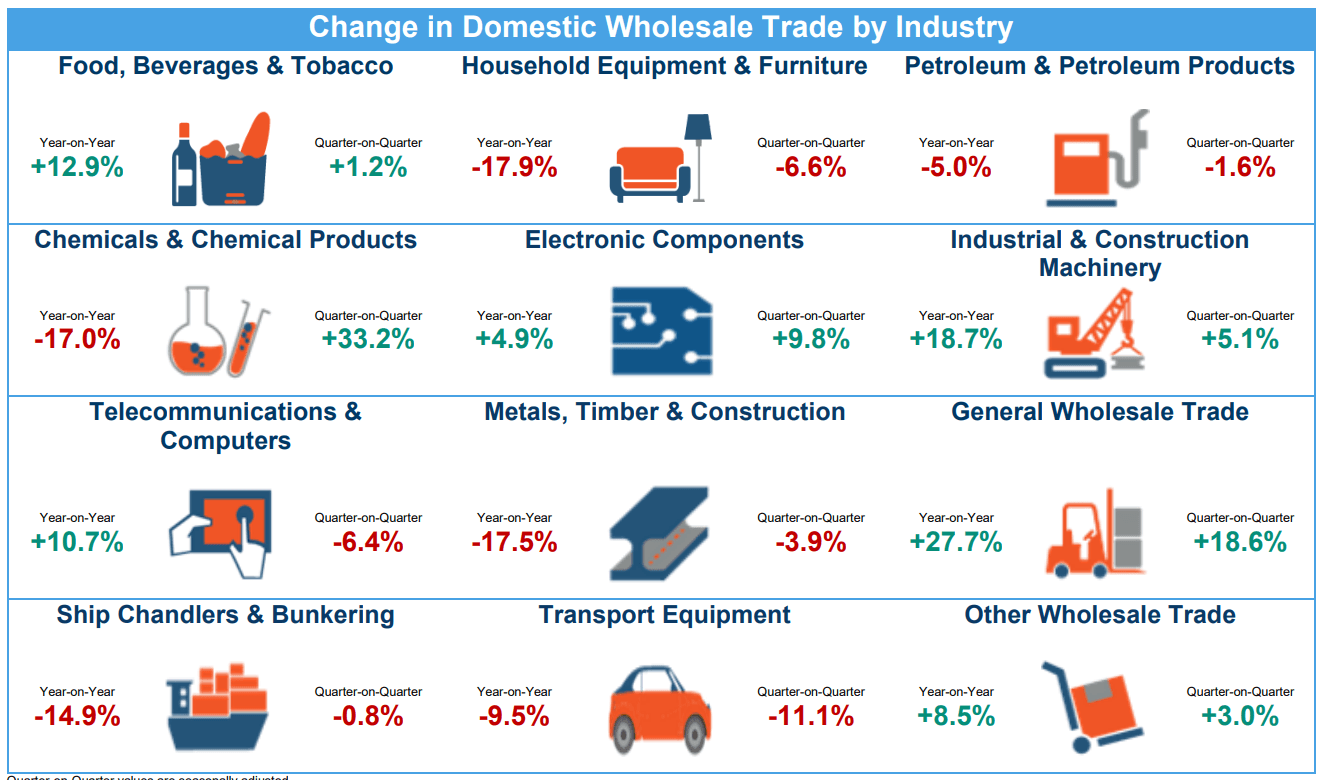
Domestic performance varied sharply by industry, with the household equipment and furniture sector recording a 17.9% year-on-year decline. The department attributed the fall to weaker demand for household electrical appliances.
The metals, timber and construction materials industry also saw a steep decline of 17.5% year-on-year, which the department linked to reduced demand for metals and metal ores.
Other domestic segments also registered declines. Transport equipment sales fell 9.5% year-on-year, which the release said reflected reduced sales of motor vehicles.
Ship chandlers and bunkering sales dropped 14.9% year-on-year in domestic terms, while petroleum and petroleum products fell 5.0% year-on-year, according to the same release tables.
Offsetting these declines, the general wholesale trade segment recorded 27.7% year-on-year growth in domestic sales. The department said this reflected higher sales of commodities.
Domestic sales in industrial and construction machinery rose 18.7% year-on-year, supported by increased sales of industrial machinery and equipment, it added.
Several other domestic categories posted gains, including food, beverages and tobacco at 12.9%, and telecommunications and computers at 10.7% year-on-year. Electronic components rose 4.9% year-on-year domestically.
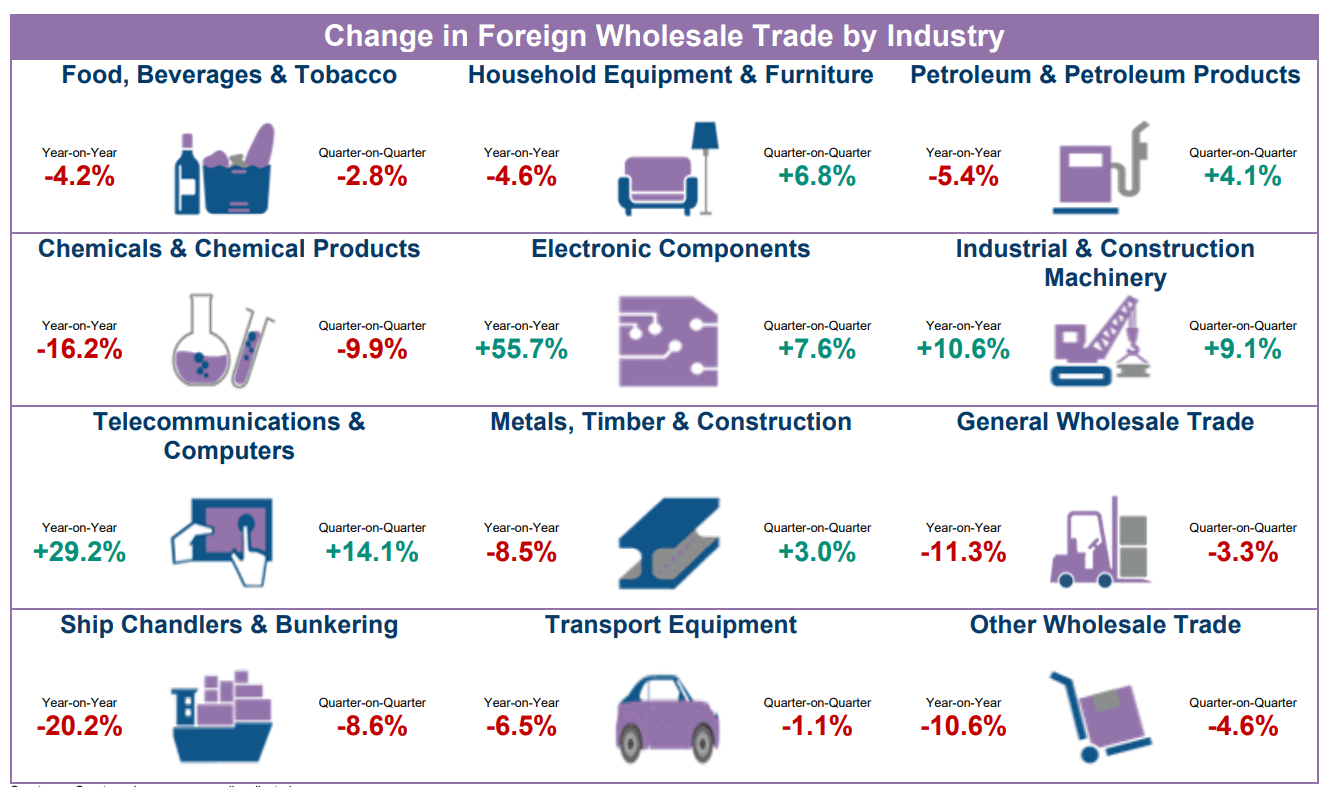
In foreign wholesale trade, the strongest growth came from electronic components, which surged 55.7% year-on-year. The department said the rise reflected increased global demand for electronic components.
Foreign sales of telecommunications and computers increased 29.2% year-on-year, which the department attributed to stronger demand for computer software and accessories.
Foreign sales of industrial and construction machinery rose 10.6% year-on-year, while petroleum and petroleum products declined 5.4% year-on-year, the release tables showed.
Not all external-facing categories benefited from improved demand conditions. The ship chandlers and bunkering industry recorded the largest foreign-sales decline, falling 20.2% year-on-year due to reduced sales of bunker fuel, the department said.
Other foreign wholesale categories that declined year-on-year included general wholesale trade at 11.3%, other wholesale trade at 10.6%, and metals, timber and construction materials at 8.5%, according to the fourth-quarter tables.
The Wholesale Trade Index is compiled by the Department of Statistics to track quarterly sales performance in the wholesale trade industry, covering both domestic wholesale trade and foreign wholesale trade, which includes offshore merchandise and trade-related flows such as re-exports and transhipment cargo.
The department said the index measures changes in sales values at current prices, which can reflect shifts in both prices and quantities, while separate volume measures remove price effects.