NTU students raise anti-bullying awareness among primary school parents
NTU students behind “Be Bully Aware” are bringing anti-bullying awareness to parents of primary school children, after a survey found strong concern but gaps in confidence. Their outreach comes amid heightened parliamentary attention on bullying in 2025.
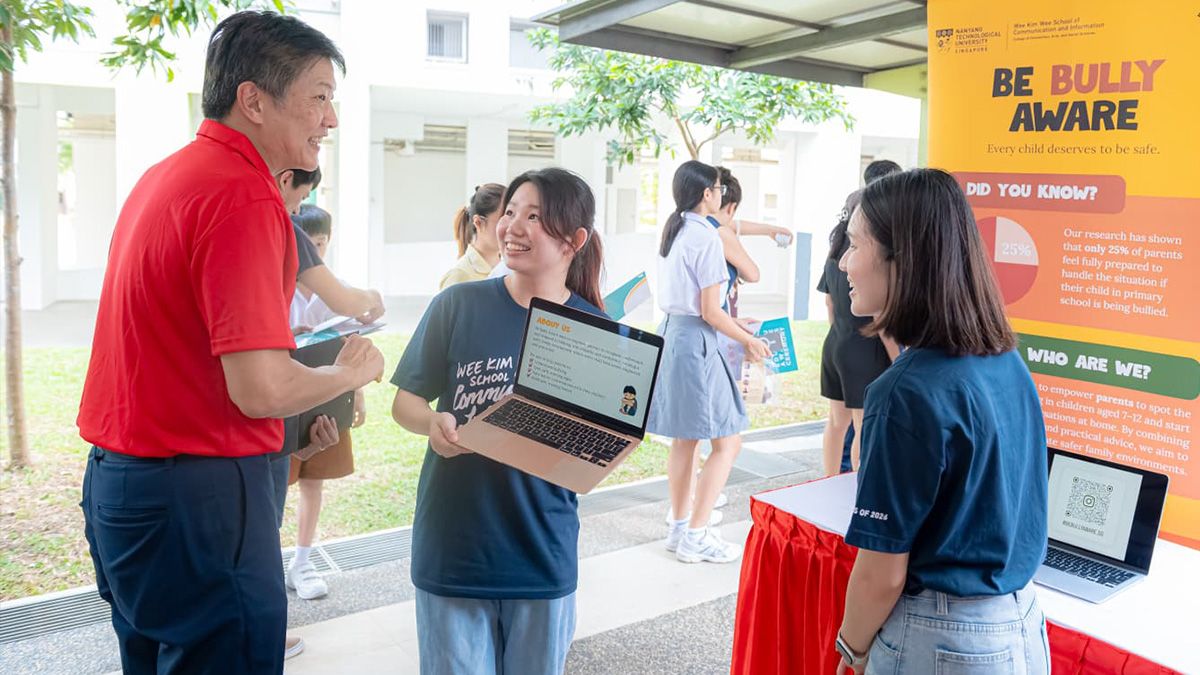
- NTU Final Year Project students launched “Be Bully Aware” to help parents recognise bullying signs and respond appropriately.
- Their survey indicates parents see bullying as serious, but many want more guidance on talking about bullying and responding.
- The campaign’s parent-focused push comes as bullying drew parliamentary attention in 2025, including discussion of MOE monitoring, incident rates, and school–home partnerships.

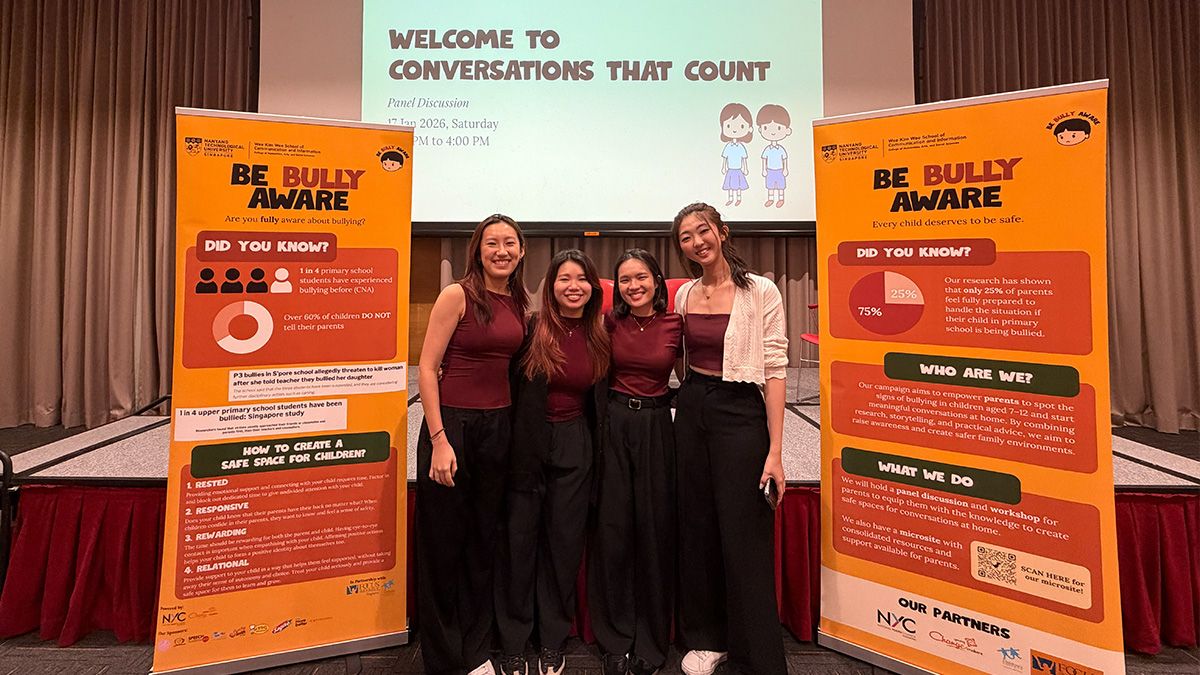
SINGAPORE — A group of university students have launched a youth-led public awareness campaign, Be Bully Aware, to help parents of primary school children aged seven to 12 recognise signs of school bullying and respond in ways that support their children.
The campaign aims to strengthen parents’ confidence to start difficult conversations early, based on concerns that bullying can be underreported and that its effects can extend beyond immediate emotional or physical harm.
The initiative was sparked by the personal experience of team member Tessa, who was bullied in both primary and secondary school, and wanted to prevent other children from “suffering in silence” by equipping parents with practical tools.
The campaign is led by Final Year Project students from Nanyang Technological University’s Wee Kim Wee School of Communication and Information.
What the students found
As part of their primary research, the Be Bully Aware team surveyed 137 parents and caregivers of primary school children.
The findings reveal that verbal and social bullying are the most pervasive forms in primary settings: 114 respondents believe verbal bullying (name-calling, insults) is occurring, followed by social bullying (exclusion, rumors) at 99, and physical bullying at 98.
Awareness of the issue’s severity is nearly universal, with 91% of parents (104 of 114) agreeing that bullying causes long-term emotional and mental health harm.
Despite this, only 17.5% of respondents feel schools are doing enough for prevention, while 41% remain neutral, signaling a significant lack of transparency or confidence in school-led safeguards.
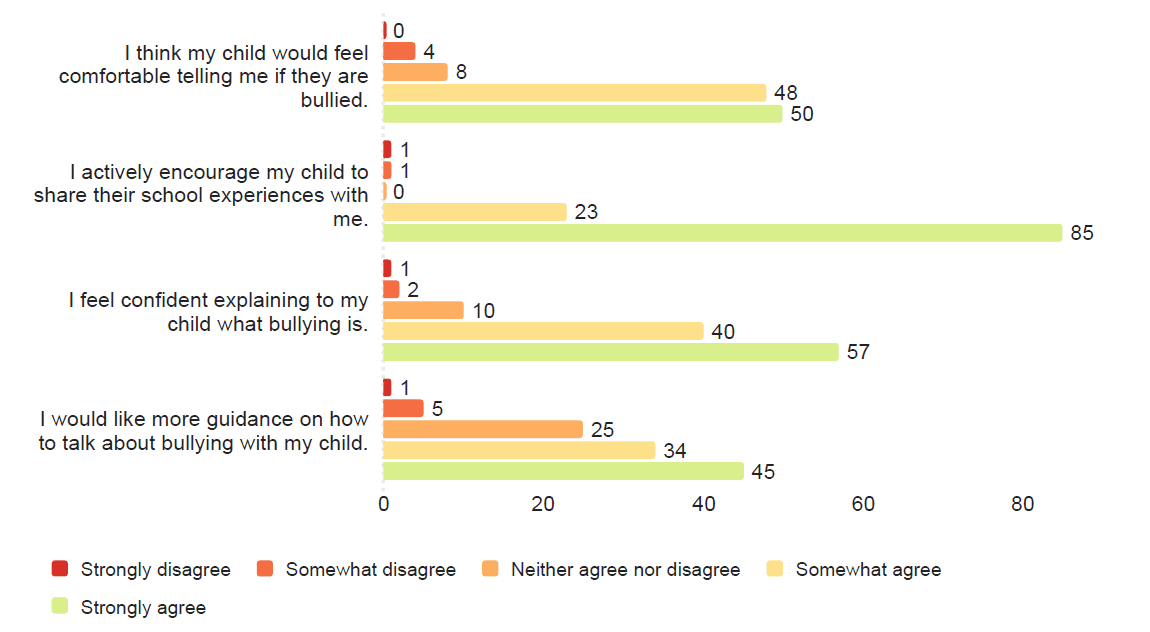
The survey highlights that parents are highly proactive but feel technically under-equipped to handle the nuances of modern bullying.
While 80% of parents initiate daily check-ins with their children and nearly half discuss bullying regularly, 71% admitted they need more guidance on how to conduct these conversations.
Furthermore, roughly 63% of parents (65 out of 103) reported that their child has already experienced bullying.
Qualitative accounts from these parents describe discovering the abuse through visible injuries, seeing their children cry over WhatsApp messages, or hearing about name-calling on school buses.
A critical "preparedness gap" was identified in the aftermath of these incidents.
While parents' immediate instincts were to contact form teachers or discipline masters, 73% of all respondents expressed a clear need for more practical resources and step-by-step guidance on how to respond.
Parents reported difficulties in knowing how to empower their children to overcome fear, with some noting they were "not sure how to make [their child] understand there's nothing to be afraid of".
This data points to a strong demand for actionable scripts and clearer support pathways to bridge the gap between parental concern and effective intervention.
What they have been doing to spread awareness
In response, the students rolled out ground activations, beginning with a panel discussion on 17 January and a hands-on workshop on 31 January, drawing close to 100 parents in total, according to the team.
They also held activations at Fernvale Community Centre’s Edusave Award ceremony, which they said enabled them to reach over 1,400 parents through a major community touchpoint.
The campaign is continuing through March with additional outreach targeted at heartland communities, with the team positioning parental confidence as a key lever for earlier intervention and stronger support at home.
Beyond events, the team said it translated survey insights and expert advice into actionable content frameworks and social media materials that focus on common parental gaps and practical communication approaches.
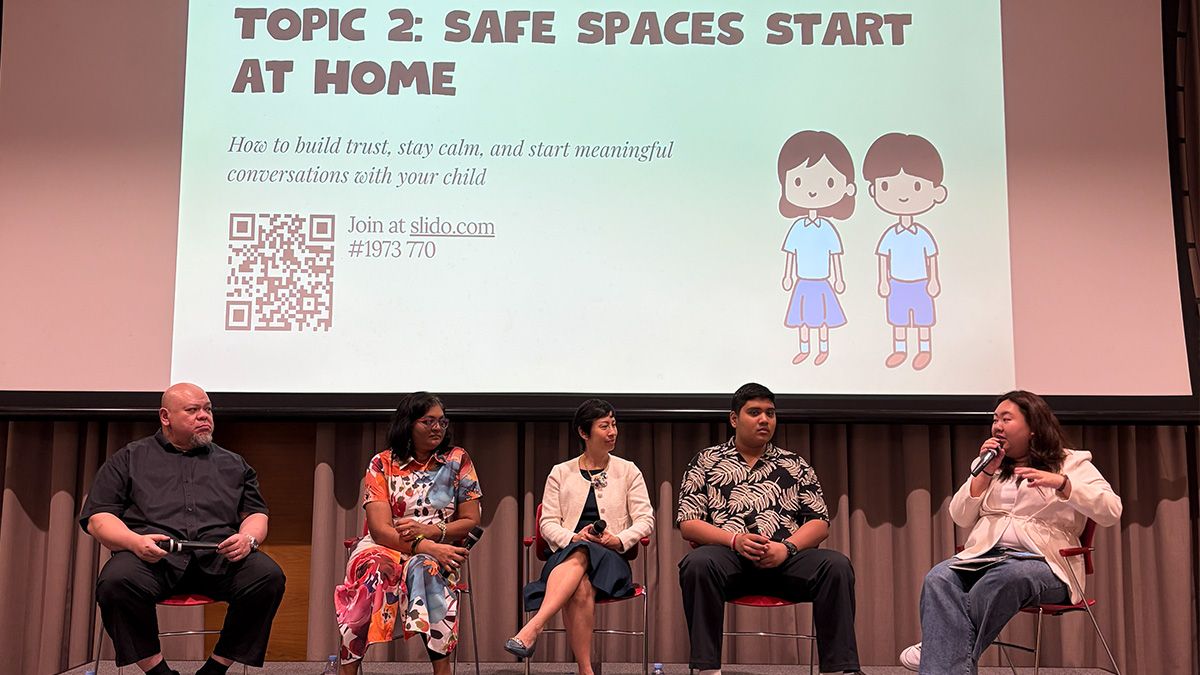
They also curated resources on a microsite, including the Tinkle Friend helpline and Health Promotion Board parenting resources, to provide parents with immediate support pathways beyond campaign events.
To extend reach, the students said they are partnering with Singapore Children’s Society, connecting interested parents to Bullying-Free Programme workshops for structured guidance and training.
They said a comprehensive Final Year Project report with NTU will consolidate research findings, campaign outcomes, engagement metrics and recommendations on strengthening parental preparedness in anti-bullying conversations.
Parliamentary context
Bullying and hurtful behaviour in schools was repeatedly raised in Parliament in 2025, as MPs questioned how incidents are detected, managed and communicated, and how parents can be better supported as partners in prevention and response.
On 4 February 2025, then Education Minister Chan Chun Sing responded in Parliament amid public concern following widely shared reports of bullying at Admiralty Secondary School in January 2025.
In his reply, Chan said MOE monitors bullying and violence cases reported to, or identified by, schools across online and offline settings, and cited an average of about two bullying incidents per 1,000 students per year in secondary schools.
Chan also cautioned that viral social media posts can heighten sensitivities and spur “vigilante” actions, which may complicate school interventions and undermine rehabilitative and restorative approaches.
In September 2025, Education Minister Desmond Lee said recent media and online reports had “renewed the spotlight” on bullying and hurtful behaviour in schools, while stressing the role of parents and families as key partners.
Lee added that MOE had been conducting a comprehensive review since early 2025 and was consulting the public on school culture and processes, values education, resourcing and capacity, and strengthening school–home partnerships, with recommendations targeted for the first half of 2026.