He Ting Ru urges Singapore to prioritise ‘wealth with health’ in Budget 2026 debate
In Parliament on 25 February 2026, Workers’ Party MP He Ting Ru argued Budget 2026 should focus on societal health, calling for clearer population planning, stronger support for caregivers, interventions for smartphone-era harms, and deeper commitments to nature and blue spaces.
- He Ting Ru said Singapore should aim to be “a healthier society”, not simply a wealthier one, and framed her proposals around demographics, digital well-being, and environmental well-being.
- She pressed for clearer population planning, including more granular regional projections, arguing uncertainty about crowding can fuel stress and anxiety.
- She called for stronger support for caregivers and domestic workers, and proposed more visible, science-informed interventions on social media and AI’s societal impacts.

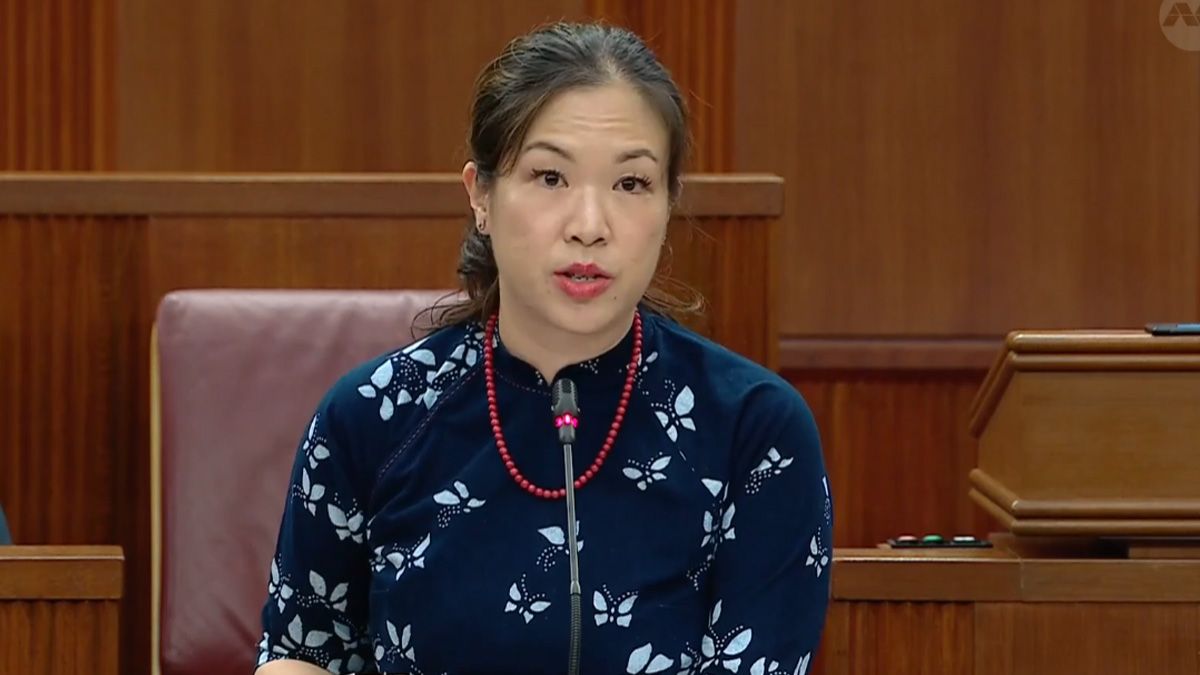
He Ting Ru, the Workers’ Party MP for Sengkang GRC, used her speech in Parliament’s Budget 2026 debate on 25 February 2026 to argue that Singapore’s success should be judged by societal health, not material wealth alone.
She opened by describing Singapore as a country of “extraordinary monetary wealth”, while warning that some residents still face sharp economic pressures, including wage gaps between blue-collar workers and PMETs, and graduates struggling to secure first jobs amid offshoring and tighter multinational spending.
Referring to the “Us Together” theme she raised at the Opening of Parliament, she said she wanted to expand on what collective responsibility should look like as Singapore moves beyond “early nationhood”.
At the core of her argument was the line “Health is wealth”, coupled with a call to make Singapore “a healthier society to live in, rather than simply a wealthier one”. She reiterated her earlier push to look beyond GDP through dashboards and social-development indicators.
She structured her speech around three “pillars” of societal health: measuring demographics, ensuring well-being in the smartphone era, and supporting environmental well-being. She linked these to everyday lived experience, from crowded commutes to children’s “happiness and flourishing”.
On population pressures, she said Singaporeans could “answer” the question of demographic limits simply by taking the Northeast MRT Line at peak hour. In Mandarin, she described the crush of being squeezed between passengers and how this makes residents wonder if the country is nearing its limits.
He Ting Ru argued that the difference between a crowded train and an “intolerable” one is not only passenger numbers, but whether commuters believe there is “a timetable and a plan” behind the system. She said this sense of management affects comfort and confidence.
She pointed to the government’s position that 6.9 million remains a “planning parameter” for the 2030s, while population size depends on trends and needs. But she said residents want specifics: what infrastructure is being planned at that parameter, and when it starts producing discomfort.
While noting repeated assurances that Singapore has “no population target”, she said statements such as being “significantly below 6.9m by 2030” do little to ease anxiety about what daily life might look like in five, ten, or more years.
He Ting Ru warned that avoiding direct conversations about limits may “backfire”, creating visible uncertainty that raises anxiety and dampens positive emotions. She urged greater clarity to restore a sense of control for people living in high-density estates.
As a concrete step, she asked whether the government would consider releasing population projections for each region as part of URA plans. She cited research suggesting stress responses depend less on actual density than on whether people believe crowding is being managed.
She said granular projections could both demonstrate active planning to tackle crowding and help communities advocate for “urban-related well-being”, including access to nature and “blue spaces”. Her framing presented planning transparency as a public mental well-being issue, not only an infrastructure one.
Turning to demographics and care, she described a “rising dependency ratio megatrend” and argued caregiving depends on “presence, trust, and reciprocity”. In her view, care is “not transactional”, and overly scheme-driven responses risk widening what she termed a “humanity gap”.
To illustrate, she gave examples of people who receive formal support yet still feel isolated or overwhelmed: a daughter whose disabled parent gets the Home Caregiving Grant but who still feels alone, and a parent given new LifeSG credits but burnt out by constant school messaging.
She also described workplace culture gaps, such as employers who tick “flexible work arrangement” boxes but judge staff for using them. Policies can be “efficient”, she said, yet still miss deeper human realities of caregiving and interdependence.
He Ting Ru cited a 2018 Journal of Development Economics study linking Beijing’s vehicle licence plate lottery to fewer births, using it as a caution that people respond to policies in complex ways that are hard to simulate. She argued for less fixation on optimisation.
While acknowledging progress, including enhanced parental leave introduced the previous year, she said more must be done to ensure workers who provide unpaid care do not feel leave-taking will limit careers or brand them as “difficult” with “scheduling problems”.
On hired domestic labour, she said Singaporeans rely heavily on live-in help and must be responsible for workers’ welfare “because it is the right thing to do”. She asked whether a rule introduced in 2021—one non-compensable rest day a month—has been assessed as sufficient.
She also urged progress on expanding non-live-in, part-time domestic work under the Household Services Scheme (HSS). With basic child-minding services no longer supported with manpower concessions under the HSS pilot from the next month, she asked if providers were raising awareness of broader HSS services.
He Ting Ru then shifted to “societal health in the smartphone era”, saying scrutiny of social media, online games and AI has grown. Beyond laws addressing discrete harms, she argued Singapore needs interventions that address harms caused by digital environments themselves.
She warned that the risks extend beyond youth, referencing an Economist article about rising smartphone addiction among older people. She said scientific evidence indicates children’s brains, in particular, are not sufficiently developed to handle such environments.
Citing social psychologist Jonathan Haidt, she argued unsupervised offline play has sharply declined and been replaced by near-limitless virtual interaction, weakening the development of social and coping skills. She also referenced debate about the Flynn Effect plateauing or reversing.
Noting that other jurisdictions are proposing child social media bans, she pointed to Australia’s laws coming into effect in December the previous year, and said countries including Spain, India, Denmark, Norway, Malaysia and the UK had signalled similar intentions.
She urged Singapore to take “clearer, scientifically-informed interventions”, including setting up a select committee to study whether a ban is appropriate. She argued this should happen alongside ongoing government study, and said select committee hearings could provide public participation and visibility.
On generative AI, she noted the Budget announced wide-ranging support, but said many people worry about what AI means for culture, work, and “what it means to be human”. She suggested the risk is not that AI is better, but that it is cheaper and faster, governed by models people cannot access.
She cited a Milieu Insight survey from the previous year in which 43% of respondents were concerned heavy AI use could lead to a loss of “human touch”. She said government responsibility includes regulation, financial support, and its own adoption choices.
Her first proposal was that the new National AI Council include representatives from societal sectors at high risk of adverse effects, not only those driving industrial adoption. She said social scientists and psychologists appear absent, and called for representation from MCCY and MOE.
She referenced the UK’s AI Council (2019–2023) as an example of a body that included industry, public sector and academia, and focused on public confidence and frameworks for safe, fair, legal and ethical data-sharing. She framed this as aligning with “Us Together”.
Her second proposal was for education to incorporate the latest findings on AI’s impact on learning. She cited an MIT Media Lab study from the previous year suggesting overreliance on AI may reduce functional brain connectivity and memory recall, with stronger effects in developing brains.
She also cited the UAE’s “Safe and Responsible Use of AI in Classrooms” manual, which she said limits generative AI use to settings with direct teacher oversight. She argued these developments should inform Singapore’s approach even as AI use expands.
In her final section on environmental well-being, she welcomed the goal for all households to be within a 10-minute walk of a park by 2030. But she urged extending ambitions to access “blue spaces” such as seas and lakes, citing studies linking them to mental restoration.
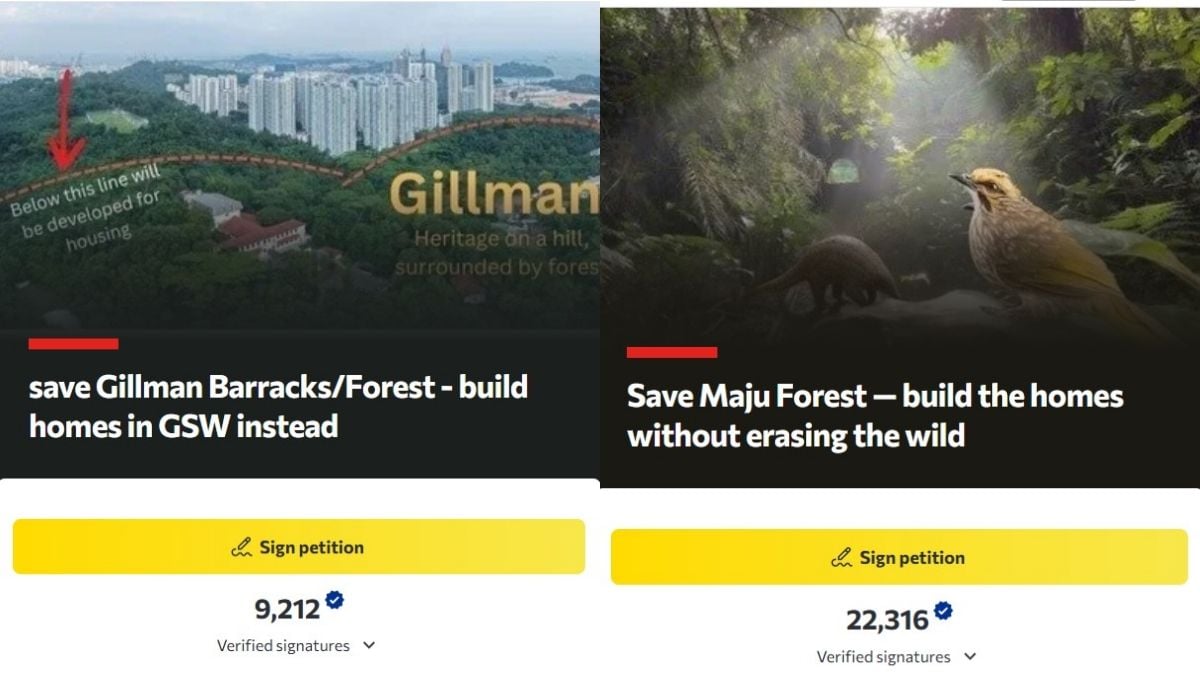
She also called for higher-quality engagement with nature conservation groups, saying feedback suggests some consultations feel one-way rather than deep discussions where concessions are made. She referenced the 2024 Singapore Terrestrial Conservation Plan’s call for clear legal boundaries for protected areas.
He Ting Ru closed by arguing Singapore must confront not just fiscal costs but “human costs” that do not appear on balance sheets or GDP. She listed the caregiver without respite, the child distressed by a digital world that never switches off, and residents watching wild spaces disappear.
She urged Singapore, under an “Us Together” ethos, to prioritise choices that make the country “a healthier society” and “a healthier home”, warning that “wealth without health, is a house that is not a home”.