More than 30 Singapore satellites launched as new space agency targets specialist talent
Deputy Prime Minister Gan Kim Yong confirmed in Parliament that Singapore has launched more than 30 satellites to date. This disclosure comes as the new National Space Agency of Singapore (NSAS) prepares to ramp up specialist recruitment over the next five years.
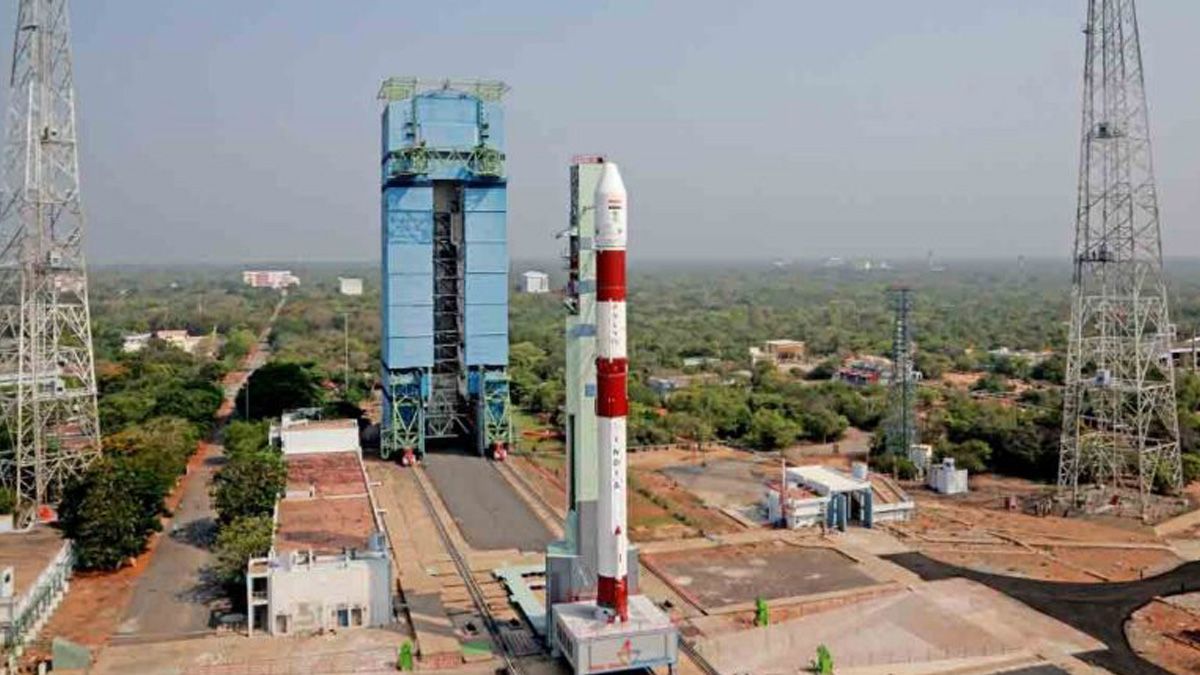
- Singapore has launched more than 30 satellites over two decades, with three Earth Observation units currently co-owned by the Government and ST Engineering.
- The National Space Agency of Singapore (NSAS) will begin operations on 1 April 2026, ramping up its workforce over five years across technical and regulatory fields.
- New private sector developments include the NeuSAR-2 constellation, with four commercial satellites expected to be fully operational by 2030.

Singapore has successfully launched more than 30 satellites over the past two decades, representing a steady expansion of the nation's orbital capabilities.
This figure was disclosed in a written reply to Parliament on 24 February 2026, providing the first comprehensive tally of the Republic’s satellite footprint ahead of the formal launch of its national space agency.
The disclosure was made by Deputy Prime Minister and Minister for Trade and Industry Gan Kim Yong in response to questions from West Coast–Jurong West GRC MP Ang Wei Neng.
Mr Ang had sought a breakdown of satellite ownership between the public and private sectors, as well as the specific recruitment strategies for the National Space Agency of Singapore (NSAS) over the coming three years.
Mr Gan noted that the majority of these launches were conducted by academia and the private sector for purposes including technology demonstration, communications, and Earth observation.
The Minister clarified that the Government currently co-owns three Earth Observation satellites with ST Engineering, a partnership intended to serve both commercial requirements and national needs.
The Minister did not provide the requested specific data on the number of satellites owned completely by the private sector. Instead, he highlighted the "steady pipeline" of upcoming launches as the sector matures.
He specifically cited ST Engineering’s plans to launch the NeuSAR-2 constellation, which will consist of four small Synthetic Aperture Radar (SAR) satellites, reaching full operational status by 2030.
Turning to the establishment of the NSAS, the Minister maintained that the agency will initially be staffed by officers from the existing Office for Space Technology and Industry (OSTIn). However, the agency plans to progressively ramp up its workforce over the next five years. Recruitment will target specialists in space technology, geospatial analytics, project management, and international relations.
The Parliamentary update builds upon the institutional backdrop first detailed by the Ministry of Trade and Industry on 2 February 2026. At that time, Minister for Manpower and Minister-in-charge of Energy and Science and Technology Dr Tan See Leng announced that the NSAS would be established under the aegis of the MTI to consolidate Singapore’s space ambitions.
According to the earlier press release, the NSAS will officially begin operations on 1 April 2026. The agency is tasked with four primary functions: strengthening the research and development ecosystem, developing the local space industry, advancing international partnerships, and creating a regulatory framework that ensures space safety and sustainability.
The establishment of the agency comes as the global space economy is projected to reach US$1.8 trillion by 2035. Singapore currently hosts approximately 70 space companies employing around 2,000 professionals. The Government has committed over $200 million to space R&D since 2022, focusing on niches like micro-electronics and precision engineering to capture emerging global opportunities.