Singapore's nuclear pivot is not a question — it has already been answered
Singapore has spent fifteen years saying it is "studying" nuclear energy. The agreements it has signed, the funds it has committed, and the long-term waste stewardship that nuclear power inevitably entails suggest the country may already be further along that path than the public debate reflects.
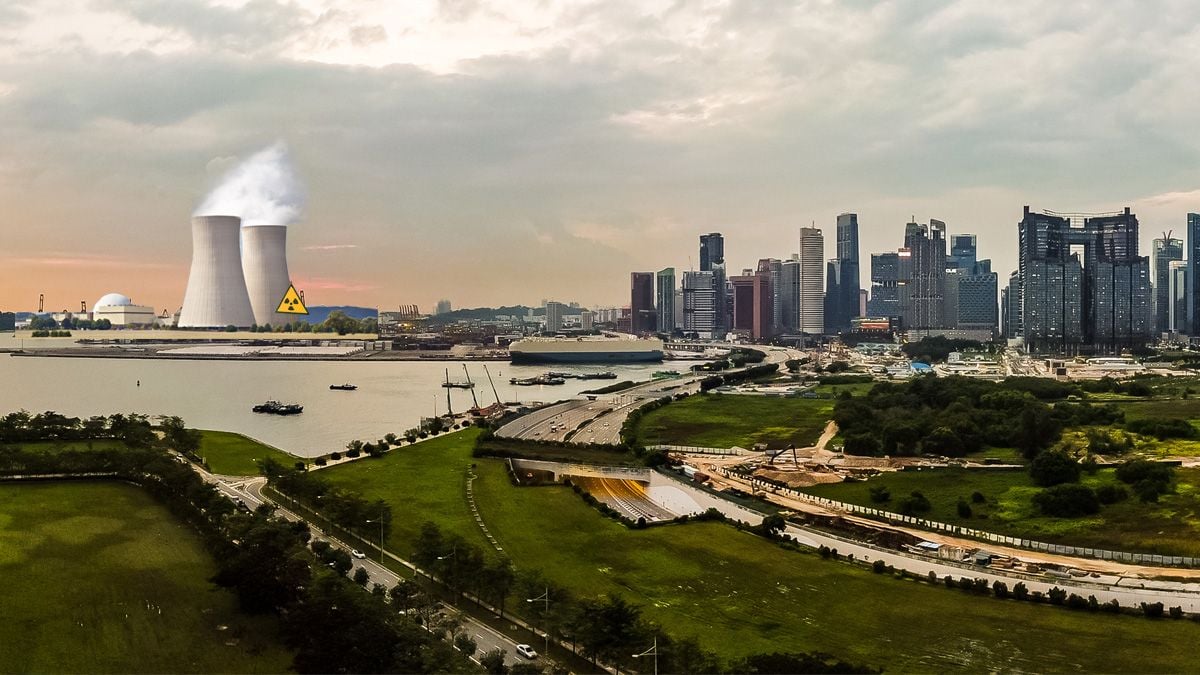

On 15 March 2026, Dr Tan See Leng stood before an energy security forum in Tokyo and told the world that Singapore was "seriously studying" small modular reactors. The same day, he signed a bilateral agreement with Japan that explicitly included civil nuclear cooperation.
Singapore has now signed such agreements with the United States, Japan and South Korea. At some point, studying becomes something else.
There is a version of Singapore's energy story that the government tells clearly and consistently. Natural gas powers the grid. Solar is being scaled up. Regional electricity imports are being developed. Nuclear is being studied cautiously, with no decision made.
It is a reasonable story. It is also, by now, increasingly difficult to reconcile with the evidence.
Between November 2024 and March 2026, Singapore signed a civil nuclear cooperation framework with the United States, embedded civil nuclear cooperation into a bilateral energy agreement with Japan, and — most specifically — concluded a memorandum of understanding between the Energy Market Authority (EMA) and Korea Hydro & Nuclear Power to jointly develop small modular reactor (SMR) business models and build a trained workforce.
That final agreement, signed during South Korean President Lee Jae-myung's state visit on 2 March 2026, is not the language of a study. Taken together, these agreements suggest a shift from study to programme.
From 'not yet suitable' to 'cost-competitive option'
The shift in official language over fifteen years is not subtle once you read it in sequence.
In 2012, then-Second Minister for Trade and Industry S Iswaran told Parliament that nuclear technologies were "not yet suitable for deployment in Singapore" and that the government preferred to "wait for technology and safety to improve." The door was left open, but the frame was cautious.
Through 2021 and 2022, the language evolved. Parliamentary answers began detailing the specific safety improvements in SMR designs and the progress of Generation IV reactor technologies. Nuclear moved from a distant possibility to a named option under active evaluation.
By November 2024, Second Minister for Trade and Industry Tan See Leng confirmed in Parliament that Singapore had signed the 123 Agreement with the United States — a formal civil nuclear cooperation framework — and that the government was building a talent pool of approximately 100 nuclear energy experts.
In February 2025, Prime Minister Lawrence Wong announced that the government would "reorganise itself" to place greater emphasis on nuclear energy work, and injected a further S$5 billion into the Future Energy Fund — bringing its total to S$10 billion.
By February 2026, Deputy Prime Minister Gan Kim Yong was telling Parliament that Singapore would "explore other alternatives, including the possibility of a nuclear at some point in time" — language that, read against the programme of agreements already concluded, understates considerably what has already been set in motion.
Cost-competitive. Not merely safe, or technically feasible. Commercially attractive. That is not the register of a government still weighing options.
For whom is this power being planned?
The question that receives the least scrutiny in Singapore's energy debate is also the most fundamental one. A city of six to seven million people does not generate nuclear-scale baseload demand on its own. Solar expansion, gas imports and regional grid connectivity are sufficient to power a population of that size.
Yet Singapore has never stated what population it is actually planning for. The 2013 Population White Paper projected a figure of 6.9 million by 2030 but was never framed as a target.
At the February 2026 Committee of Supply debate, Member of Parliament Yip Hon Weng asked the government directly what its planning range for annual population growth was over the next decade, what rate was socially and infrastructurally sustainable, and what parameters toward 2030 Parliament could use to debate numbers alongside principles.
Deputy Prime Minister Gan Kim Yong's reply confirmed that Singapore expected to grant between 25,000 and 30,000 new citizenships annually over the next five years, with around 40,000 new permanent residents each year, and said total population would remain below 6.9 million by 2030. The reply did not provide specific numerical sustainability thresholds, a planning range for population growth, or defined triggers for intervention.
Infrastructure planning — in housing, transport and now energy — has consistently been built beyond current need. The demand basis for nuclear-scale power has therefore never been transparently established. Singaporeans are being asked to accept the infrastructure consequences of a planning horizon that has not been publicly defined to them.
The government's own parliamentary record answers the question it has not posed directly.
In November 2024, Dr Tan told Parliament explicitly that Singapore needed energy solutions to "accommodate high-growth industries, whether it is in semiconductors or even wafer fabs or even data centres."
The scale of that demand is significant. Data centres accounted for approximately seven per cent of Singapore's total electricity consumption in 2020, according to the Ministry of Trade and Industry.
Industry analysis projected that figure rising to around 12 per cent by 2030 — before the current expansion programme was announced.
In January 2025, Member of Parliament He Ting Ru asked the government directly what percentage of total electricity consumption data centres would contribute once capacity increased by at least a third. The written reply from Deputy Prime Minister Gan Kim Yong confirmed the expansion was proceeding and said it remained in line with emissions peak projections. It did not answer the question.
In tropical Singapore, cooling systems alone can account for up to 40 per cent of a data centre's total energy consumption. A single one-megawatt facility uses approximately 26 million litres of water per year.
As of early 2025, Singapore ranked as the world's fifth-largest data centre market, with one gigawatt of operational capacity, according to energy think tank Ember. That figure is projected to grow, with the government's Green Data Centre Roadmap allocating at least 300 additional megawatts of capacity in the near term.
A peer-reviewed study published in the journal NPJ Urban Sustainability found that strategic political-economic factors contribute to clustering data centre operators in Singapore, "creating a positive feedback loop that establishes and maintains Singapore as a desirable hub despite physical limitations, thus potentially hindering a low-carbon sectoral transition."
In other words, the very forces driving Singapore to seek more power are the same forces making it harder to decarbonise. Singapore is not planning nuclear energy for the population it has. It is planning for the economic role it has chosen to occupy — as a hosting hub for global technology capital.
The subsidy that does not appear in the tariff
When data centres pay for electricity and water in Singapore, they pay a commercial tariff. What remains publicly unclear is whether current commercial tariffs fully account for the amortised capital cost of the infrastructure beneath them — including long-term grid expansion, desalination, LNG terminal development and eventual nuclear decommissioning liabilities.
This is not a hypothetical concern. The Institute for Energy Economics and Financial Analysis (IEEFA), which has tracked SMR project economics globally, concluded in a 2024 report that SMRs remain "too expensive, too slow to build, and too risky."
The International Energy Agency estimated in 2025 that SMR overnight construction costs in comparable markets run at around US$10,000 per kilowatt — significantly higher than the US$6,600 per kilowatt for conventional nuclear, which is itself not cost-competitive with renewables.
M.V. Ramana, Simons Chair in Disarmament and Global Security at the University of British Columbia, wrote in January 2024 that the financial challenges and cost trends witnessed in the failed NuScale project in the United States would "afflict any SMR project." NuScale's estimated construction cost had risen 75 per cent to US$9.3 billion before the project was cancelled.
None of these costs are borne by the data centre operators whose demand makes the investment necessary. The profits from hosting compute are repatriated by corporations headquartered elsewhere. The resource strain — on water, on land, on energy infrastructure — is local and permanent.
This pattern is not new to Singapore's growth model. Economists Manu Bhaskaran and Nigel Chiang have documented that Singapore's growth has been driven by the addition of capital and labour inputs rather than by productivity gains — what economists call an extensive growth model.
An analysis published on the policy platform Academia.sg found that between 70 and 90 per cent of Singapore's GDP growth since the 2008 global financial crisis was attributable to increased inputs rather than increased productivity.
A January 2026 Atlantic Council report described the structural consequence plainly: Singapore's 37 per cent labour share of national income is low relative to peers, while government-linked firms and multinationals dominate many input and output markets. The hidden costs — including muted productivity incentives and limited diffusion of economic gains — accrue slowly and below the surface.
Nuclear energy, financed from public funds and carrying long-term public liability, is the latest iteration of the same pattern: socialise the infrastructure cost, and allow mobile capital to capture the return.
The lock-in that cannot be undone
There is a dimension to this that goes beyond economics, and it deserves direct scrutiny.
Once Singapore enters into long-term hosting agreements with hyperscalers, it does not merely gain a revenue stream. It may also incur supply obligations that are, in practice, extremely difficult to curtail.
Data centre service level agreements in major markets typically carry substantial financial penalties and reputational consequences for interruption. Whether Singapore's specific agreements contain such provisions is not publicly known — the government has not disclosed their terms.
But the structural concern is real and has precedent elsewhere.
In Ireland, which hosts a disproportionate concentration of European data centre capacity, grid operator EirGrid warned as early as 2021 that data centres could account for 29 per cent of national electricity demand by 2028 — a concentration that led to a de facto moratorium on new connections in the Dublin region. Irish authorities concluded that the density of non-interruptible commercial demand was compromising their ability to manage grid stress events and protect residential consumers.
In Texas, hyperscale data centre operators with contractual power guarantees have contributed to grid vulnerability during extreme weather events, when industrial demand could not be shed fast enough to protect residential supply.
The question Singapore's government has not publicly answered is this: in a genuine resource emergency — a prolonged drought straining desalination capacity, a regional LNG supply disruption, a geopolitical shock to shipping lanes — what priority does data centre demand receive relative to residential and essential services?
The government has yet to publicly clarify the hierarchy of power distribution during a national resource emergency — specifically, whether data centre demand would be treated as interruptible alongside other industrial users, or whether commercial obligations would affect that calculus. That clarification is owed to the public.
Nuclear energy, insulated from commodity price shocks and immune to shipping disruptions, would reduce the urgency of that question. But it does not resolve the underlying issue of who authorised the demand commitments in the first place.
The efficiency argument does not rescue the model
Proponents of the government's strategy argue that efficiency improvements across buildings, transport and industry can offset growing energy demand. This misunderstands the arithmetic.
Switching from internal combustion engine vehicles to electric vehicles, for instance, reduces petrol consumption but shifts that demand onto the electricity grid — increasing, not decreasing, the case for baseload power. Energy efficiency in buildings, meanwhile, generates headroom that the current growth model promptly refills with new data centre approvals.
This is a documented phenomenon in energy economics known as Jevons' Paradox: as a resource becomes more efficient to use, total consumption of that resource tends to increase because it becomes cheaper and more available. Efficiency, under an input-driven growth model, is not a substitute for restraint. It is a mechanism for accommodating more growth.
The waste that cannot be moved
The government's standard response to democratic objections to large infrastructure decisions is well-rehearsed and not entirely unreasonable. Strategic infrastructure policy is technocratic. Public surveys are not binding mandates. Many countries have built nuclear plants without referendums.
Those responses may be adequate for decisions about LNG terminals, desalination plants or grid interconnectors. They are not adequate for nuclear energy, and not because of the surveys.
The reason is physical geography and what it means across time.
Every functioning nuclear state manages its waste problem through distance. The United States stores spent fuel at remote federal facilities. Finland spent decades building consensus around the Onkalo deep geological repository, located far from population centres. France stores high-level waste at sites remote from its major cities.
The political logic in each case is the same: put the hazard somewhere that minimises the proximity of the population to the long-term risk, and negotiate the terms with the affected communities over time.
Singapore cannot do that. There is no "away" on 730 square kilometres. Any nuclear waste repository, interim storage facility or long-term containment solution would sit in close proximity to the entire population simultaneously. The hazard cannot be geographically externalised because there is no geography to externalise it to.
This changes the nature of the decision in a way that goes beyond consultation or democratic preference. Nuclear waste from even the most advanced SMR designs remains hazardous across timescales measured in centuries or millennia.
A decision to deploy nuclear energy in Singapore is therefore not a decision about an energy technology. It is a decision to impose a permanent national risk condition on every generation that follows — a civilisational timescale obligation incurred in the present.
Most infrastructure Singapore has built is reversible on a human timescale. LNG terminals can be decommissioned. Solar farms can be dismantled. Gas turbines can be retired. A nuclear waste legacy cannot be undone by a future government that decides the trade-off was wrong.
Singapore's technocratic governance model has delivered exceptional results for decisions that can be optimised, revised and replaced. But nuclear waste introduces a category of responsibility that sits uneasily with purely technocratic decision-making, because the people most affected by the outcome — future generations — have no voice in the process and no mechanism to object.
The consent that has not been sought
This is where the democratic deficit argument recovers its full force, reframed on stronger ground.
The issue is not whether Singaporeans like nuclear power.
A 2021 study by Nanyang Technological University's Wee Kim Wee School of Communication and Information, published in the peer-reviewed journal Energy Research and Social Science, surveyed 1,000 people each in Singapore, Malaysia, Indonesia, Vietnam and Thailand. It found that more than half of respondents in every country were against nuclear energy development. In Singapore specifically, only 22 per cent were in favour.
Professor Shirley Ho, who led the study, stated plainly that public opinion cannot be ignored on this question. That finding matters. But it is not the primary argument.
The primary argument is this: who authorised a permanent national risk structure, on behalf of a population that includes people not yet born, in a geography where the risk cannot be compartmentalised or later redistributed?
That is not a technocratic question. It is not an infrastructure question. It is a question about the terms on which a society commits itself across generations — the kind of decision that, in democracies with functioning nuclear programmes, has typically required decades of open deliberation, independent safety commissions and explicit public negotiation.
Finland, which built the world's first deep geological repository for nuclear waste at Onkalo, spent roughly four decades building the scientific, legal and social consensus required to do so. The process was not a referendum. But it was a genuine process of national reckoning, conducted in public, contested openly, and concluded with explicit societal agreement.
Singapore's process, by contrast, has been conducted almost entirely within government, disclosed to Parliament only when asked, and accelerated substantially since 2024 without any public framing of the waste question at all.
The government is already constructing the institutional and economic conditions — the talent pool, the bilateral agreements, the Future Energy Fund, the reorganised bureaucracy — that would make nuclear deployment effectively irreversible as a policy direction before Singaporeans have been asked to confront the permanent implications of what nuclear stewardship means on a small island.
Researchers Netina Tan and Cassandra Preece, writing in their 2022 peer-reviewed study "Democratic backsliding in illiberal Singapore", documented that mechanisms of diagonal accountability — meaning media scrutiny and civil society oversight — have declined significantly since 2010, with the government increasingly relying on legislation including the Protection from Online Falsehoods and Manipulation Act (POFMA) to constrain dissent rather than contest it openly.
A 2024 study published in Frontiers in Political Science found that Singapore's consultative structures present a façade of deliberative participation that ultimately does not serve to expand citizens' opportunities for meaningful political input.
Writing after Singapore's May 2025 general election, Cherian George, a media scholar at Hong Kong Baptist University, called on the government to impose a moratorium on the use of POFMA notices and defamation lawsuits "when simple clarifications would do the job of setting the record straight" — arguing that democratic progress in Singapore requires the government to win arguments through debate and persuasion rather than legal pressure.
In that environment, nuclear energy follows the same political grammar as immigration before it. The agreements are being signed. The funds are being committed. The bilateral partnerships are accumulating. And the public is being told, incrementally, that this is the responsible path forward.
The commitment is being made. The consent has not been sought. And unlike almost every other commitment Singapore has made in its history, this one cannot be walked back.