Israel plans Lebanon buffer zone, ordering destruction of Litani bridges and border homes
Israel has announced plans to occupy southern Lebanon up to the Litani River, ordering the demolition of all Litani bridges and border village homes to establish a permanent buffer zone as its campaign against Hezbollah intensifies.

- Israel plans to permanently occupy southern Lebanon up to the Litani River and bar displaced residents from returning.
- Defence Minister Katz ordered destruction of all Litani bridges and border homes, citing the Gaza buffer zone model.
- Three UN peacekeepers have been killed; Human Rights Watch warns Israel's actions may constitute war crimes.

Israel has announced plans to permanently occupy a large portion of southern Lebanon and bar more than 600,000 displaced residents from returning to their homes, as its campaign against the Iran-backed militant group Hezbollah escalates.
Defence Minister Israel Katz said the Israeli Defence Forces (IDF) would establish control over the entire area south of the Litani River, which lies approximately 30 kilometres from the Israeli border, as part of a declared buffer zone strategy.
Katz also ordered the destruction of all bridges over the Litani River and the demolition of homes in border villages, describing the approach as modelled on Israeli military operations in Beit Hanoun and Rafah in Gaza.
Human Rights Watch (HRW) warned that similar statements made by Katz in recent days could amount to forced displacement and wanton destruction — both classified as war crimes under international law.
Destruction of bridges and border villages
At a meeting with the military chief of staff and senior officials, Katz said the military had been ordered to destroy all Litani bridges used for what he described as "terrorist activity".
The aim, he said, was to prevent Hezbollah fighters and weapons from advancing southward into the border zone.
He also ordered the acceleration of home demolitions in what he termed "frontline villages", saying the measures were necessary to neutralise threats to Israeli communities in the north.
"The IDF would control the area up to the Litani River, including the remaining Litani bridges, while eliminating Radwan forces," Katz said, referring to an elite Hezbollah unit whose destruction he identified as a central objective.
He added that all homes near border villages would be destroyed "in accordance with the Rafah and Beit Hanoun model in Gaza."
An IDF spokesperson, Major Doron Spielman, said in a broadcast interview that every home in southern Lebanon's Shia-majority areas was a "command centre" — a characterisation that drew immediate international criticism.
International law generally prohibits attacks on civilian infrastructure. The UN human rights chief has criticised Israel's use of widespread evacuation orders, raising alarm over the scale of destruction across southern Lebanon.
Casualty and displacement toll
At least 1,268 people have been killed in Lebanon since Israel's campaign began, according to the Lebanese Ministry of Health, with more than one million displaced from their homes.
Over 80 per cent of those displaced have no access to official state shelters. Medical facilities and infrastructure, including bridges, water treatment stations and power stations, have been damaged or destroyed by Israeli strikes.
Ten Israeli soldiers have been killed during ground clashes in southern Lebanon. Two Israeli civilians were killed by Hezbollah rocket fire in northern Israel.
Advance into southern Lebanon
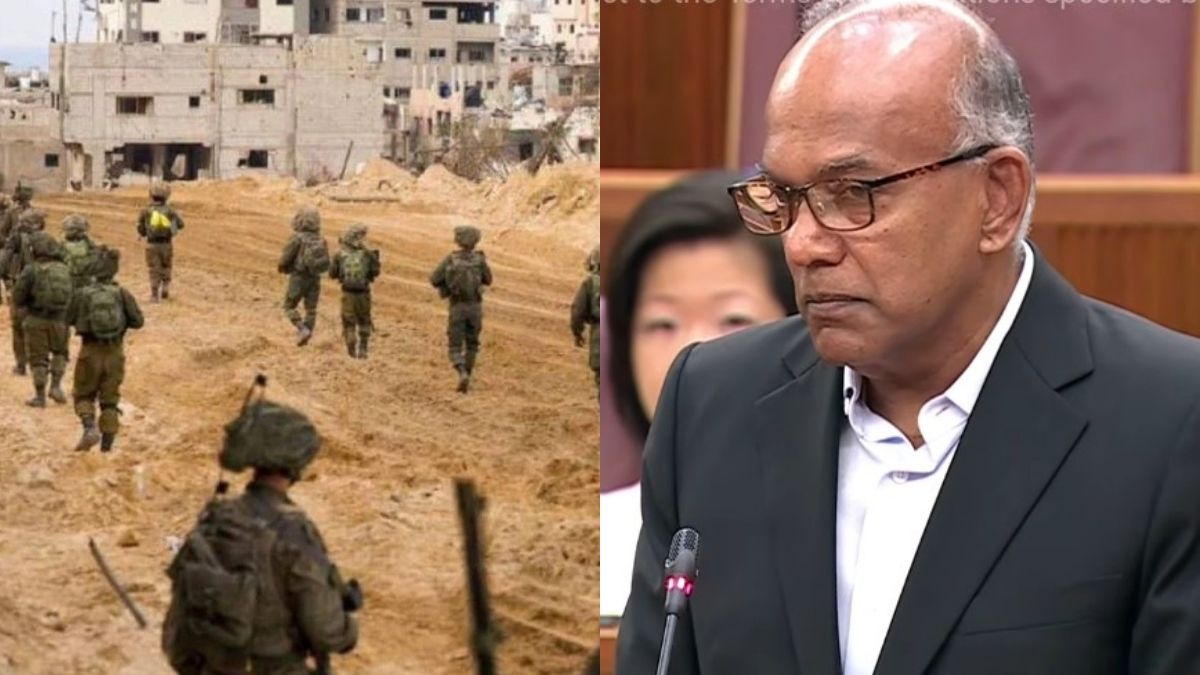
Israeli troops have advanced rapidly through southern Lebanon, reaching the town of Bayada — just eight kilometres from the city of Tyre — on Sunday.
Troops are also moving closer to towns in the Nabatieh district. If captured, those positions would give the IDF commanding control over the Litani area.
Israeli forces conducted a wave of airstrikes on the southern suburbs of Beirut on Tuesday.
The Lebanese army withdrew from positions in the Christian-majority towns of Rmeish and Ain Ebl as Israeli troops advanced, over the protests of local residents.
Background to the conflict
Israel launched its military campaign in Lebanon after Hezbollah opened fire on 2 March 2026, in what the group described as retaliation for Israel's killing of Iranian Supreme Leader Ayatollah Ali Khamenei.
The killing of Khamenei had earlier triggered the broader Iran-Israel war, which began in late February 2026.
Hezbollah has continued to fire rockets and drones into Israel through March. The group stated on 30 March 2026 that it had conducted 44 separate operations against Israeli towns and soldiers who had crossed into Lebanon.
The IDF said Hezbollah had launched between 4,000 and 5,000 rockets, drones and mortar rounds since the start of hostilities, according to Lieutenant-Colonel Nadav Shoshani.
Prime Minister Benjamin Netanyahu said he had instructed the military to expand the buffer zone within Lebanon, without specifying the extent of the planned advance.
Israel's stated aim is to push Hezbollah back from the border and end rocket attacks on communities in northern Israel.
UN peacekeepers killed
Three UN peacekeepers serving with the United Nations Interim Force in Lebanon (Unifil) were killed in separate incidents as fighting intensified.
Two Indonesian peacekeepers near Aadshit al-Qusayr in southern Lebanon were severely injured in an explosion close to their base on Sunday; one later died of his injuries.
On Monday, a separate explosion near a vehicle in Bani Hayyan killed two more Indonesian peacekeepers.
Unifil said it was investigating both incidents but did not attribute responsibility to either Israel or Hezbollah. The IDF said it was also investigating.
UN Undersecretary-General for Peace Operations Jean-Pierre Lacroix condemned what he described as "unacceptable incidents" and said all acts endangering peacekeepers must stop. The European Union (EU) also condemned the attacks.
The UN Security Council was scheduled to hold an emergency session on Tuesday at France's request.
Lebanese government and diplomatic responses
Lebanese President Joseph Aoun and Prime Minister Nawaf Salam publicly criticised Hezbollah's decision to resume fighting with Israel. The Lebanese government has outlawed Hezbollah military activity and expressed willingness to engage in direct talks with Israel.
However, the government has been unable to exercise effective control over Hezbollah in the south, despite previous attempts to demilitarise the area below the Litani River.
French Foreign Minister Jean-Noel Barrot met his Israeli counterpart, Foreign Minister Gideon Saar, in Jerusalem, stating that France had reservations about a ground operation of "significant scale and duration."
Barrot urged both Lebanese and Israeli officials to seek a lasting resolution, adding that military force alone could not achieve a durable solution.
Earlier in March, Katz warned the Lebanese government it would face infrastructure damage and territorial losses unless Hezbollah was disarmed.
Israel destroyed a Litani River bridge for the first time in the current conflict on 13 March 2026, followed by two more demolitions on 18 March 2026.
Analysts have warned that if southern Lebanon is permanently occupied and residents barred from returning, the social and political consequences for Lebanon — where most of the population was living in poverty even before the war — could be severe.