Singapore tightens rules on open-concept massage outlets amid rising vice concerns
Singapore is tightening rules on open-concept massage outlets after a rise in vice-related breaches and public complaints. From late 2026, all such businesses must obtain a new Category 3 licence, ending long-standing exemptions. Authorities say stricter oversight will protect neighbourhoods.

- Open-concept massage outlets must obtain licences under new Category 3 rules from late 2026.
- Changes respond to rising vice activity and public complaints about neighbourhood impact.
- Additional measures include licence display requirements and longer licence validity for compliant operators.

SINGAPORE: The Singapore Police Force (SPF) will tighten regulations governing massage establishments, requiring open-concept outlets to obtain licences under a new framework set to take effect in the second half of 2026.
The move removes a longstanding exemption introduced in 2018, bringing such businesses under stricter oversight amid growing concerns about vice-related activities and public dissatisfaction.
Authorities on 21 April said the changes aim to address enforcement gaps and improve the management of massage establishments operating in residential and commercial areas.
Rising concerns over vice and public disamenities
SPF said it observed an increase in vice-related activities and breaches of exemption conditions among open-concept massage establishments.
These trends were accompanied by a steady rise in public unhappiness.
The police highlighted concerns over the “number of open-concept MEs and the social disamenities they create”, signalling mounting pressure from residents affected by such operations.
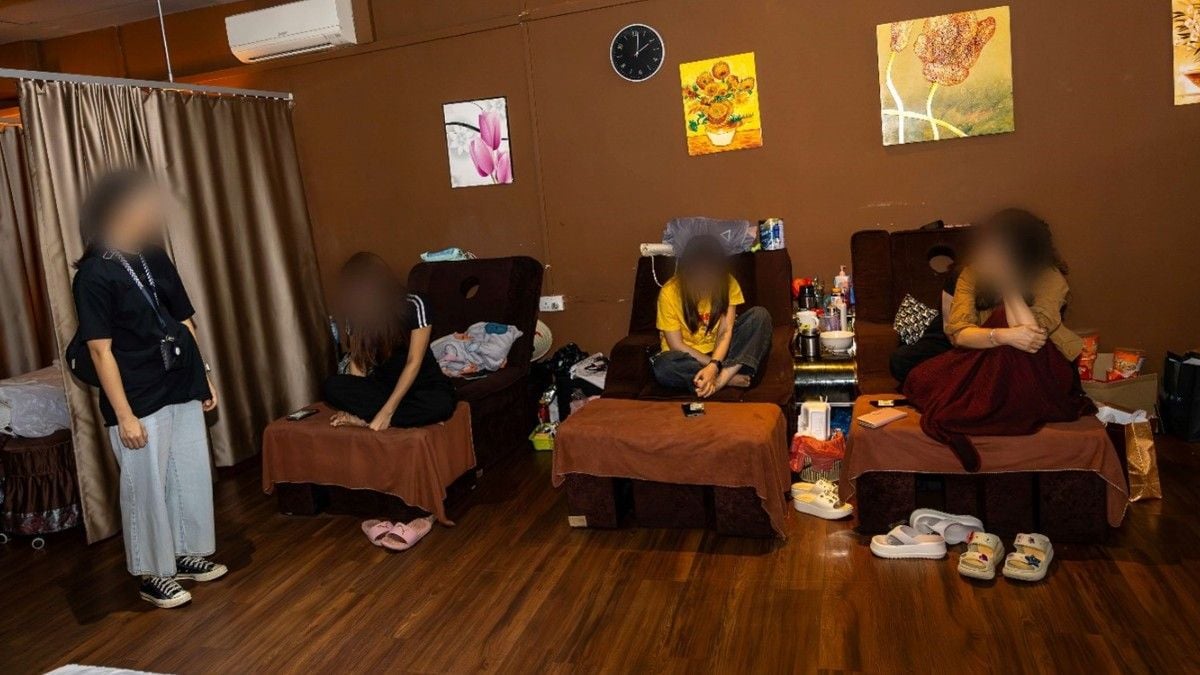
Open-concept establishments were previously allowed to operate without licences provided they met conditions, including registering with police and ensuring that no enclosed spaces enabled private services.
Despite these safeguards, enforcement challenges persisted, prompting the policy shift.
Introduction of new Category 3 licensing framework
Under the revised system, massage establishments will be classified into three categories.
Category 1 licences apply to outlets in Housing and Development Board (HDB) shop houses, shopping centres and hotels.
Category 2 licences cover locations away from residential zones, schools and places of worship.
A new Category 3 licence will apply specifically to open-concept massage establishments.
These businesses will no longer be exempt and must comply with full licensing requirements.
Operators will need to secure land-use approval from HDB or the Urban Redevelopment Authority before operating.
They must also adhere to conditions such as not installing rooms, partitions or cubicles within premises.
“Operators must also comply with licensing conditions, including the requirement not to set up rooms, partitions or cubicles within the ME,” SPF said.
Existing operators will be granted a transition period. SPF stated that “existing open-concept ME operators will be granted a grace period to apply for and obtain a licence”.
During this period, businesses may continue operating while working towards compliance.
Stronger enforcement and inter-agency cooperation
Minister for National Development Chee Hong Tat said HDB will work closely with SPF to address non-compliant operators.
“Errant operators will not be permitted to continue their illegal business activities in our neighbourhoods, regardless of whether they are operating out of HDB rental or sold shops,” Chee said.
“We will weed them out and not allow such undesirable activities to spread in our housing estates and affect the living environment for residents.”
The statement underscores a broader enforcement push targeting operators who breach regulations or exploit loopholes.
Additional regulatory changes for all licence holders
Beyond the new category, SPF announced three further measures affecting all massage establishment licence holders.
First, operators must prominently display an SPF-issued poster at their shopfront.
The poster will include the licence number, key conditions, and a web link enabling the public to report breaches.
Authorities said the poster must be clearly visible, with failure to display it constituting an offence.
Second, licence tenures will be extended for compliant operators to reduce administrative burden. Eligible businesses may receive licences valid for up to five years, compared to the current three-year period.
New Category 1 and 2 operators will continue to receive one-year provisional licences, subject to reassessment based on compliance history.
Category 3 licensees may be granted licences lasting three or five years from the outset, depending on SPF’s evaluation.
SPF will remove the requirement for prior approval of employee uniforms.
This will be replaced with clear standards governing uniform decency, streamlining operational processes for businesses.
Earlier, MOS Sun Xueling says Government agencies use various controls to balance commercial activities in residential estates
During a Parliamentary sitting on 4 February 2026, Senior Minister of State for National Development Sun Xueling said government agencies employ various controls to balance commercial activities within residential estates, responding to MP Denise Phua's adjournment motion on protecting residents' well-being.
Phua highlighted persistent challenges faced by residents, including noise, late-night operations, and cooking odours.
She also raised concerns about visible solicitation outside massage parlours and noted that increased commercial footfall causes congestion and friction in shared spaces.
Ms Phua attributed current shortfalls to regulatory gaps and siloed enforcement, arguing that no single body oversees the full neighbourhood impact.
She proposed a "prevention-governance-enforcement" framework, including clearer business classifications and "good neighbour agreements" to set expectations on noise, waste, and crowd management.
In response, Ms Sun outlined existing safeguards.
The Urban Redevelopment Authority and SPF have designated exclusion zones where new nightlife or massage establishments are prohibited in areas with high outlet concentrations or resident complaints.
Sun added that agencies continue refining coordination efforts, including joint enforcement actions, and will consider making pre-approval information clearer and more transparent for applicants.