Singapore urged to end executions, repeal POFMA and establish human rights body at UN review
Dozens of nations urged Singapore to end executions, repeal POFMA, and establish an independent human rights body at its fourth Universal Periodic Review in Geneva on 12 May 2026, as 142 countries delivered recommendations in total. Western nations pressed hardest on civil liberties and criminal justice reform, while many Global South nations offered broad praise. Singapore rejected the majority of critical recommendations.
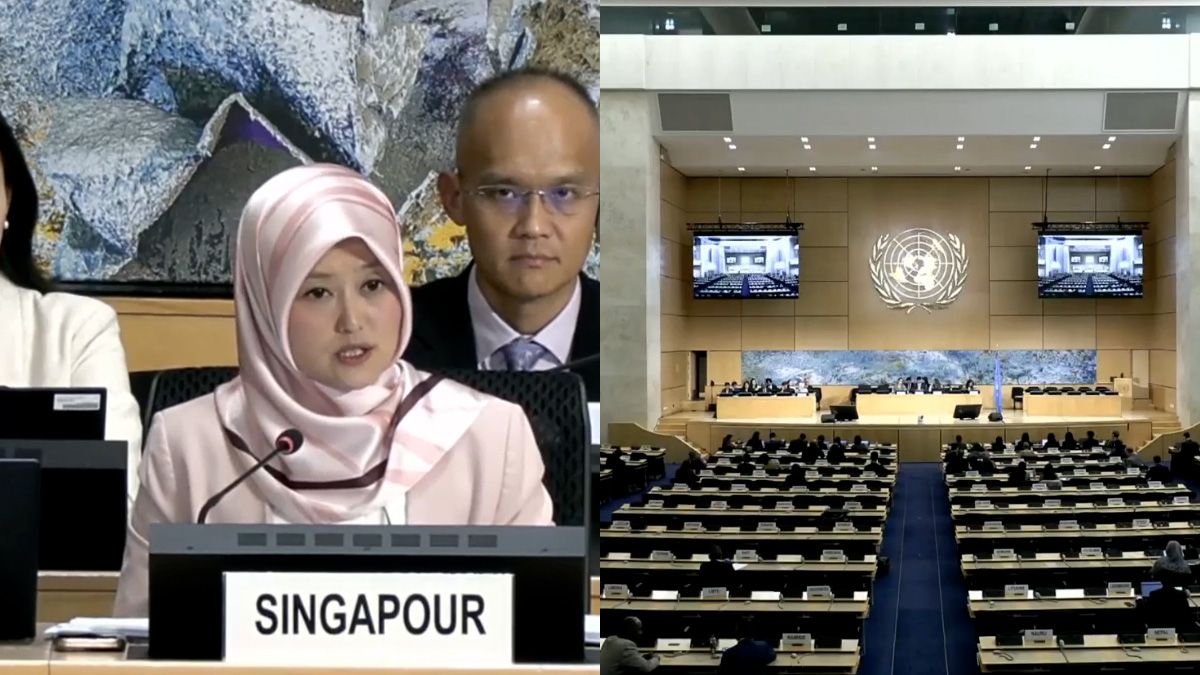

GENEVA, 12 May 2026 — A total of 142 countries delivered recommendations to Singapore at its fourth Universal Periodic Review (UPR) before the 52nd session of the United Nations Working Group on the Universal Periodic Review in Geneva, Switzerland, on Tuesday.
The recommendations covered a wide range of issues, including calls to abolish the death penalty, repeal the Protection from Online Falsehoods and Manipulation Act (POFMA), extend anti-discrimination protections to LGBT+ persons, strengthen the rights of migrant domestic workers, and establish a national human rights institution.
Singapore was represented by a high-level delegation led by Minister of State for Health and Digital Development and Information Rahayu Mahzam, accompanied by officials from the Ministries of Home Affairs, Manpower, Digital Development and Information, Social and Family Development, Sustainability and Environment, and Culture, Community and Youth.
The session revealed a clear political divide. Western and Latin American nations concentrated their recommendations on civil liberties, criminal justice reform, and legal equality. Many Global South nations broadly praised Singapore's governance record and recommended that the country continue or build on existing initiatives.
Death penalty draws broadest criticism
The most frequently raised concern among Western delegations was Singapore's continued and, according to Australia, intensifying use of capital punishment. Australia noted that Singapore's executions had reached their highest level in over 20 years in 2025, and called for the re-establishment of a moratorium on executions with a view to abolishing the death penalty.
More than 30 countries called for a moratorium on executions as a first step toward full abolition. They included the United Kingdom, Netherlands, Belgium, France, Germany, Canada, Ireland, Italy, Czech Republic, Sweden, Estonia, Albania, Chile, Colombia, and Costa Rica.
Also among them were Croatia, Iceland, Lithuania, Luxembourg, Malta, Mexico, Cabo Verde, Kiribati, Marshall Islands, New Zealand, Portugal, Austria, Slovenia, Switzerland, Poland, Romania, and Spain.
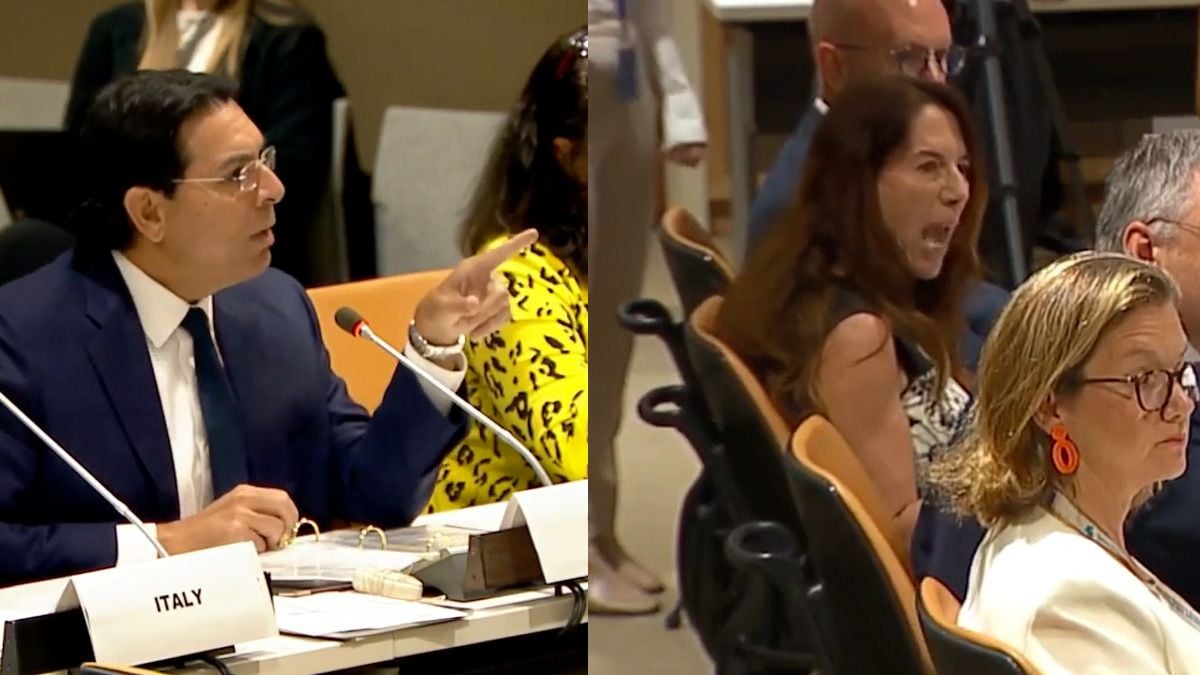
Several went further than a moratorium. Ireland expressed deep concern about what it described as an increased number of executions and limited access to legal counsel for those on death row. Italy called on Singapore to consider commuting all existing death sentences, particularly for crimes not qualifying as the most serious under international law.
Colombia called for full abolition. Iceland called on Singapore to ratify the second optional protocol to the International Covenant on Civil and Political Rights (ICCPR), which aims at the abolition of the death penalty. Switzerland called for the mandatory death penalty to be deleted from law entirely.
Belgium, Colombia, and France specifically named drug-related offences, urging Singapore to end the mandatory application of the death penalty in such cases. Australia's notation of the record-high execution rate in 2025 gave added weight to the calls for an immediate moratorium.
Multiple countries also called for the abolition of judicial corporal punishment, including Austria, Brazil, Croatia, Paraguay, and Venezuela. Austria named caning explicitly. Brazil recommended abolishing mandatory corporal punishment for non-violent offences including immigration and labour violations.
Singapore's Ministry of Home Affairs Director Gregory Foo, addressing the criticism before recommendations were formally delivered, cited a 2025 government survey in which almost eight in ten Singapore residents agreed or strongly agreed that the mandatory death penalty is appropriate for trafficking a significant quantity of drugs.
He said a 2024 survey of cities in the region found 84.2 per cent of respondents believed capital punishment deterred drug trafficking into Singapore, and 82.5 per cent considered it a more effective deterrent than life imprisonment.
Foo said Singapore's courts impose additional safeguards in capital cases. All capital offences are heard only in the High Court. Every capital conviction is reviewed separately by the Court of Appeal. Free legal counsel is provided throughout trial and appeal regardless of the defendant's nationality.
Rahayu, in her closing remarks, said there is no international consensus for or against capital punishment and that international law does not prohibit its use when imposed with due process and judicial safeguards. She described the decision as a sovereign one.
POFMA named; freedom of expression broadly challenged
The Netherlands was among the most direct, recommending that Singapore repeal domestic laws restricting freedom of expression and assembly that contradict international standards, explicitly naming POFMA. Belgium recommended that Singapore ensure POFMA is fully compatible with international human rights law on freedom of expression, peaceful assembly and association. Sweden called on Singapore to amend or repeal restrictive legislation like POFMA.
Chile recommended a review of both POFMA and the Public Order Act to ensure that the effort against disinformation does not unduly restrict freedom of expression, peaceful assembly, and the work of human rights defenders. South Africa specifically called for amendment of the Public Order Act in relation to the right to peaceful assembly.
Japan, Norway, Luxembourg, Malta, Czech Republic, Estonia, Lithuania, Italy, New Zealand, Poland, Romania, and the Republic of Korea each raised concerns about freedom of expression and assembly. Their recommendations ranged from calls to strengthen safeguards and undertake legislative review, to demands for an enabling environment for civil society and human rights defenders.
Italy called for effective measures in law and in practice to ensure journalists, human rights defenders, and civil society organisations can fully exercise their freedom of expression and right to peaceful assembly. Poland specifically called for the protection of human rights defenders.
Singapore's Director at the Ministry of Digital Development and Information, Angela Tan, defended POFMA before the recommendations session. She said a correction direction does not require the removal of content but only requires the government's clarification to be carried alongside the original post, allowing readers to compare both accounts.
Tan said POFMA applies only to false statements of fact affecting public interest and cannot be used simply because the government disagrees with a view. Rahayu added in closing that the rights to free expression and peaceful assembly are constitutionally protected in Singapore but are not absolute, even under international human rights law.
National human rights institution rejected
At least seven countries called on Singapore to establish a national human rights institution (NHRI) in accordance with the Paris Principles: Germany, Costa Rica, Cabo Verde, Montenegro, Nepal, Pakistan, and Ukraine.
Germany and Costa Rica were among the most specific, calling for an institution with a broad mandate for the promotion and protection of rights, independent of government. Cabo Verde called for the institution to be established in keeping with international standards.
Rahayu rejected the calls directly. She said Singapore already has existing mechanisms that allow it to promote and protect human rights through legislation, regulation, institutional oversight, and multiple feedback channels from the people.
She described the Inter-Ministry Committee on Human Rights as Singapore's national mechanism for implementation, reporting, and follow-up. She said Singaporeans have direct avenues to have their concerns addressed, including through Members of Parliament at the grassroots level. She said Singapore has found this decentralised and mutually reinforcing system to be effective.
Migrant workers: exclusions from labour law draw wide concern
The exclusion of migrant domestic workers from core labour protections drew recommendations from more than a dozen countries across geographic and political lines, making it one of the most broadly shared substantive concerns of the session.
The United Kingdom recommended that Singapore mandate rest periods and create digital recruitment and wage payment processes for foreign domestic workers.
Norway called for the extension of the Employment Act and Work Injury Compensation Act to cover all migrant workers, including domestic workers. Canada recommended that both acts be extended to domestic workers of both sexes. Australia called for a government-run recruitment system to prevent deceptive hiring and contract substitution.
Brazil called on Singapore to ensure entitlements to public holidays, regulated working hours, and paid leave for domestic workers, and to abolish mandatory pregnancy and HIV testing. France recommended strengthening the legal framework binding employers of migrant workers.
Angola, Bangladesh, Cambodia, Cameroon, Ethiopia, Gambia, Lesotho, Nigeria, Philippines, Eritrea, and Indonesia each recommended continued or strengthened protections and welfare for migrant workers, including access to healthcare and decent living conditions.
Singapore's Director at the Ministry of Manpower, Koh Xiao Ying, outlined measures taken since the last UPR, including the extension of dormitory standards to all facilities and the expansion of primary healthcare access for migrant workers. She noted that over nine in ten migrant workers surveyed in 2024 were satisfied working and living in Singapore.
LGBT+ protection gap highlighted
Multiple Western nations called on Singapore to extend anti-discrimination protections to LGBT+ persons following the repeal of Section 377A of the Penal Code in 2022, which decriminalised consensual sex between men.
The United Kingdom recommended that Singapore include protection against discrimination on grounds of sexual orientation and gender identity in the Workplace Fairness Act, and ensure equal treatment in government policies for LGBT+ persons.
Australia, Canada, Ireland, New Zealand, and France made similar calls. Norway called for stronger institutional protections for LGBT+ persons. Spain called for a guarantee of equality for the LGBTIQ+ community. Venezuela called for a comprehensive anti-discrimination law explicitly covering sexual orientation.
Iceland called for Singapore to legalise same-sex marriage and to adopt comprehensive anti-discrimination legislation explicitly prohibiting discrimination against persons of diverse sexual orientations and gender identities. Brazil encouraged the formal recognition of same-sex marriages. Malta recommended legislation to ban conversion practices.
Singapore's official presentations did not directly address these specific recommendations. Ang Bee Lian, Senior Advisor at the Ministry of Social and Family Development, said LGBT+ persons are equal members of society with access to opportunities, education, employment, healthcare, social services, and protection from harassment and violence.
Children and persons with disabilities
Several countries raised the protection of children and the rights of persons with disabilities. Angola, Armenia, India, the Central African Republic, Maldives, and Malawi each recommended continued strengthening of child protection frameworks, particularly in digital environments.
Bulgaria recommended legislative measures for compulsory pre-primary education and the introduction of free primary and secondary education for all children.
On disability, Zambia, Jordan, the Dominican Republic, El Salvador, Georgia, and the Lao People's Democratic Republic each recommended continuing or strengthening efforts toward the inclusion of persons with disabilities in employment, education, and public services.
Singapore's delegation highlighted an increase in the employment rate of persons with disabilities from 28 per cent in 2018 to 34 per cent in 2024, with a target of 40 per cent by 2030.
Global South recommendations: continuity over reform
A significant portion of the session's recommendations came from African, Middle Eastern, and Asian nations that largely commended Singapore's social and economic achievements and recommended continuity rather than reform.
Nations including Kenya, Belarus, Cuba, Ethiopia, the Gambia, Gabon, Burkina Faso, Burundi, Cambodia, Kyrgyzstan, the Lao People's Democratic Republic, Yemen, Bhutan, and Vietnam focused their recommendations on areas such as continued support for older persons, further improvements in migrant worker welfare, sustained investment in education and healthcare, and climate resilience.
China's delegation recommended that Singapore continue promoting social equality and developing social resilience. The Democratic People's Republic of Korea recommended that Singapore continue to ensure adequate public health expenditure and continue efforts to protect the rights of children, older persons, and persons with disabilities.
Treaty ratification widely called for
Multiple countries — including France, Belgium, Canada, Costa Rica, Croatia, Czech Republic, Lithuania, Luxembourg, Malta, Ghana, Cyprus, Haiti, Panama, Namibia, Slovenia, and Togo — recommended that Singapore ratify the ICCPR.
Ratification of the International Covenant on Economic, Social and Cultural Rights (ICESCR), the Convention Against Torture (CAT), and the Convention on the Rights of Migrant Workers (CMW) were also each raised by several delegations, including Indonesia and Nigeria on the CMW specifically.
Rahayu rejected the calls directly, saying Singapore's existing mechanisms — legislation, regulation, institutional oversight, and multiple feedback channels — already fulfil the functions an NHRI would serve.
She said Singaporeans have many direct avenues to have their concerns addressed and cited, as one example, that at the grassroots level they can "approach their Members of Parliament directly for assistance."
She described this decentralised system as effective and said Singapore has been stepping up public engagement efforts.
In her closing remarks, Rahayu said Singapore's delegation would thoroughly examine all recommendations received and consider how they can be implemented in a manner that advances the promotion and protection of human rights.
She said Singapore will continue to press on in improving the human rights of its people, guided by national context and steered by a commitment to find pragmatic solutions delivering real and lasting outcomes.
Session closes; report due 22 May
The President of the working group announced that the recommendations section of the draft report will be distributed on 15 May 2026 at 12.30 pm, with adoption scheduled for 2.30 pm the same day. The full report, including summary sections, will be distributed by email on 22 May 2026.
The report will be prepared by the Troika comprising representatives of Albania, Benang, and Indonesia.
Singapore has participated in the UPR process since its inaugural review in 2011, with subsequent reviews conducted in 2016 and 2021.
The UPR is a peer-driven process conducted by the United Nations Human Rights Council in which every UN member state submits to a review of its human rights record approximately once every five years.