Indonesian ex-education minister faces 18-year prison demand in US$132 million graft trial
Indonesian prosecutors have sought an 18-year prison sentence and trillions of rupiah in restitution against former education minister Nadiem Makarim over alleged corruption linked to Chromebook procurement between 2020 and 2022.
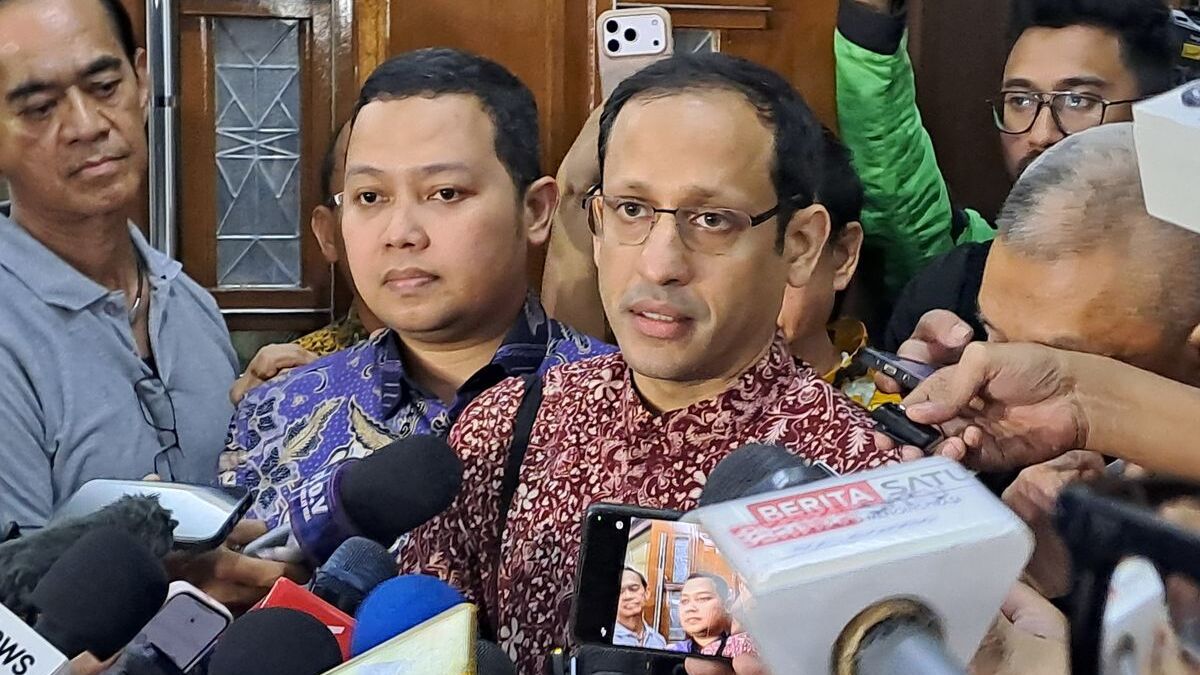
- Prosecutors demanded an 18-year prison sentence and Rp5.68 trillion (US$344 million) in restitution from Nadiem Makarim.
- The case concerns alleged corruption in Chromebook and software procurement between 2020 and 2022.
- Nadiem denied wrongdoing and argued the prosecution’s financial calculations were misleading.

Former Indonesian Minister of Education, Culture, Research and Technology Nadiem Makarim is facing an 18-year prison sentence and demands for trillions of rupiah in restitution after prosecutors accused him of orchestrating a corruption scheme linked to the procurement of Chromebook laptops and Chrome Device Management (CDM) software between 2020 and 2022.
The case, which has drawn widespread public attention in Indonesia, centres on allegations that the digital education procurement programme caused state losses exceeding Rp2.18 trillion, equivalent to approximately US$132 million.
Prosecutors seek prison term and financial penalties
At a hearing at the Jakarta Corruption Court on Wednesday, 13 May 2026, prosecutor Roy Riady asked judges to convict Nadiem and impose an 18-year prison sentence.
The prosecution also requested a Rp1 billion fine, equivalent to about US$60,000. If unpaid, the fine would be replaced with an additional 190 days in detention.
In addition, prosecutors demanded that Nadiem pay Rp5.68 trillion in restitution, approximately US$344 million. The amount consists of two separate claims: Rp809.59 billion (US$49 million) and Rp4.87 trillion (US$295 million).
According to prosecutors, the latter figure represents assets allegedly disproportionate to Nadiem’s legitimate income or suspected to have originated from corruption.
Prosecutors said that if Nadiem failed to pay the compensation within one month of a final court verdict, his personal assets could be seized and auctioned. If the assets proved insufficient, the restitution would be replaced by an additional nine-year prison term.
Allegations over chromebook procurement
The prosecution alleges that Nadiem, together with co-defendants Ibrahim Arief, Mulyatsyah, Sri Wahyuningsih and Jurist Tan, manipulated the procurement process for Chromebook laptops and CDM software used in Indonesia’s education sector.
Prosecutors charged the defendants under Indonesia’s Anti-Corruption Law and provisions of the 2023 Criminal Code.
According to the indictment, Nadiem personally received Rp809.59 million, approximately US$49,000, and facilitated benefits for 12 private companies involved as Chromebook suppliers.
The prosecution further alleged that the procurement decision was influenced by business interests linked to efforts to encourage Google to increase investment in PT Aplikasi Karya Anak Bangsa (AKAB), the company founded by Nadiem that later became part of PT GoTo Gojek Tokopedia following the merger between Gojek and Tokopedia in 2021.
Google had previously been one of Gojek’s long-standing business partners.
Estimated state losses
Prosecutors estimated total state losses from the procurement project at Rp2.18 trillion, or roughly US$132 million.
The figure includes Rp1.56 trillion (US$95 million) in alleged losses from Chromebook procurement, based on an audit conducted by Indonesia’s Financial and Development Supervisory Agency (BPKP).
An additional US$44.05 million, or around Rp621.38 billion, was linked to the procurement of Chrome Device Management software.
Separately, prosecutors argued that the programme had negatively affected educational equality in Indonesia.
During the hearing, prosecutors stated that corruption in the education sector had obstructed equal educational opportunities for children across the country.
Nadiem rejects allegations
Following the hearing, Nadiem strongly denied wrongdoing and questioned the scale of the punishment sought against him.
“This is a very, very disappointing day,” he told reporters outside the court.
He argued that the prosecution’s demands were harsher than sentences sought in some violent crime and terrorism cases.
“Why is the sentence sought against me harsher than for murderers? Harsher than for terrorists?” he said.
Nadiem also disputed the restitution figures, saying prosecutors had based their calculations on the temporary peak valuation of his shareholdings during Gojek’s initial public offering period rather than on liquid assets actually under his control.
He stated that his total assets at the end of his ministerial term were below Rp500 billion, or around US$30 million.
According to Nadiem, the shares cited by prosecutors were legally obtained in 2015 and unrelated to the Chromebook procurement case.
“They used that figure, and that became the basis for the restitution. And they know I don’t have that money,” he said.
Before the hearing, Nadiem said he hoped to be acquitted based on evidence presented during the trial.
He also revealed that he was scheduled to undergo surgery later that evening due to an unspecified medical condition.
Public reaction and social media debate
The prosecution’s demands quickly triggered intense debate across Indonesian social media platforms, including X, Instagram and TikTok.
Many users expressed shock at the severity of the sentence sought against the former minister, while others questioned the legal basis of the case and compared it with other high-profile corruption prosecutions in Indonesia.
Supporters of Nadiem argued that the allegations had not been sufficiently proven during court proceedings and criticised what they viewed as excessive punishment demands.
The case has become one of the most closely watched corruption trials involving a former cabinet minister in recent years.
Concerns over investor confidence
The legal proceedings have also raised concerns among business figures about Indonesia’s investment climate.
Thomas Lembong, Indonesia’s former trade minister, said the case could affect international investor confidence in the country’s technology sector.
Speaking in an interview broadcast on YouTube earlier this month, Lembong said foreign investors continued to view GoTo as one of Indonesia’s key technology companies and were closely monitoring developments involving Nadiem, one of Gojek’s founders.
Lembong cited investors including Singapore’s GIC, the Qatar Investment Authority and Abu Dhabi sovereign wealth funds as parties paying attention to the case.
He questioned the legal construction of the indictment, particularly allegations linked to debt conversion into shares, which he described as common corporate practice under Indonesian company law.
At the same time, Lembong stated that investors would support proper law enforcement if wrongdoing were lawfully proven.
Awaiting verdict
The trial remains ongoing at the Central Jakarta District Court, and judges have not yet issued a verdict.
If convicted and ordered to serve the full additional prison term in lieu of unpaid restitution, Nadiem could face a total of 27 years in prison.
The case continues to draw attention both domestically and internationally because of its implications for Indonesia’s anti-corruption efforts, public procurement oversight and investor perceptions of legal certainty in Southeast Asia’s largest economy.