Australia orders forced divestment of China-linked stakes in Northern Minerals
Australia has formally ordered six China-linked shareholders in rare earths firm Northern Minerals Ltd to divest their stakes, in the federal government's second major foreign investment intervention in the company within two years.
- Australia orders six China-linked shareholders in Northern Minerals to divest stakes under foreign investment law.
- Two investors accumulated shares as recently as January 2026, suggesting active accumulation before the order.
- A legal condition linking Hong Kong Ying Tak's disposal to Northern Minerals' AGM explains the company's meeting delay.

Australia's federal government has formally ordered six shareholders in rare earths company Northern Minerals Ltd (NML) to divest their stakes, in its second major foreign investment intervention in the firm within two years.
The order, formally titled the Foreign Acquisitions and Takeovers (Disposal of Interests in Northern Minerals Limited) Orders (No. 1) 2026, was signed by Federal Treasurer Dr Jim Chalmers on 17 May 2026.
It is made under subsection 69(2) of the Foreign Acquisitions and Takeovers Act 1975, with Dr Chalmers satisfied of the conditions set out in subsection 69(1A) of the Act.
The six entities named are Hong Kong Ying Tak Limited, Real International Resources Limited, Qogir Trading & Service Co., Limited, Chuanyou Cong, Vastness Investment Group Limited, and Zhongxiong Lin.
According to data compiled by Bloomberg, the six entities collectively hold almost 27 per cent of Northern Minerals' outstanding float. The Australian Broadcasting Corporation (ABC) separately reported their combined stake at approximately 17 per cent of the company.
Northern Minerals, listed on the Australian Securities Exchange (ASX) and valued at approximately A$229 million (US$163 million), entered a trading halt on Monday, 18 May 2026, following the announcement.
A spokesman for Dr Chalmers declined to specify the precise grounds for the order. The decision was described as entirely consistent with advice from Treasury and the Foreign Investment Review Board (FIRB), and taken to protect Australia's national interest.
"We operate a robust and non-discriminatory foreign investment framework, and will take further action if required to protect our national interest in relation to this matter," the spokesman said.
Commencement and timeline
The disposal orders do not take immediate effect. Under the instrument, Part 2 — which contains the individual divestment directives — commences on the 31st day after the instrument is registered. Investors then have a further 14 days to complete their divestments.
The effective window for compliance is therefore approximately 45 days from the date of registration, a detail that some reporting simplified to a flat two-week deadline.
Breakdown of shareholdings ordered for disposal
The order specifies exact shareholdings for each named investor. Real International Resources Limited holds the largest stake subject to the directive, at 619,071,000 ordinary shares accumulated between 6 September 2023 and 20 February 2025.
Qogir Trading & Service Co., Limited is directed to divest 523,463,250 shares acquired between 2 September 2024 and 20 January 2026.
Vastness Investment Group Limited must sell 271,250,091 shares acquired on 24 September 2024. Chuanyou Cong is directed to divest 130,056,866 shares accumulated between 16 December 2025 and 29 January 2026.
Hong Kong Ying Tak Limited must dispose of 95,328,713 shares acquired on 13 November 2024. Zhongxiong Lin is required to sell 39,725,860 shares, also acquired on 24 September 2024.
The acquisition dates are significant. Two investors — Qogir Trading and Chuanyou Cong — built their stakes as recently as January 2026, indicating active accumulation in the months immediately preceding the order.
Two of the six entities — Real International Resources and Vastness Investment Group — are incorporated in the British Virgin Islands, though Vastness lists a Beijing registered address.
The remaining four are registered or addressed in Hong Kong or mainland China: Hong Kong Ying Tak and Qogir Trading in Hong Kong; Chuanyou Cong in Shandong Province and Zhongxiong Lin in Fujian Province.
The AGM condition and Hong Kong Ying Tak
Hong Kong Ying Tak faces an additional legal constraint not imposed on the other five entities.
A separate instrument issued alongside the order — the Foreign Acquisitions and Takeovers (Interests in Northern Minerals Limited No. 1) Directions 2026 — bars certain foreign persons from disposing of Northern Minerals shares before the company holds its next annual general meeting (AGM).
Hong Kong Ying Tak's disposal order is explicitly subject to that restriction, meaning the company is simultaneously required to sell its shares and prohibited from doing so until the AGM is convened.
This legal tension provides a direct explanation for why Northern Minerals has delayed its annual general meeting. In a statement to the ASX, the company said it was currently considering the Treasurer's orders and would make a further announcement in due course.
Background to the Browns Range project
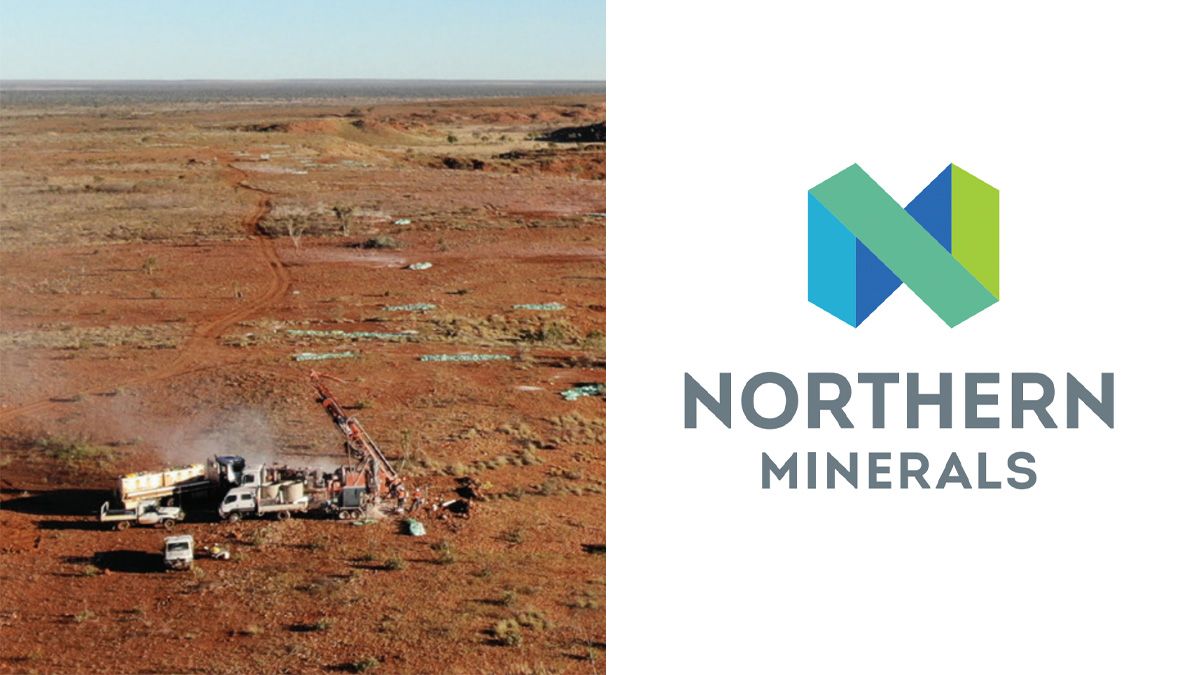
Northern Minerals is developing its Browns Range Heavy Rare Earths Project in the remote East Kimberley region of Western Australia, near the Northern Territory border.
The project aims to produce dysprosium and terbium at scale — elements critical to the magnets used in military systems, computing hardware, and clean energy technologies.
Browns Range is targeting the position of the world's largest producer of dysprosium outside China. Northern Minerals is on track to receive approximately US$500 million in funding from the Export Import Bank of the United States.
The company is regarded as a key participant in joint efforts by Australia and the United States to reduce China's dominance over the global critical minerals supply chain.
A second intervention in two years
The latest order follows a comparable directive in 2024, when Dr Chalmers ordered five other investors to divest their Northern Minerals holdings. The government later sued one Chinese company for breaching that order, winning the case last year.
The FIRB wrote to Northern Minerals earlier this year, stating it believed three of the previously blocked investors had violated the 2024 order by transferring their shares to Hong Kong Ying Tak Limited — one of the entities subject to Monday's directive.
In 2023, Dr Chalmers also blocked Yuxiao Fund, a Chinese-linked investment vehicle, from increasing its stake in Northern Minerals, in the first of several government interventions targeting the company.
Attempt to remove chairman
Vastness Investment Group Limited, whose registered address is in the Chaoyang District of Beijing, attempted to unseat Northern Minerals' chairman earlier this year before abandoning the effort.
The episode was viewed in Canberra as part of a broader pattern of Chinese commercial entities seeking influence over a company both Australia and the United States regard as strategically significant.
The ABC reported it had been unable to reach any of the six named investors for comment.
Expert commentary
John Coyne of the Australian Strategic Policy Institute (ASPI) told the ABC that the government appears to have concluded that several China-based investors had ignored repeated direction, and had acted accordingly and appropriately.
"It sends an important signal that Australia is far more willing to use investment policy as a tool of economic security," Dr Coyne said.
"Australia has been very clear for several years that critical minerals are no longer simply a commercial issue. They now sit at the centre of strategic competition, industrial resilience and economic security," Dr Coyne added.
Broader geopolitical context
Monday's order reflects a wider Western effort to limit Chinese investment in rare earths and other critical minerals considered essential to defence industries and the energy transition.
China holds a near-monopoly on global rare earth production and processing. Beijing has used export controls as leverage in ongoing trade disputes with the administration of United States President Donald Trump since 2025.