HDB unveils nature-led housing plans for Gillman Barracks and Sunset Way amid growing conservation concerns
HDB will develop new homes at Gillman Barracks and Sunset Way after completing environmental and heritage studies, proposing to retain key forests, streams and heritage buildings.
- HDB will develop new housing estates at Gillman Barracks and Sunset Way while retaining significant ecological and heritage features.
- Final housing plans, including the number of homes and timeline, will be determined after public consultation and further planning.
- Conservation groups continue to oppose the Gillman proposal, arguing the preserved forest area is insufficient.

SINGAPORE: The Housing and Development Board (HDB) will proceed with plans to build new homes at Gillman Barracks and at Sunset Way in Clementi after completing environmental and heritage studies, proposing developments that retain significant natural habitats and heritage buildings while integrating new housing into the surrounding landscape.
The studies were conducted as part of the planning and development process to assess the expected impact of development on the natural and built environment, HDB said on 10 July 2026, as reported by state media CNA.
The agency said the findings, together with public feedback, will help shape the final development plans, including the eventual housing yield, housing mix, flat classification and implementation timeline.
"This process will inform the development plans for the sites, including the eventual housing yield, housing mix, flat classification, and development timeline. More details on the plans for the sites will be shared when ready," HDB said.
Nature-led design proposed for Gillman Barracks
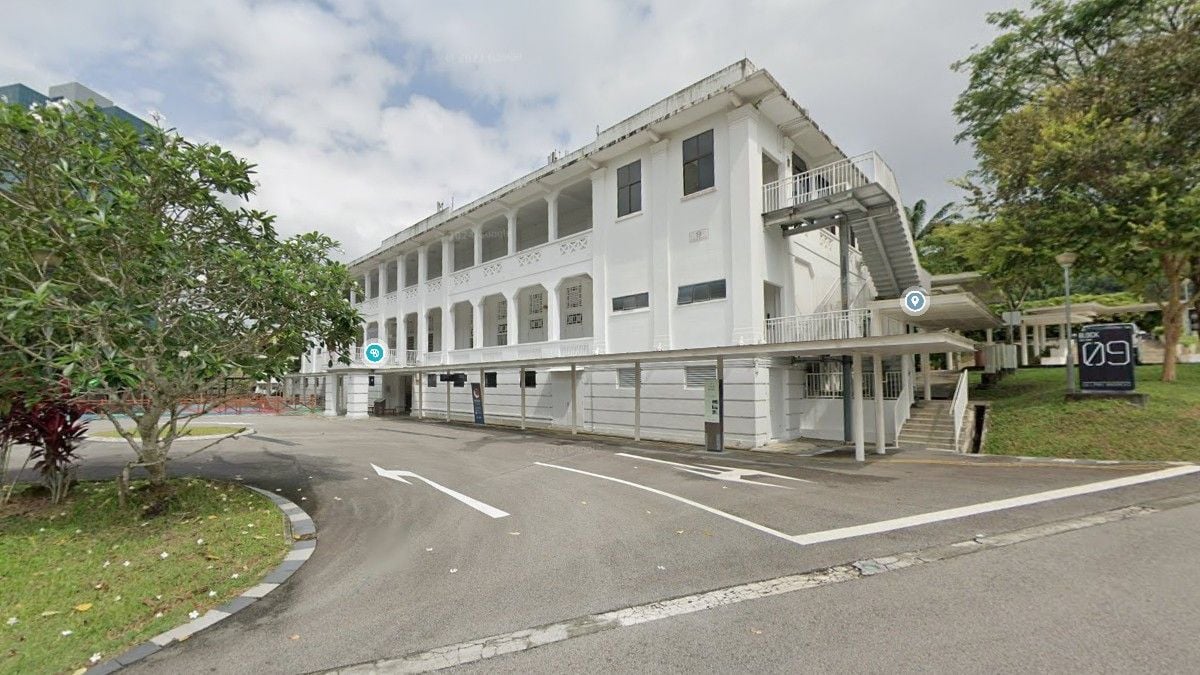
At Gillman Barracks, HDB proposed retaining more than 20 of the site's 86 heritage buildings, together with most of the secondary forest and an existing forest stream.
The future residential estate will comprise both public and private housing and is planned near the city centre, close to the future Greater Southern Waterfront district.
According to HDB, the estate will offer residents a "charming and vibrant" place to live, with easy access to the Southern Ridges and Labrador Nature Park Network.
"The future development will be well-connected, close to Labrador Park MRT station, and planned with new roads and active mobility options," the agency said.
The Government first announced in March 2024 that it was studying the possibility of introducing a new residential neighbourhood at Gillman Barracks.
Originally constructed in 1935 as a British military garrison for servicemen and their families, Gillman Barracks has since been transformed into an arts and lifestyle enclave housing creative businesses, offices, galleries and food and beverage establishments.
Ecological corridors and forest stream to be retained
To guide redevelopment, HDB commissioned environmental and heritage studies covering about 47 hectares, including an approximately 40-hectare development site bounded by Depot Road, Alexandra Road, Telok Blangah Road, West Coast Highway and Telok Blangah Street 31, together with a seven-hectare green area north of Telok Blangah Heights.
Throughout the planning process, HDB engaged nature and heritage stakeholders, including representatives from Nature Society Singapore, Singapore Youth Voices for Biodiversity and LepakInSG.
The environmental study identified 293 plant species and 178 fauna species, with biodiversity concentrated mainly within the native-dominated secondary forest and adjoining forest streams.
Among the recorded plants, 22 species are considered to be of conservation significance, including Ficus sinuata and Antiaris toxicaria.
The study also documented 11 fauna species of conservation significance, including the violet cuckoo, the critically endangered straw-headed bulbul and the bamboo bat.
To maintain ecological connectivity, agencies intend to safeguard ecological corridors with a minimum width of 30 metres.
HDB said the recommended width was based on findings from the environmental study and feedback from nature groups to facilitate wildlife movement across the landscape.
The corridors will connect Telok Blangah Hill Park with HortPark to the west and Berlayar Creek and Labrador Nature Reserve to the south, maintaining links within the broader Southern Ridges ecological network.
HDB also plans to retain the forest stream and most of the native-dominated secondary forest within the green area, which provides habitat for species of conservation significance and mature Tembusu trees.
The agency said contractors will follow an environmental monitoring and management plan, including phased directional vegetation clearance that allows wildlife to relocate into adjacent greenery before construction begins.
A new green link planted with native species is also proposed at the southern end of the site to complete the ecological corridor between Telok Blangah Hill Park, Berlayar Creek and Labrador Nature Reserve.
"Together with the retained ecological corridors, this will create a green area of about 8ha, with a continuous forest structure to support avian movement and attract bird species such as the straw-headed bulbul, while forming part of the wider ecological network across the area," HDB said.
Heritage buildings to be preserved and repurposed
As part of the heritage assessment, all 86 buildings across seven clusters were evaluated for their historical, architectural, technological, social and contextual significance.
Agencies intend to retain all four buildings assessed to have exceptional heritage significance at Preston Road and Lock Road.
Twenty-seven buildings were classified as having high significance, although only 21 can be retained because six occupy land required for essential infrastructure or areas near the future MRT station where housing development can be optimised.
Overall, agencies plan to largely preserve four historically significant clusters, including the Preston Road housing and school clusters, together with the Lock Road and Malan Road clusters.
The Preston Road housing cluster consists of 16 semi-detached garrison houses built between 1935 and 1939. The adjacent Alexandra School was the first school built to serve the British military community in the area.
The Lock Road cluster preserves one of the last remaining sections of the original 1935 barracks, including former military administrative buildings and communal facilities.
Meanwhile, the Malan Road cluster comprises former workshops, garages, stores and medical facilities supporting military operations.
HDB said the retained buildings could be repurposed into commercial uses and community amenities serving both existing and future residents.
The Singapore Land Authority (SLA), which currently manages Gillman Barracks as state property, said there are 11 arts tenants and 13 food, beverage and lifestyle tenants at the site.
Their leases will expire progressively by the second quarter of 2030.
An SLA spokesperson told CNA that agencies have been engaging tenants since 2023 and have kept them informed about the ongoing environmental and heritage studies.
The spokesperson said redevelopment plans would not shorten any existing leases.
"We understand that business transitions can be challenging, and have encouraged tenants to begin planning early ahead of their tenancy expiry," the spokesperson said.
Sunset Way estate to feature biophilic landscape
HDB also announced plans to develop a greenfield site at Sunset Way within Clementi Town to provide additional public housing in western Singapore.
The site has been largely zoned for residential use since the Master Plan 1980.
"The development of Sunset Way will provide more housing options for Singaporeans in the west region, including young families who wish to live near their parents in Clementi, Bukit Batok, and Queenstown for mutual care and support," HDB said.
When completed, the estate will incorporate biophilic landscape design using native plant species to support biodiversity while maintaining ecological connectivity.
An environmental study covering approximately 23 hectares documented 286 flora species and 113 fauna species.
Among these were 49 flora species and six fauna species of conservation significance, including the critically endangered straw-headed bulbul.
Based on the study's findings, HDB will retain about eight hectares of the site to provide wildlife refuge and facilitate animal movement.
The retained area includes a natural freshwater stream with its riparian buffer, while the area surrounding the Old Jurong Line, where a future nature trail is being studied, will also be preserved.
The Clementi Nature Trail and Old Jurong Line Nature Trail will be progressively implemented to maintain ecological connectivity.
Together with Clementi Neighbourhood Park, which will remain unchanged, these green spaces will provide recreational opportunities for future residents.
Public consultation under way
HDB said the full environmental and heritage reports for both Gillman Barracks and Sunset Way have been published on HDB InfoWeb.
Members of the public can submit feedback from 10 July 2026 until 6 August 2026.
Online petition questions extent of forest preservation
Despite HDB's proposed mitigation measures, opposition to the Gillman Barracks development continues to grow.
An online petition on Change.org calling for the preservation of Gillman Barracks and Gillman Forest has attracted more than 3,200 signatures.
In an update published on 10 July following HDB's announcement, the petition argued that a substantial portion of Gillman Forest remained earmarked for housing development and questioned HDB's assertion that most of the forest would be preserved.
According to the petition, the proposed development would reduce one of Singapore's increasingly valuable green spaces at a time when the nearby Greater Southern Waterfront is expected to accommodate thousands of additional homes, including about 9,000 housing units on the former Keppel Club site.
The petition also noted that the Government invested S$2 million in rejuvenation works in 2022 with plans to transform Gillman Barracks into a creative lifestyle destination serving residents, workers and visitors.
Campaigners argued that the forest and heritage buildings provide important ecological benefits by offering cooling effects, biodiversity habitats and recreational green space in an increasingly dense urban environment.
The petition further highlighted the site's role as a venue for sports and community activities, including Singapore's only open-field archery venue, which has been affected by redevelopment plans.
Advocates also cited the area's historical significance, arguing that archaeological evidence indicates parts of the site contain heritage predating the British colonial period.
HDB has said agencies will consider both the findings of the environmental and heritage studies, as well as public feedback, before finalising development plans for the two housing sites.