Starbucks Korea chief removed after ‘Tank Day’ campaign sparks outrage over Gwangju references
Starbucks Korea removed its chief executive and suspended a promotional campaign after accusations that marketing phrases linked to the 1980 Gwangju Uprising and the 1987 torture death of a student activist, triggering public backlash, boycott calls and condemnation from South Korean President Lee Jae Myung.
- Starbucks Korea removed its chief executive after backlash over a May 18 promotional campaign.
- Critics said phrases used in the campaign mocked victims of the 1980 Gwangju Uprising.
- President Lee Jae Myung and civic groups condemned the campaign and demanded accountability.

Starbucks Korea has removed its chief executive and apologised after a promotional campaign launched on the anniversary of the 1980 Gwangju Uprising drew accusations of mocking one of South Korea’s darkest chapters in modern history.
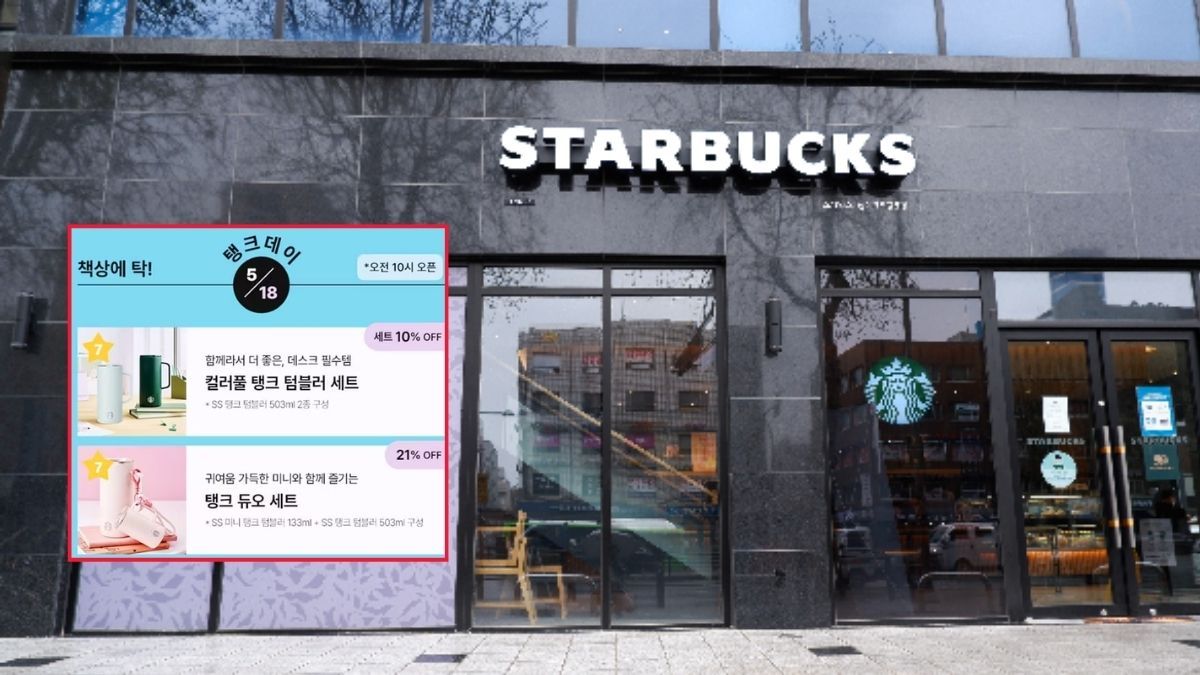
The controversy erupted after the company promoted its “Tank Series” tumblers on May 18 using phrases including “Tank Day” and “Tak! on the desk”, prompting online outrage, boycott calls and criticism from politicians, educators and civic groups across the country.
Shinsegae Group, the conglomerate controlling Starbucks Korea, said the campaign was an “inexcusable mistake” and dismissed Starbucks Korea chief executive Sohn Jeong-hyun following the backlash. The promotion was suspended within hours of its launch.
Campaign sparks historical controversy
The promotional event was tied to Starbucks Korea’s tumbler campaign running from May 15 to 26, featuring products including the Colorful Tank Tumbler Set and Tank Duo Set.
Critics said the use of the phrase “Tank Day” on May 18 evoked the military vehicles deployed during the violent suppression of pro-democracy demonstrators in the southern city of Gwangju in 1980.
The phrase “Tak! on the desk” also drew criticism for echoing a notorious police statement connected to the 1987 torture death of student activist Park Jong-cheol.
At the time, police claimed Park had collapsed after investigators hit a desk forcefully during questioning. Later investigations revealed he had died under torture, and the statement became a symbol of state brutality during South Korea’s authoritarian era.
Reports estimate that hundreds of demonstrators were killed during the Gwangju Uprising after troops deployed by the military regime of Chun Doo-hwan suppressed protests against martial law. Subsequent investigations confirmed that troops committed rape and sexual assault during the crackdown.
The uprising later became a defining moment in South Korea’s democratisation movement, helping fuel nationwide protests that culminated in the June 1987 movement that ended Chun’s authoritarian rule.
President Lee condemns campaign
President Lee Jae Myung strongly criticised the campaign in a post on X on May 18.
“On the anniversary of the Gwangju Democratic Uprising in 1980, an event called ‘Tank Day’ that insults the bloodstained struggle of the victims and citizens of Gwangju is unacceptable,” Lee wrote.
“How many innocent lives were unjustly taken that day, and how severely has justice and history been damaged? What kind of grudge could have led to this act?”
“I am outraged by the inhuman and despicable behavior of these lowly merchants, who deny the values of the South Korean community, basic human rights, and democracy,” he added.
Lee also said that “moral, administrative, legal, and political responsibilities must be held accordingly” and questioned whether the company had apologised to victims and bereaved families connected to the uprising.
Starbucks and Shinsegae apologise
Starbucks Korea acknowledged that “inappropriate wording” had been used in the campaign and apologised publicly.
“We sincerely apologise for causing inconvenience and concern to our customers due to this,” the company said. “We have immediately suspended the event and will review and improve our internal processes to prevent similar incidents from recurring in the future.”
Starbucks Global, headquartered in Seattle, described the controversy as an “unacceptable marketing incident” in a statement to The Korea Times.
“We are deeply sorry for an unacceptable marketing incident in Korea that referenced and coincided with May 18, the commemoration of the Gwangju Democratization Movement — a day of profound historical and human significance,” the company said.
The company also apologised to “the people of Gwangju, to those impacted by this tragedy, and to our customers and communities”, adding that it was implementing “stronger internal controls, review standards and companywide training”.
Starbucks Global spokesperson Jaci Anderson told The Korea Times that the company had “nothing more to share” beyond previously announced measures and an ongoing investigation.
Shinsegae chairman Chung Yong-jin called the campaign “an inexcusable mistake that trivialised the suffering and sacrifices of all those who have dedicated themselves to the democracy of this country”.
In a statement published Tuesday, Chung pledged to “thoroughly investigate” the approval procedures behind the event and “re-examine the review process” for marketing content across all Shinsegae affiliates.
Boycott calls spread online
Public backlash intensified online, with consumers sharing photographs of themselves destroying or discarding Starbucks products while calling for a boycott of Starbucks Korea and Shinsegae.
One social media user wrote: “I can’t believe they thought they could pull off something like this and people would just let it slide... it’s utterly absurd and infuriating.”
Another consumer wrote online that they had smashed their only Starbucks mug because they would “never consume Starbucks again” after the company “mocked May 18”.
Some users also circulated edited images combining the Starbucks logo with boycott slogans and political criticism.
Criticism expanded beyond social media into political and educational circles.
A spokesperson for a Democratic Party candidate in Gwangju described the campaign as “a historical insult mocking a tragedy in modern Korean history and a deliberate provocation”, while lawmakers and local officials demanded broader accountability beyond the removal of the chief executive.
The Gwangju Metropolitan Office of Education sent a formal protest letter to Starbucks Korea on May 19, warning that it could consider excluding the company from future official partnership projects if meaningful corrective measures were not taken.