Suicide bombing on Quetta shuttle train kills at least 24 in Pakistan
At least 24 people were killed and around 70 injured after a suicide bombing targeted a shuttle train carrying security personnel and civilians in Quetta, Pakistan, authorities said.
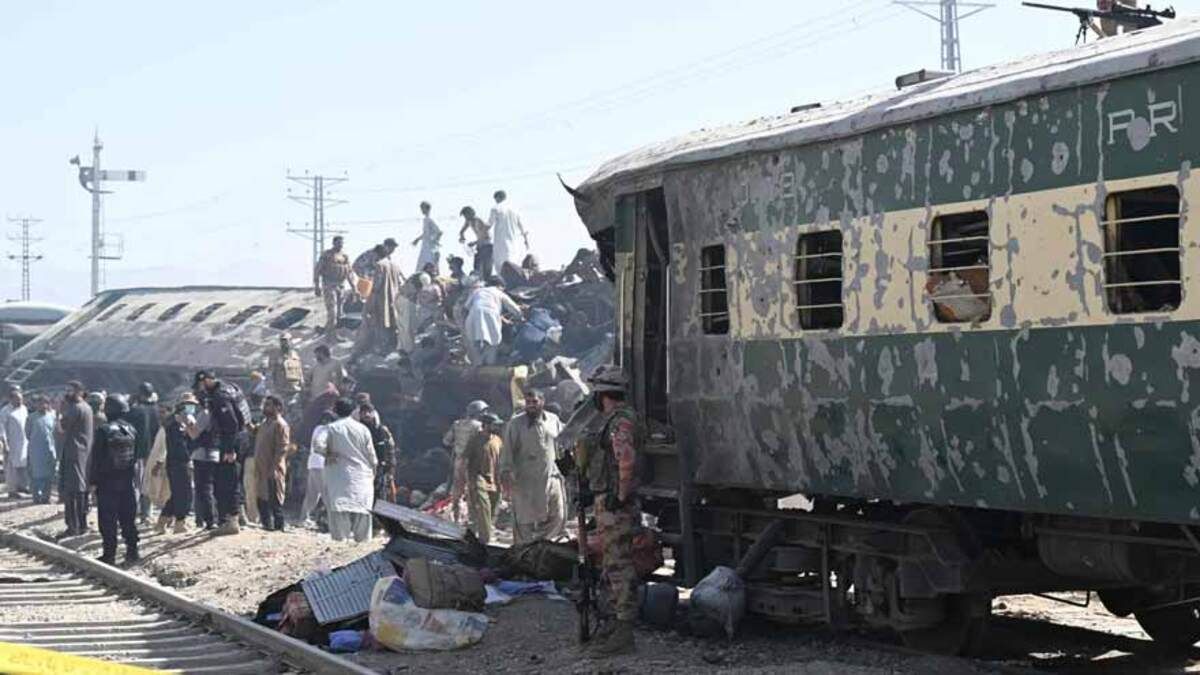
- At least 24 people were killed after a suicide bombing targeted a train in Quetta.
- The Baloch Liberation Army claimed responsibility for the attack, according to AFP and Reuters.
- Pakistani authorities launched emergency rescue and security operations following the bombing.

At least 24 people were killed and around 70 others injured after a suicide bombing targeted a shuttle train in Quetta, the capital of Pakistan’s south-western Balochistan province, on Sunday morning, officials and international news agencies reported. Earlier figures from the Balochistan government had put the death toll at 14, with 20 people injured.
The blast occurred shortly after 8:00 a.m. near Chaman Phatak, a railway crossing area in Quetta, as the shuttle train was travelling from Quetta Cantonment towards the city’s main railway station.
The train was reportedly carrying security personnel and their families and was connected to travel arrangements involving the Peshawar-bound Jaffar Express.
The Balochistan Home Department said the train was targeted by a vehicle-borne suicide bomber. Local officials said the explosion caused three coaches, including the locomotive, to derail, while two coaches overturned. Nearby vehicles were also set ablaze, and houses and buildings close to the railway line sustained damage.
Officials said the dead included civilians and security personnel.
Earlier provincial statements said three Frontier Corps personnel were among those killed, while most of the victims were civilians, including passengers, bystanders, pedestrians and residents of nearby houses.
The provincial government also said one family of four — a father, mother, son and daughter — died in the blast.
Women and children were among the injured. Ambulances took casualties to hospitals across Quetta, where authorities declared a medical emergency and called in doctors, paramedics and other medical staff for urgent duty.
Police, the Counter-Terrorism Department, bomb disposal squads and forensic teams cordoned off the area after the explosion and began collecting evidence. Rescue trucks and a relief train were also sent to support emergency operations.
Television footage and photographs from the scene showed a mangled train carriage lying on its side, burnt-out cars, damaged buildings, twisted metal and smoke rising from the wreckage.
Rescuers, security personnel and local residents were seen searching through debris and carrying injured people on stretchers.
Dawn Today also posted visual updates from the scene on Instagram, including a reel reporting that at least 14 people had initially been killed and several others injured after the blast tore through the shuttle train near Chaman Phatak.
View this post on Instagram
Prime Minister Shehbaz Sharif condemned the attack in a post from his official X account, saying he “strongly condemn[ed] the heinous bomb explosion near Chaman Phatak, Quetta”, which had caused the loss of innocent lives and left many others injured. He said “such cowardly acts of terrorism” would not weaken Pakistan’s resolve, adding that the country remained determined to eliminate terrorism “in all its forms and manifestations”. Sharif also expressed condolences to the families of those killed and prayed for the swift recovery of the injured..
Witnesses described panic after the blast. Mohammad Rahim, who was near the site, told AFP he had been asleep when the explosion occurred and heard screaming and crying from women and children. Another witness, Abdul Basit, said people ran for shelter after hearing the blast.
The Baloch Liberation Army, a banned separatist militant group, claimed responsibility for the attack, according to AFP and Reuters. The group has previously claimed attacks in Balochistan, including incidents targeting railway infrastructure and security forces.
Balochistan, Pakistan’s largest province by area, borders Iran and Afghanistan and has faced a long-running insurgency involving separatist militant groups. Railway lines in the province have been targeted repeatedly in recent years. The Jaffar Express has also been attacked several times, including in a major hijacking in March 2025 and other blasts that damaged tracks or derailed carriages.
Following Sunday’s attack, the Balochistan government established a control room at the Deputy Commissioner’s Office in Quetta and activated a monitoring and coordination cell at the Home Department. Officials said Section 144, a legal order restricting public gatherings and movement in sensitive areas, was already in force because of security concerns.
Interior Minister Mohsin Naqvi and Balochistan Chief Minister Sarfraz Bugti later chaired a high-level meeting in Quetta to review the security situation and the initial investigation. Senior police and law-enforcement officials attended the meeting, where Balochistan’s police chief presented an initial report.
President Asif Ali Zardari condemned the bombing and expressed condolences to the families of those killed.
Railways Minister Hanif Abbasi also condemned the attack and directed authorities to submit an immediate report. He said Pakistan Railways operations would continue despite the bombing.
Condemnations also came from several foreign missions and governments, including China, the United States, the United Kingdom, Russia, Turkiye, Azerbaijan, Australia, Iran, Norway and Afghanistan. The diplomatic statements expressed condolences to the victims’ families and support for Pakistan following the attack.
The Human Rights Commission of Pakistan said it was alarmed by the security situation in Balochistan and cited a rise in attacks on civilians, workers, passengers, law-enforcement personnel and public infrastructure.
Security agencies have since been directed to tighten surveillance in parts of Balochistan and neighbouring Khyber Pakhtunkhwa after intelligence warnings of possible further attacks on highways and transport routes.