Man sentenced to maximum three years' jail for 21 years of national service evasion
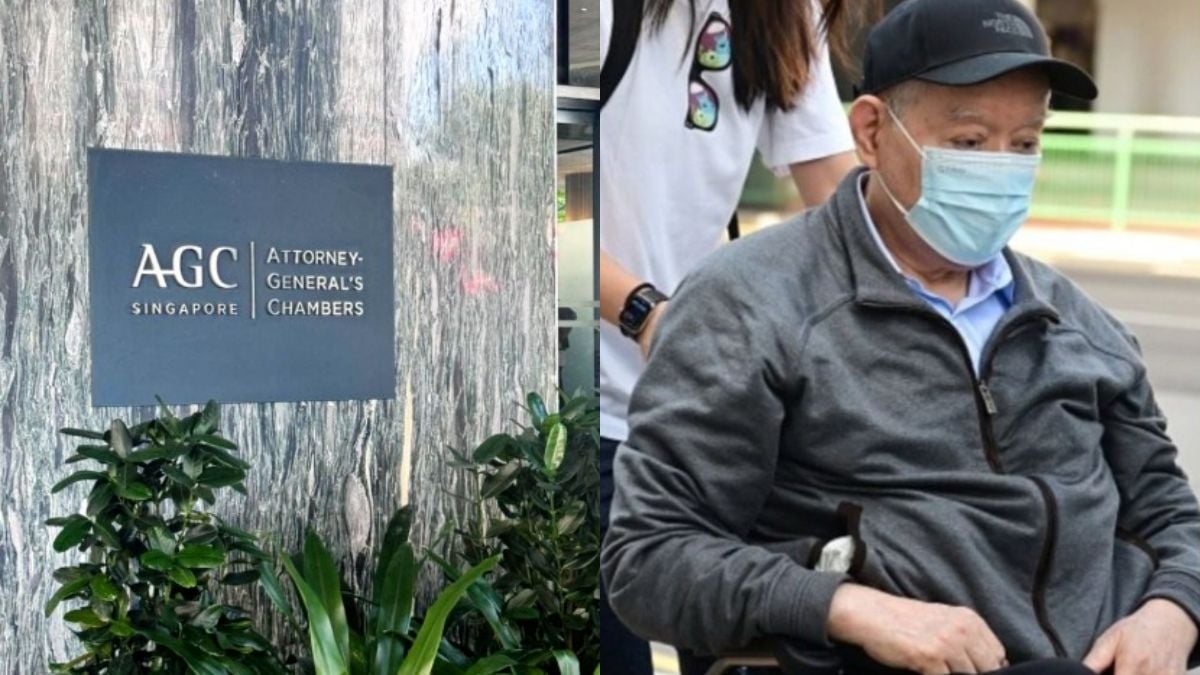
A 47-year-old dual national has received Singapore's longest-ever custodial sentence for national service evasion, after a court found he had wilfully defaulted on his obligations for more than two decades.

- A Singapore court sentenced dual national Edmond Yao Zhi Hai to the maximum three years’ jail for evading national service obligations for over 21 years.
- The court found Yao deliberately avoided both full-time NS and reservist duties despite repeated notices and official correspondence rejecting his exemption claims.
- Judge James Elisha Lee rejected Yao’s defence that he believed Indonesian law exempted him, calling his conduct among the most serious NS default cases.

A Singapore court sentenced a 47-year-old dual national to three years' imprisonment on 26 May 2025, the longest custodial term imposed in Singapore for a national service (NS) defaulting case.
Edmond Yao Zhi Hai was convicted in March this year following a contested trial on a charge of failing to report for enlistment.
He subsequently pleaded guilty in April to immigration offences.
District Judge James Elisha Lee, sitting at the State Courts, imposed the maximum sentence under the Enlistment Act and an additional fine of S$3,000 (US$2,350) for the immigration charges.
Judge Lee found that Yao had evaded both the entirety of his full-time NS obligations and his post-Operationally Ready Date (ORD) reservist duties.
Because Yao was past the age of 40 when he was arrested in 2021, he could no longer serve the obligations he had avoided.
The judge said his conduct fell within the worst category of NS defaulters.
Yao, through his lawyers Sunil Sudheesan and Joyce Khoo of Quahe Woo & Palmer, filed an immediate appeal against both his conviction and sentence. He remains on bail pending that appeal.
Background and dual citizenship
Yao was born in Singapore in 1978 to a Singaporean mother and an Indonesian father. His Singapore birth certificate was issued the same year, making him a Singapore citizen by birth. He was never issued a Singapore passport.
In 1979, his father successfully obtained Indonesian citizenship for him. An Indonesian passport was issued to Yao in 1983 under the name Edmond Jauw Ming Siang, listing his nationality as Indonesian.
Yao studied in Singapore between 1984 and 1996, attending Catholic High School, Raffles Institution and Raffles Junior College (RJC).
His completion of education at RJC was later cited by the Central Manpower Base (CMPB) as an exercise of the rights and privileges of Singapore citizenship.
On 26 January 1996, CMPB sent Yao a notice requiring him to register for NS. He signed and returned the registration form by 7 February 1996.
A letter from his mother accompanying the form stated that Yao wished to renounce his Singapore citizenship in favour of his Indonesian citizenship.
CMPB replied that, having exercised the rights and privileges of Singapore citizenship through his education here, Yao was required to fulfil his NS obligations without exception.
The deferral option available to those who had not exercised such rights did not apply to him.
Failure to report and police gazette
Yao did not report to CMPB for enlistment on 23 January 1997.
He also failed to comply with a second enlistment notice delivered by hand to his address the following day.
A police gazette was issued for his arrest on 28 January 1997, less than five days after he first failed to report.
The gazette, however, reflected his name as it appeared on his Singapore National Registration Identity Card (NRIC), not the name on his Indonesian passport.
Yao completed further education abroad between July 1997 and June 2001.
In October 2003, he wrote to the Singapore Embassy in Indonesia requesting to renounce his Singapore citizenship.
The embassy referred the matter to the Immigration and Checkpoints Authority (ICA), which replied that the renunciation application was withheld under the Constitution of the Republic of Singapore.
In January 2005, Yao married a Singaporean woman, using his Indonesian passport to register the marriage in Singapore.
He also applied for Singapore permanent residence, but ICA rejected the application on the basis that he was already a Singapore citizen.
Travel using Indonesian passport
Between 2008 and 2020, Yao travelled in and out of Singapore on 13 occasions using his Indonesian passport, which bore a different name from his Singapore NRIC.
The defence had argued at trial that his unimpeded travel indicated the authorities regarded him as an Indonesian citizen, not a Singaporean subject to NS obligations.
Judge Lee rejected this argument.
He noted that the police gazette had been raised in Yao's NRIC name, while Yao had consistently used an Indonesian-name passport at border checkpoints.
"His failure to contact CMPB to resolve his NS liabilities can only be attributable to an outright refusal to acknowledge his NS obligations," the judge said.
"It is disingenuous for him to now claim that there was no enforcement action taken against him when he had clearly contributed to his non-apprehension."
The judge found no unreasonable delay in prosecution and held that any delay in enforcement was materially contributed to by Yao's own conduct.
Defence arguments rejected
At trial, Yao contested the enlistment charge on the basis that he believed he was bound by Indonesian law not to enlist, as Indonesian law forbids citizens from entering foreign military service.
Judge Lee rejected the argument that Yao was operating under a genuine mistake of fact about his status in Singapore.
The judge also found that Yao could not, by any reasonable interpretation, be considered to have acted in good faith.
CMPB had consistently communicated to Yao and his parents from the outset that he was required to serve his NS obligations.
That correspondence, spanning years, left no room for a credible claim of genuine belief in exemption.
Arrest and conviction
Yao was arrested on 1 September 2021 at the ICA visitor services centre when he attempted to extend his short-term visit pass.
At that point, more than 21 years and nine months had elapsed since his first failure to report for enlistment.
Under the Enlistment Act, the maximum penalty for failing to report for NS is three years' imprisonment, a fine of up to S$5,000, or both.
The prosecution had sought the maximum jail term and the S$3,000 fine for the immigration offences. The court imposed both.