Contractor cleared protected nature reserve saplings without approval, NParks investigating
Singapore's National Parks Board is investigating the unauthorised clearance of around 40 saplings and shrubs at Lower Peirce Reservoir, within the Central Catchment Nature Reserve, by a contractor who defied repeated warnings.
- A contractor cleared 40 saplings at Lower Peirce Reservoir for storage, defying NParks warnings.
- Trees were planted by citizen scientists supporting the critically endangered Raffles' banded langur.
- NParks is investigating; offenders face fines up to S$50,000 and six months' jail.

Singapore's National Parks Board (NParks) announced on Thursday, 4 June 2026, that it is investigating the unauthorised clearance of a tree-planting site at Lower Peirce Reservoir, within the Central Catchment Nature Reserve.
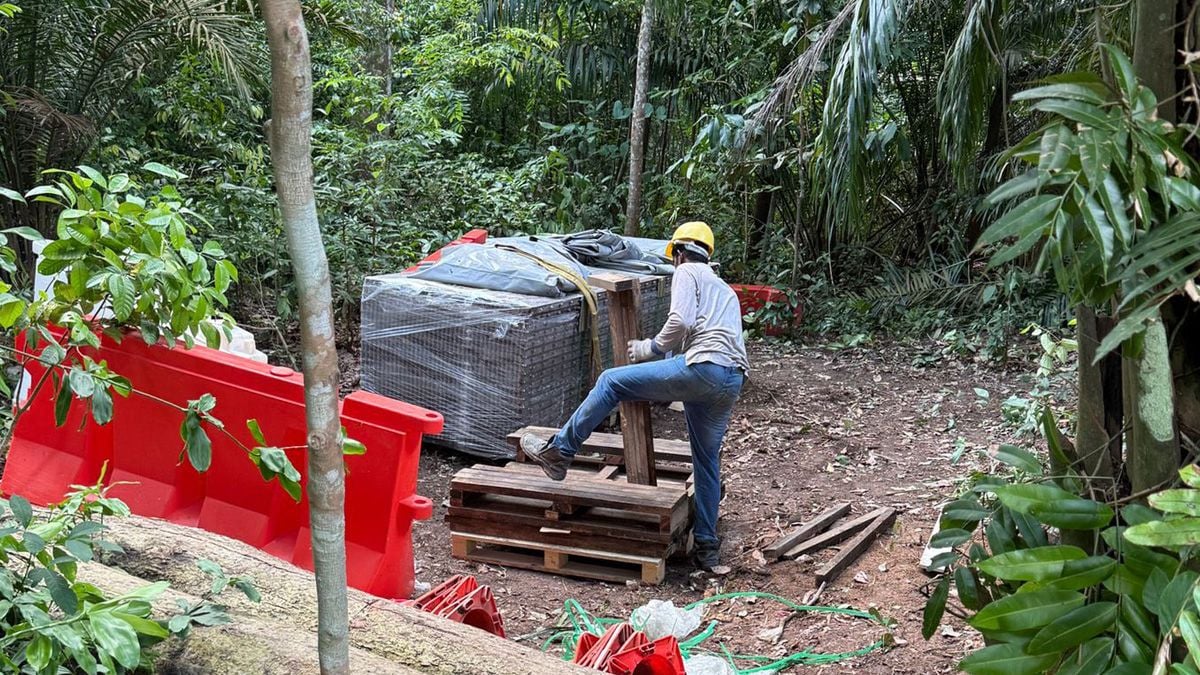
A contractor cleared approximately 40 saplings and shrubs — about half the original planting site, covering an area of roughly 40 sq m, or half the size of a badminton court — without obtaining permission, in order to temporarily store construction materials at the location.
NParks group director for conservation Lim Liang Jim said the board would not hesitate to take action against errant parties. NParks did not name the contractor in its statement.
Contractor defied repeated warnings
According to Lim, NParks had on multiple occasions communicated to the contractor's site supervisor that the area was unsuitable for storage and had directed the supervisor to use an alternative location.
"However, the contractor went against NParks' direction and proceeded to clear the area on 29 May 2026 without informing NParks," he said.
News of the clearance was first brought to public attention on 2 June 2026, when a member of the public posted photographs on social media and informed the Raffles' Banded Langur Working Group. The photos showed contractors moving construction materials onto flattened soil and saplings at the site.
By the afternoon of 2 June, the materials had been removed and the barren patch cordoned off. Only a few lone saplings remained intact.
An NParks staff member inspecting the site that morning had already discovered the clearance, Lim according to CNA.
He said NParks immediately instructed the contractor to stop all work and remove the stored items, and that the board intends to replant the site.
Trees planted for critically endangered langur
The site held 87 saplings planted on 22 January 2025 by citizen scientists from the Raffles' Banded Langur Working Group, as part of NParks' OneMillionTrees movement. The programme, launched in 2020, aims to plant 1 million trees across Singapore by 2030.
The Raffles' banded langur is one of only two monkey species native to Singapore and is classified as critically endangered.
Of the five native species planted, two were chosen as food plants for the langurs: Canthiumera robusta (Green Coffee), which is endangered, and Vitex pinnata (Malayan Teak). The remaining three were the critically endangered Kopsia singapurensis (White Kopsia), as well as Horsfieldia polyspherula and Ixora congesta (Malayan Ixora).
Primatologist Dr Andie Ang, chairperson of the working group, told CNA that she organised the planting as part of celebrations leading up to the group's 10th anniversary in 2026. She said the site and species had been selected by NParks.
Volunteers respond with shock and grief
Ang said she was alerted on 2 June after a volunteer at the site contacted her to report that the planting area had been "flattened" and that construction materials were there.
Following the discovery, Ang posted a message to the working group's volunteers. "To all the volunteers who took extra care in planting each of the saplings, hoping they get to survive and provide shelter and food for our wild animals, I am very, very sorry. We will get an answer," she wrote.
She described the reaction of the citizen scientists as one of shock and disbelief. "They were shocked, they can't believe it, they were really sad, and they have a lot of questions now," she said.
Ang said the cleared trees had direct value for wildlife habitat and forest connectivity. She added that the planting exercise had given citizen scientists a tangible link between their data collection work and conservation action — translating knowledge of langurs' diets into the planting of the food species they had identified.
"There was a lot of care put into ensuring that one sapling can survive, and we also know that the survival rate might not be high, so we were extra careful," she said.
While Ang said she would continue supporting such exercises for their biodiversity and community engagement value, she expressed "mixed and conflicted feelings" after the incident. She questioned whether saplings planted under the OneMillionTrees movement are being actively monitored, and whether the contractor has been suspended given the severity of what occurred.
Broader questions raised about OneMillionTrees
N. Sivasothi, a senior lecturer at the National University of Singapore's Department of Biological Sciences who has organised multiple OneMillionTrees plantings, described the incident to the Straits Times as a "significant setback" and said it represents a "distressing breakdown in site coordination, which requires systemic analysis".
He stressed that volunteer plantings are not decorative gestures but carefully planned ecological efforts to provide food, shelter, and connectivity for wildlife.
Sivasothi noted that each sapling represented months or years of preparation. "Propagating seeds is painstaking work — flowering in the forest is irregular, not all seeds can be harvested to avoid ecological impact, germination and growth rates can be low, and young plants need careful attention before they are ready for planting in the field," he said.
He warned that such incidents threaten NParks' vision of Singapore as a City in Nature, and said critics have already questioned whether the OneMillionTrees movement amounts to what he called "performative planting to appease forest removal elsewhere", given perceived over-pruning of mature trees, unexplained tree removals, and forest clearances for development.
Sivasothi called for a systemic assessment of Singapore's greening vision, the development of forest enhancement plans in consultation with nature groups, and a requirement for development projects to compensate for forests cleared — not through area substitution, he said, but through habitat restoration of degraded green sites with community participation.
Legal framework and ongoing investigation
Under Singapore law, it is an offence to cut, collect, or displace any tree or plant within a national park or nature reserve without permission from the Commissioner of Parks and Recreation. Offenders can be jailed for up to six months, fined up to S$50,000, or receive both penalties.
NParks confirmed its investigation is ongoing but did not specify what action had been taken against the contractor as of Thursday.
Not first instance of unauthorised clearance
The Lower Peirce incident is not the first time a contractor has cleared protected land without authorisation in Singapore. In the Kranji woodland case, four individuals from JTC Corporation and CPG Consultants were convicted of conspiring to fell 362 trees without approval between late 2020 and January 2021, in connection with the development of the Kranji Agri-Food Innovation Park. The two JTC officers and two CPG Consultants personnel received fines ranging from S$20,000 to S$30,000, totalling S$106,000.
Huationg, the contractor that physically carried out the felling, was issued a stern warning. No charges were brought against the company. There is no public record of debarment from future government contracts for either Huationg or CPG Consultants.