Singapore court issues second warning in three months against misuse of committal proceedings for debt recovery
A Singapore district court has for the second time in three months dismissed an attempt to commit a company director for contempt over a missed debt examination hearing, warning of an "unhealthy increase" in committal proceedings being misused as a debt collection tool in the State Courts.
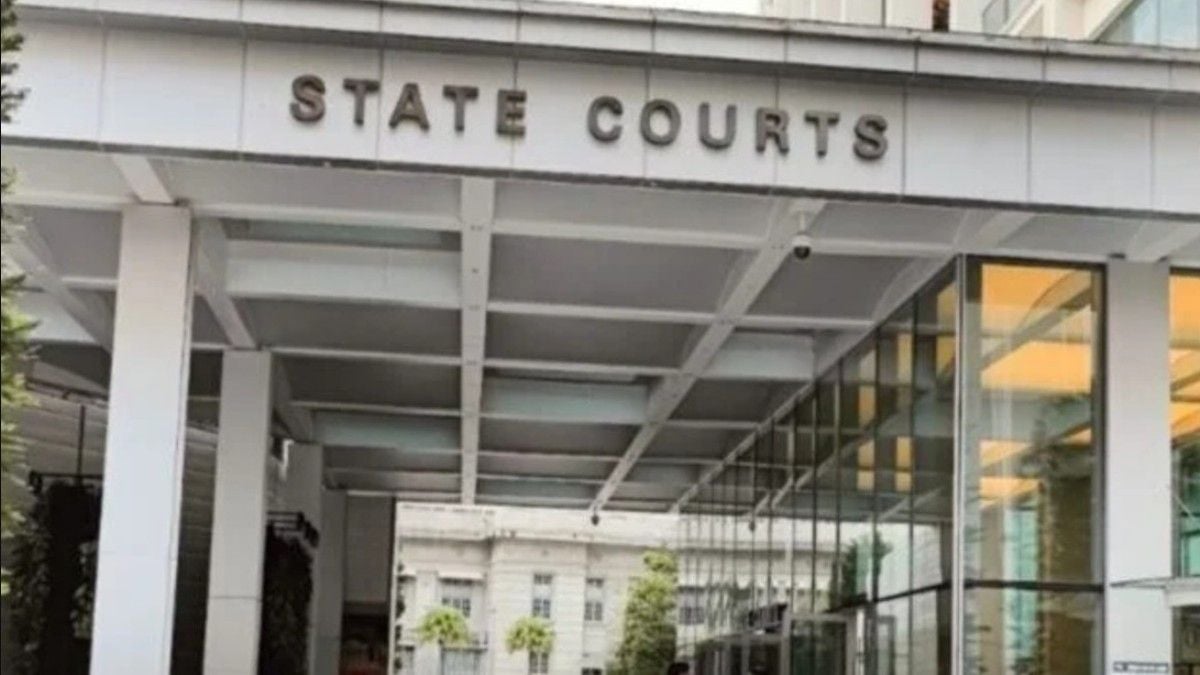

A Singapore district court has for the second time in three months dismissed an application to commit a company director for contempt of court over absence at a debt examination hearing, with the presiding judge sharpening his warning that committal proceedings are being misused as a debt collection tool in the State Courts.
In Cairnhill Law LLC v Royal's Sanitary & Plumbing Pte Ltd, delivered on 3 June 2026, District Judge Chiah Kok Khun dismissed an application by law firm Cairnhill Law LLC to commit director Ms Subramanian Deepa for missing an adjourned examination of enforcement respondent (EER) hearing.
The ruling follows an earlier decision by the same judge in Cairnhill Law LLC v Royal's Engineering & Trading (S) Pte Ltd, delivered on 30 March 2026, in which a near-identical application against a separate director was also dismissed.
Both cases involve the same law firm as claimant. The judge's language grew notably stronger between the two decisions — from observing an "increase" in committal filings in March to characterising it as an "unhealthy increase" by June.
The June judgment: Cairnhill Law LLC v Royal's Sanitary & Plumbing Pte Ltd
Cairnhill Law had previously acted for Royal's Sanitary & Plumbing and obtained a default judgment against the company for unpaid legal fees. It then sought an EER order — a court-supervised process by which a judgment debtor's director is examined on the company's financial position and ability to satisfy the debt.
Deepa attended the initial EER hearing on 11 November 2025 and submitted the required questionnaire, albeit with two pages missing due to a double-sided printing oversight. She sought time to provide further supporting documents, which was granted. The matter was adjourned to 16 December 2025.
She did not appear on the adjourned date, explaining that without pen and paper at the hearing she had committed the date to memory and mistakenly recalled it as 19 December 2025.
Upon realising her error, Deepa wrote to the court on 22 December 2025 apologising and affirming her readiness to comply with any further directions. The letter was copied to the claimant. Within a week, on 30 December, she furnished all outstanding documents to Cairnhill Law.
Cairnhill Law did not respond to her compliance. Instead, on 31 December 2025, it informed the court it had filed for leave to commence committal proceedings — without disclosing to the court that Deepa had by then fully complied with the documentary requests. On 10 February 2026, Deepa paid the full judgment sum including costs.
District Judge Chiah found that Deepa had taken reasonable steps throughout the EER process and that her failure to attend the adjourned hearing was wholly attributable to an honest and reasonable mistake. He found her conduct was not contumelious and that she had in any event purged whatever contempt might otherwise have existed through her prompt apology, document production, and eventual full payment.
The applicable standard of proof in committal applications is the criminal standard — beyond reasonable doubt. The court found that standard had not been met.
Given the circumstances, the court ordered each party to bear its own costs.
The March judgment: Cairnhill Law LLC v Royal's Engineering & Trading (S) Pte Ltd
The earlier decision concerned Mr Manickam Nagarajan ("Naga"), director of Royal's Engineering & Trading, against whom Cairnhill Law had similarly obtained a default judgment for unpaid fees.
Naga attended the first EER hearing on 10 October 2025. He informed the deputy registrar he had not received the EER questionnaire and provided his email address as directed. The matter was adjourned to 29 October 2025.
Before the adjourned hearing, Naga appointed solicitors to act for him in the EER proceedings. His solicitors filed an application to stay execution of the default judgment pending a separate application to set aside the judgment entirely.
On 29 October 2025, his solicitor attended the adjourned EER and sought an adjournment pending those applications. Naga himself was absent — he had a medical appointment at Tan Tock Seng Hospital confirmed by a certificate of attendance.
Despite the solicitor's attendance, the pending stay application, the pending setting aside application, and the confirmed medical appointment, Cairnhill Law asked the court to suspend the EER proceedings so it could apply for committal against Naga.
District Judge Chiah found that Naga had taken reasonable steps throughout, that his absence was honest and reasonable in the circumstances, and that his conduct was not contumelious. The judge noted pointedly that the defendant had fully paid the judgment sum by 29 January 2026 — rendering the committal application entirely moot in retrospect.
Court's legal findings across both decisions
In both judgments District Judge Chiah applied the same framework. Under section 4(1) of the Administration of Justice (Protection) Act 2016, contempt of court requires intentional disobedience of a court order. Under section 21 of the same Act, a person is not guilty of contempt where failure to comply is wholly or substantially attributable to an honest and reasonable failure to understand an obligation, and where that person ought fairly to be excused.
The judge applied the two-step test from PT Sandipala Arthaputra v STMicroelectronics Asia Pacific Pte Ltd [2018] 4 SLR 828 — first determining what the order required, then assessing whether the alleged contemnor had the necessary mental element. In both cases he found the criminal standard of proof beyond reasonable doubt was not met.
Anchoring both decisions in Court of Appeal authority, District Judge Chiah cited Mok Kah Hong v Zheng Zhuan Yao [2016] 3 SLR 1 for the established proposition that committal orders are remedies of last resort — and that whilst applicants need not exhaust every alternative enforcement mechanism before filing, committal must not be deployed as a pressure tool.
Judicial warning against misuse
The judge used both decisions to address what he characterised as a systemic problem in the State Courts.
In the March judgment he observed that there had been "an increase in the filing of committal proceedings in the State Courts to enforce court orders" and called for a curtailment of such applications. By the June judgment that language had hardened — he described the increase as "unhealthy" and directed that "the courts need to guard against the misuse of committal proceedings."
In both decisions he drew a clear distinction between committal proceedings — which exist to vindicate the court's authority — and ordinary debt enforcement, which must proceed through the available statutory mechanisms. For monetary judgments specifically, he noted that judgment creditors have a range of procedural enforcement tools available, including garnishment and writs of seizure and sale, and that there is no justification for bypassing these in favour of the more draconian committal route.
"Committal proceedings are draconian measures which are quasi-criminal in nature," he wrote in the June decision. "They are not a tool to be misused to harass judgment debtors into paying up on their judgment debts."
He was also critical of Cairnhill Law's conduct in both cases specifically — noting that in each instance the firm moved immediately to suspend the EER and commence committal proceedings rather than seeking a short adjournment to allow the examinee an opportunity to attend and furnish the required information.
Legal significance
The two decisions together establish a consistent and uncontested line of authority on the limits of committal proceedings as an enforcement mechanism in the Singapore State Courts. Both are anchored in Court of Appeal precedent. Neither has been appealed.
The judgments make clear that committal for non-attendance at EER hearings requires proof of intentional breach to the criminal standard — and that honest mistakes, prompt remediation, and demonstrated cooperation are sufficient to defeat such applications. They also place applicants on notice that rushing to committal without exhausting less draconian options risks adverse costs consequences and judicial criticism.