Hezbollah rejects Lebanon-Israel ceasefire as fighting continues
Hezbollah has flatly rejected the terms of a US-brokered ceasefire agreed between the Lebanese and Israeli governments, calling the deal a "roadmap to annihilate part of the Lebanese people" and demanding a full Israeli withdrawal from Lebanon.
- Hezbollah rejects US-brokered ceasefire, calling it surrender; demands full Israeli withdrawal from Lebanon
- At least eight people killed in southern Lebanon on Thursday despite ceasefire announcement
- Trump faces domestic pressure over Iran war as Republican unity fractures in Congress

Hezbollah has rejected the terms of a ceasefire agreed between the Lebanese and Israeli governments, declaring the deal a "roadmap to annihilate part of the Lebanese people" and demanding a complete cessation of hostilities and a full Israeli withdrawal from Lebanese territory.
The Iran-backed group's leader, Naim Qassem, issued a statement on Thursday categorically rejecting the agreement reached after a fourth round of US-mediated talks in Washington. He described the negotiations as "futile" and "humiliating" for Lebanon, and said they had been rejected by "broad segments of the Lebanese people".
"As long as the occupation exists, the resistance will continue," Qassem said. He called on Lebanese officials to "put an end to this farce and humiliation called direct negotiations."
The ceasefire deal, announced jointly by the United States, Lebanon and Israel on Wednesday, required a complete cessation of fire by Hezbollah and the evacuation of all Hezbollah operatives from the area south of the Litani River — approximately 30 kilometres north of the Israeli border — which is currently under Israeli ground occupation.
Under the agreement, the US would help establish "pilot zones" in which the Lebanese Armed Forces would take "exclusive control of the territory to the exclusion of all non-state actors". No maps were included to indicate where the pilot zones would be located, nor any explanation of how they would function in practice.
Fighting continues despite ceasefire announcement
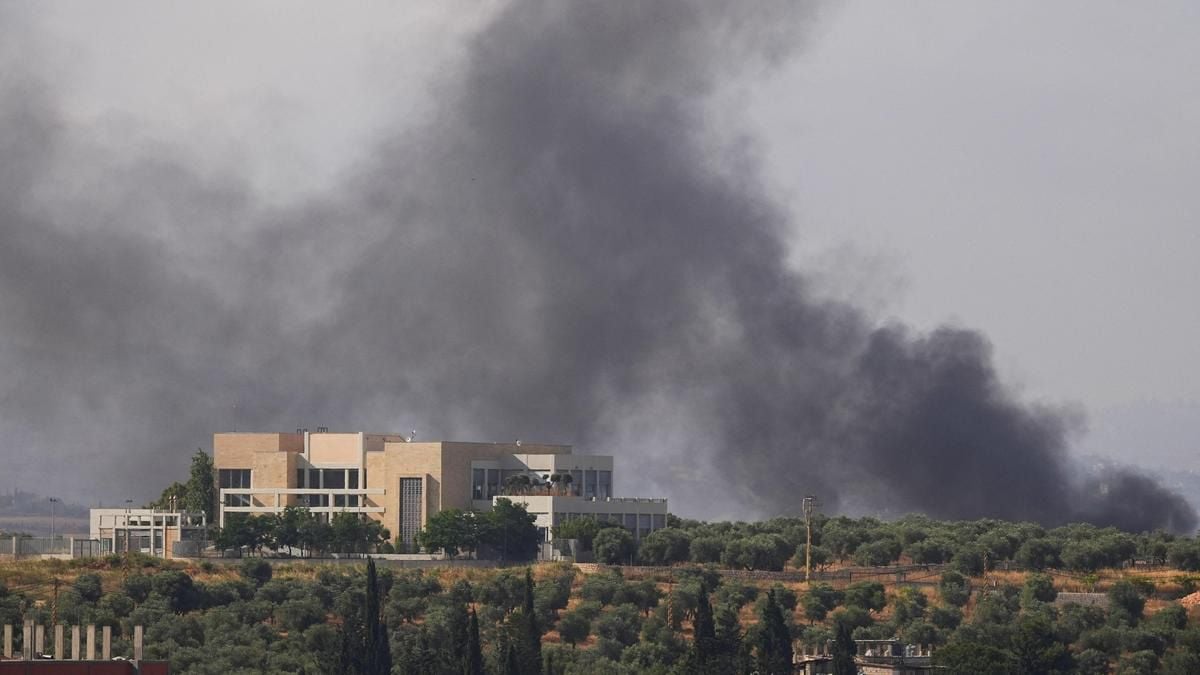
Despite the ceasefire announcement, both sides continued military operations on Thursday. The Lebanese health ministry reported that at least eight people were killed and 15 others injured in Israeli strikes targeting the towns of Sohmor, Masaken and Arab Al-Jalil in southern Lebanon.
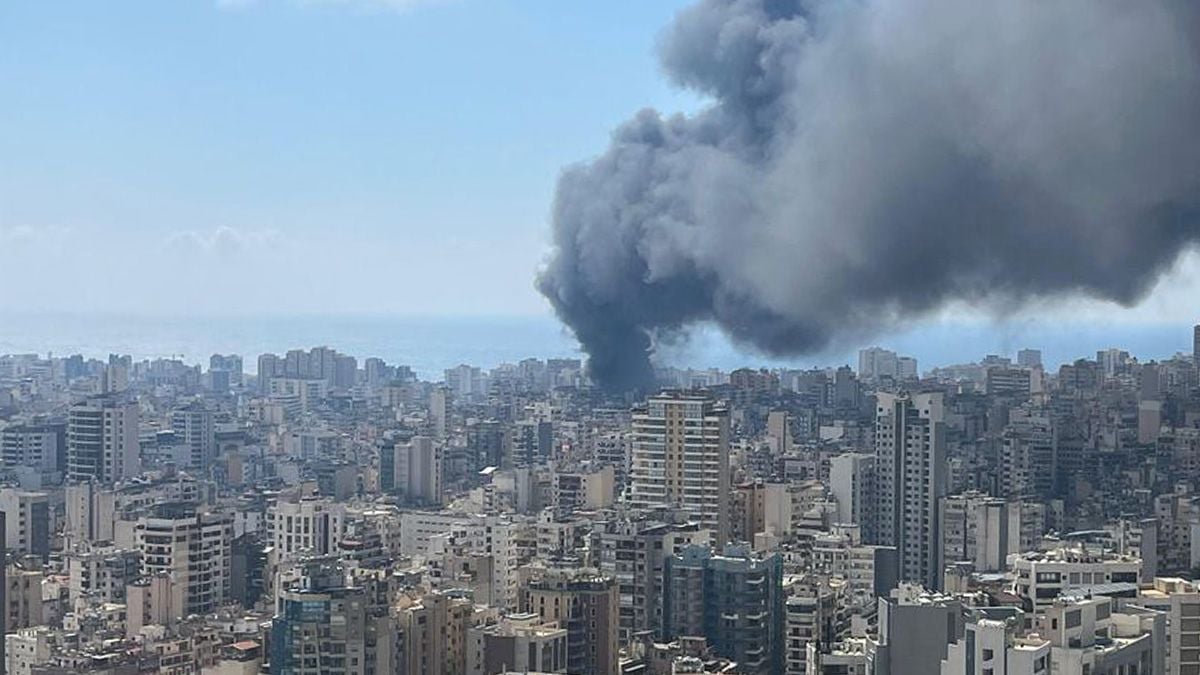
Israel's defence minister, Israel Katz, said the military would "for the time being, continue its fire and operations on the ground" and would not withdraw from southern Lebanon. Katz said Israeli forces would remain in a self-declared buffer zone up to the Yellow Line, including in the Beaufort area, and that Lebanese civilians displaced by the conflict would not be permitted to return.
Katz also asserted that Israel had US backing to "strike Beirut in response to fire on Israeli communities and territory."
Lebanese media reported multiple Israeli drone and air strikes across the south on Thursday morning. Lebanon's state-run National News Agency said at least two drone strikes targeted vehicles in southern Lebanon shortly after the ceasefire was confirmed.
Hezbollah said it had targeted Israeli soldiers and military vehicles in the town of Qantara and the Beaufort Castle area with attack drones and rockets.
UN peacekeeper killed in southern Lebanon
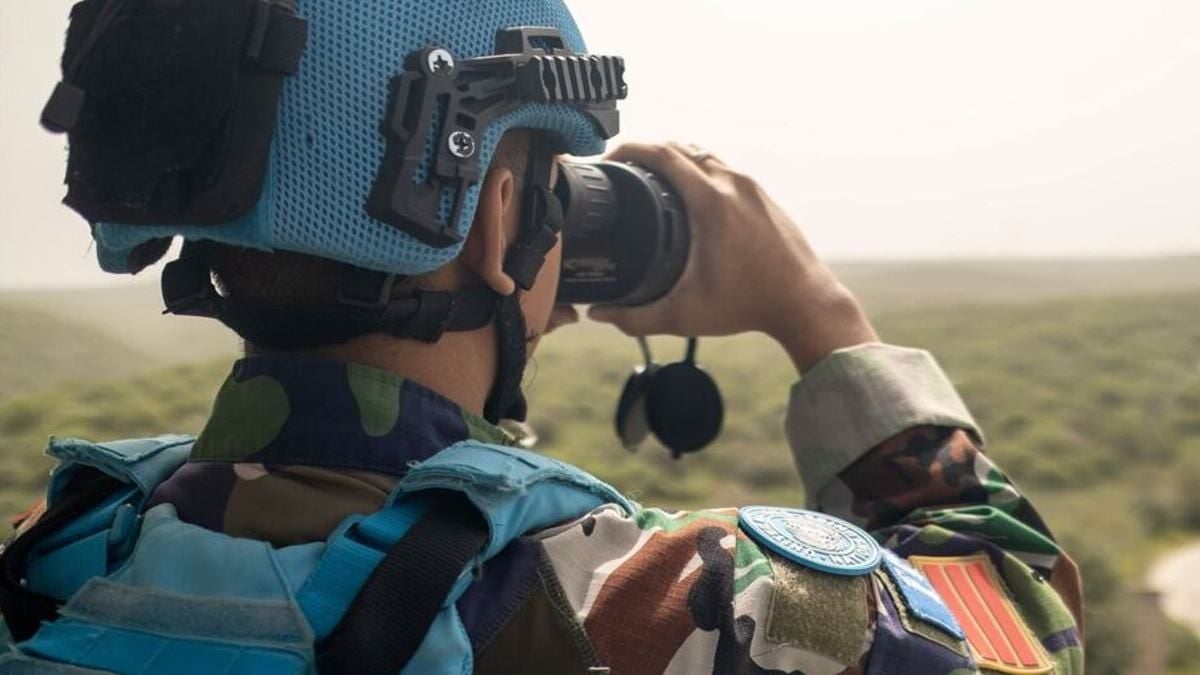
A UN peacekeeper serving with the United Nations Interim Force in Lebanon (UNIFIL) died on Thursday of wounds sustained when mortar shells struck his position near Marjayoun late on Wednesday. Two other peacekeepers were wounded in the same attack.
Serbia's defence ministry identified the peacekeeper as Senior Sergeant Milovan Jovanovic, one of approximately 170 Serbian nationals among the 7,500-strong UNIFIL force. The Israeli military accused Hezbollah of firing the mortars. Hezbollah did not immediately comment.
UN Secretary-General Antonio Guterres condemned the killing and called for those responsible to be brought to justice. "Seven peacekeepers serving with UNIFIL have now been killed and several more have been wounded since the escalation in hostilities since March this year," Guterres wrote. UNIFIL has launched its own investigation.
The Israeli military also announced on Thursday that one of its soldiers, Captain Eitan Shmuel Lemberg, had been killed in southern Lebanon.
Iran's position and the wider regional picture
Hezbollah's rejection of the ceasefire appears to align with Tehran's stated position. Iran's foreign ministry said Lebanon was "an integral part of any ceasefire and any final agreement." The head of the Quds Force, Esmail Qaani, the foreign operations arm of Iran's Islamic Revolutionary Guards Corps, stated that Israel must withdraw to the positions it held before the start of hostilities.
"Supporting the resistance in Lebanon is the duty of all of us, and removing Israel from the region is an attainable goal for Muslims," Qaani wrote on a domestic social media platform.
Iran has previously insisted that any ceasefire deal with the US and Israel must include a halt to the fighting in Lebanon. Tehran threatened this week to suspend talks with Washington in protest at Israel's ongoing offensive in Lebanon.
Lebanese Prime Minister Nawaf Salam, whose government negotiated with Israel without Hezbollah at the table, warned that those who delayed or rejected a ceasefire would bear responsibility for the consequences. "The negotiation track we chose is the fastest and least costly road for Lebanon, the Lebanese people, the south and its residents," Salam said.
Lebanese President Joseph Aoun said the ceasefire "could be implemented within 24 hours of its final approval" by all concerned parties, and suggested the first pilot zone be established in the area of Beaufort Castle.
Lebanon and Israel are to meet again on 22 June to continue negotiations "with a view toward reaching a comprehensive agreement".
Trump under domestic pressure over Iran war
US President Donald Trump, who claimed earlier this week to have personally halted an imminent Israeli strike on Beirut, appeared to downplay the fragility of the Lebanon ceasefire. "In that part of the world, a ceasefire is when you're shooting in a more moderate manner," he told reporters on Wednesday.
Trump is under growing domestic pressure to bring the Iran war to a close. Rising energy prices and economic uncertainty are threatening Republican prospects in the United States midterm elections.
For the first time, the House of Representatives this week passed a war powers resolution seeking to curb the conflict, with four Republicans joining Democrats in voting in favour of the measure. Trump dismissed the vote as meaningless, accusing the four Republicans of disloyalty.
Trump said on Wednesday he wants to separate negotiations over Lebanon from those on the Iran war — a position Tehran has explicitly rejected. He also confirmed reports that he had described Israeli Prime Minister Benjamin Netanyahu as "crazy", saying he was "a little bit perturbed" that Israel's Lebanon campaign was complicating US-led efforts to advance peace talks with Iran.
Analysts have noted that Israel seeks to inflict maximum damage on Hezbollah before any Iran peace deal constrains its military operations.
The US blockade of Iranian ports continues, with the military's Central Command reporting that 127 commercial vessels have been redirected and six non-compliant ships disabled. Tehran has been charging vessels up to US$2 million for passage through the Strait of Hormuz, which remains closed. Fragile negotiations over reopening the strait have stalled on multiple occasions.
Nuclear concerns mount as IAEA flags access gaps
The International Atomic Energy Agency (IAEA) flagged in a confidential report — seen by AFP and Reuters — that its lack of access to Iranian nuclear facilities since Israeli and US strikes destroyed them last June posed a "proliferation concern."
The agency has been unable to verify the fate of approximately 440 kilograms of uranium that Iran had enriched to 60 percent purity — near weapons-grade and far above the 3.67 percent cap under the 2015 nuclear deal. The report is to be discussed at an IAEA Board of Governors meeting next week.
Background: conflict origins and toll
Lebanon was drawn into the war on 2 March when Hezbollah launched rockets into Israel in retaliation for an Israeli strike that killed Iran's supreme leader. Israel responded with an air campaign across Lebanon and a ground invasion of the south.
A previous US-brokered ceasefire on 16 April failed to halt the fighting. Last week, Netanyahu ordered the military to intensify strikes and advance deeper into Lebanese territory following drone and rocket attacks on communities in northern Israel.
The Lebanese health ministry reports at least 3,526 people have been killed in Lebanon since the start of the war, a figure that does not distinguish between combatants and civilians. More than one million people have registered as displaced within Lebanon, with Israeli evacuation orders covering more than an eighth of the country's territory.
Israel says 26 of its soldiers and four civilians have been killed on both sides of the border during the war.