Japanese scam network leader arrested in Bangkok over Cambodia fraud and trafficking links
Thai police have arrested a Japanese national accused of leading a major Cambodia-based scam network that allegedly defrauded victims of billions of yen and recruited people into call-centre compounds linked to human trafficking operations.
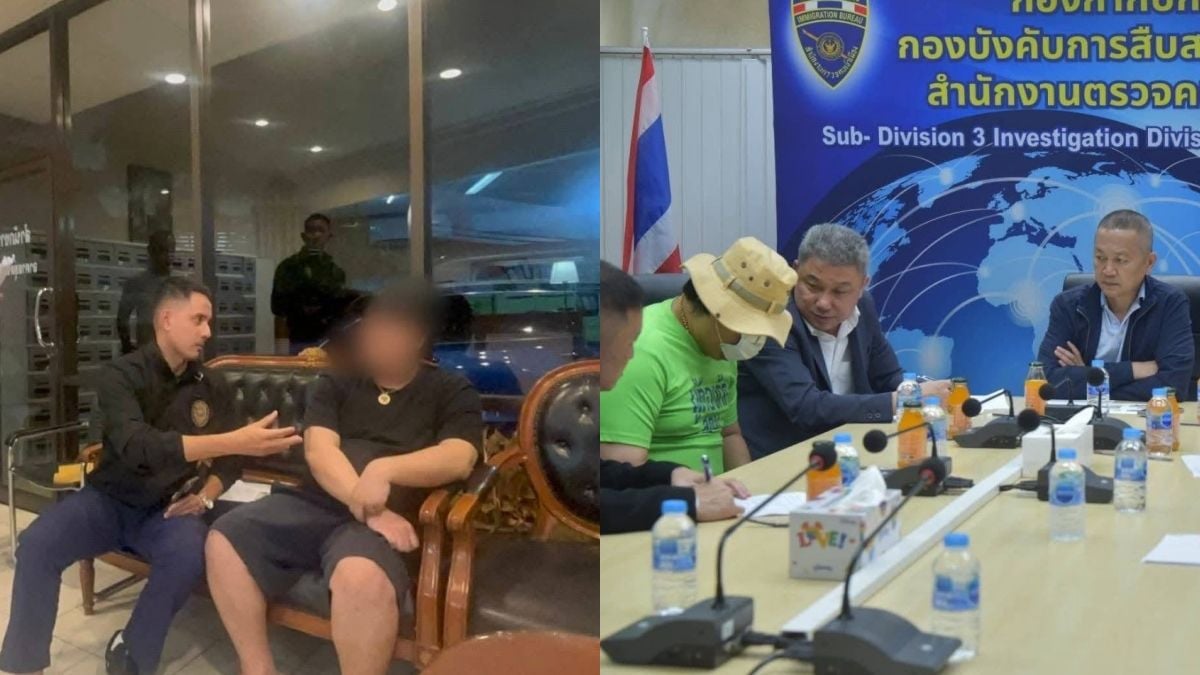
- Thai authorities arrested a Japanese fugitive accused of leading a Cambodia-based call-centre scam network.
- Investigators allege the group defrauded Japanese victims of billions of yen and recruited workers into scam compounds.
- The case highlights expanding cooperation between Thailand and Japan against transnational organised crime.

BANGKOK, THAILAND: Thai immigration authorities on 6 June 2026 have arrested a 39-year-old Japanese man accused of leading a major call-centre scam syndicate based in Cambodia and linked to alleged human trafficking activities across Southeast Asia.
The suspect was detained in Bangkok's Thong Lor district following a joint investigation involving Thai and Japanese law enforcement agencies.
Authorities allege he played a senior leadership role in a criminal network that targeted Japanese citizens through large-scale fraud operations and generated losses worth several billion yen.
Investigators said the man was wanted under an arrest warrant issued by the Nagoya District Court in Japan on fraud-related charges.
According to Japanese authorities, he was a key organiser directing operations from a network headquartered in the northwestern Cambodian border city of Poipet, an area that has become a focal point for regional investigations into scam compounds and organised criminal activity.
Joint investigation leads to arrest
The arrest followed intelligence-sharing between Japanese security agencies and the Royal Thai Police.
Japanese investigators reportedly uncovered evidence indicating that the suspect had fled to Thailand with his family after authorities intensified investigations into scam operations targeting Japanese victims.
The Royal Thai Police Anti-Human Trafficking Centre subsequently tasked the Immigration Bureau with locating and monitoring the suspect's movements.
After an extensive investigation, officers tracked him to Bangkok and carried out the arrest.
Speaking at a news conference on Saturday, Thai police described the detainee as a suspected senior figure within the Poipet-based operation.
Authorities said he had lived in Thailand for several years and regularly travelled throughout the region, including visits to China, Malaysia and Vietnam.
Thai officials confirmed they are coordinating with Japanese authorities to facilitate his return to Japan, where he is expected to face prosecution under the outstanding court warrant.
Links to Cambodian scam compounds
The case is connected to wider investigations into scam compounds operating in Cambodia.
In 2025, Cambodian authorities arrested 29 Japanese nationals at a fraud centre in Poipet. They were later returned to Japan and subsequently arrested as part of ongoing investigations.
Japanese authorities believe the broader network spans several countries and forms part of a transnational organised crime structure specialising in telephone and online fraud.
Investigators allege the suspect helped oversee operations that targeted Japanese victims through sophisticated call-centre systems designed to deceive individuals into transferring money or revealing financial information.
Police suspect he coordinated remotely from Thailand while maintaining contact with Chinese managers operating at the Cambodian base.
Authorities also allege he played a role in recruiting heavily indebted Japanese nationals who were subsequently sent to work at facilities in Poipet.
Human trafficking concerns
Beyond fraud allegations, investigators said the organisation is suspected of involvement in activities consistent with human trafficking offences.
According to Thai police, evidence suggests the network recruited and transported individuals from several countries before sending them to compounds in Cambodia.
Once there, victims were allegedly forced to participate in scam operations targeting people overseas through telephone and online platforms.
The allegations reflect growing regional concern over criminal syndicates that combine cyber-enabled fraud with labour exploitation and human trafficking.
Law enforcement agencies across Asia have increasingly focused on dismantling such networks, which often operate across multiple jurisdictions and exploit gaps in cross-border enforcement.
Pol Gen Thatchai Pitaneelaboot, Director of the Royal Thai Police Anti-Human Trafficking Centre, said the arrest demonstrated the effectiveness of international cooperation in combating organised crime.
"This arrest reflects the success of intelligence-sharing and cooperation between Thailand and Japan in tracking offenders who attempt to evade justice across borders," he said.
Pol Gen Thatchai added that preventing Thailand from being used as a transit route or safe haven for criminal organisations remained a priority.
Regional crackdown intensifies
The operation forms part of a broader campaign by Thai authorities to dismantle call-centre fraud syndicates and human trafficking networks operating throughout the region.
Thai police said future enforcement efforts would focus on identifying and arresting organisers, financiers and senior leaders rather than solely targeting lower-level participants.
Officials argue that disrupting command structures is essential to weakening transnational criminal organisations and preventing them from re-establishing operations elsewhere.
The arrest comes as Japan faces a sharp rise in fraud-related crime.
In 2025, scam victims in Japan lost a record ¥324.11 billion, equivalent to approximately US$2.12 billion.
Japanese authorities have reported that around 75 per cent of telephone calls associated with major fraud schemes originated from outside Japan, highlighting the increasingly international nature of such operations.
Law enforcement agencies say criminal syndicates have increasingly shifted their activities to parts of Southeast Asia, including Cambodia, Thailand, Malaysia, Indonesia and the Philippines, in an effort to evade domestic crackdowns while continuing to target victims in Japan.
Thai authorities said legal proceedings are now underway as they coordinate with Japanese counterparts to transfer the suspect and advance the prosecution process.