Singaporean on remission order admitted joining Cambodia scam syndicate and collecting S$656,788 from victims
A Singaporean who was released from prison in 2024 after a cheating conviction admitted joining a Cambodia-based scam syndicate, impersonating officials in calls targeting locals and later collecting S$656,788 from at least 14 victims after returning home.

- A Singaporean admitted joining a Cambodia-based scam syndicate while on remission from an earlier sentence.
- He worked in a scam centre making impersonation calls before collecting S$656,788 from at least 14 victims in Singapore.
- Prosecutors sought a lengthy jail term, while the defence cited his poor health ahead of sentencing on 6 August 2026.

A Singaporean who was released from prison while serving a sentence for cheating returned to criminal activity within weeks by joining a scam syndicate operating in Cambodia before later helping to collect S$656,788 from victims after returning home.
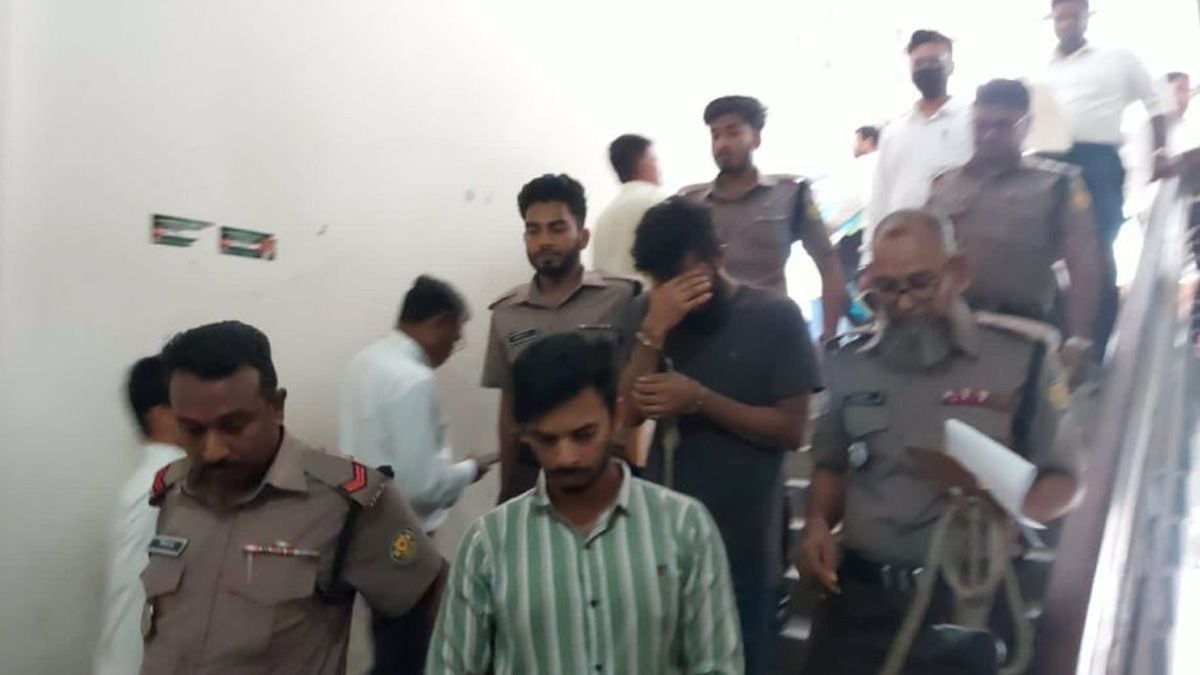
Muhammad Firdaus Abdul Rahman, 37, pleaded guilty on 22 June 2026 to one count of dealing with benefits of criminal conduct and one count of being a member of a criminal group.
A remaining charge will be taken into consideration during sentencing, which is scheduled for 6 August.
Deputy Public Prosecutor Xavier Tan told the court that Firdaus had previously been convicted of cheating on 9 November 2022 and sentenced to 31 months' imprisonment.
He was released on remission in September 2024 and was required to remain crime-free between 24 September 2024 and 3 August 2025.
However, before October 2024, a friend identified as Jackson Lim Soon Lai approached him with an offer to work in a scam operation in Cambodia. Court documents stated that Lim promised a monthly salary of S$1,000 together with a three per cent commission.
Firdaus accepted the proposal despite still being subject to the remission order.
Inside the Cambodia scam operation
On 3 October 2024, Firdaus travelled to Cambodia with Lim and another associate known as Chris Jerome.
After arriving, they took a van to an office near one of the country's borders.
The precise location was not disclosed in court proceedings.
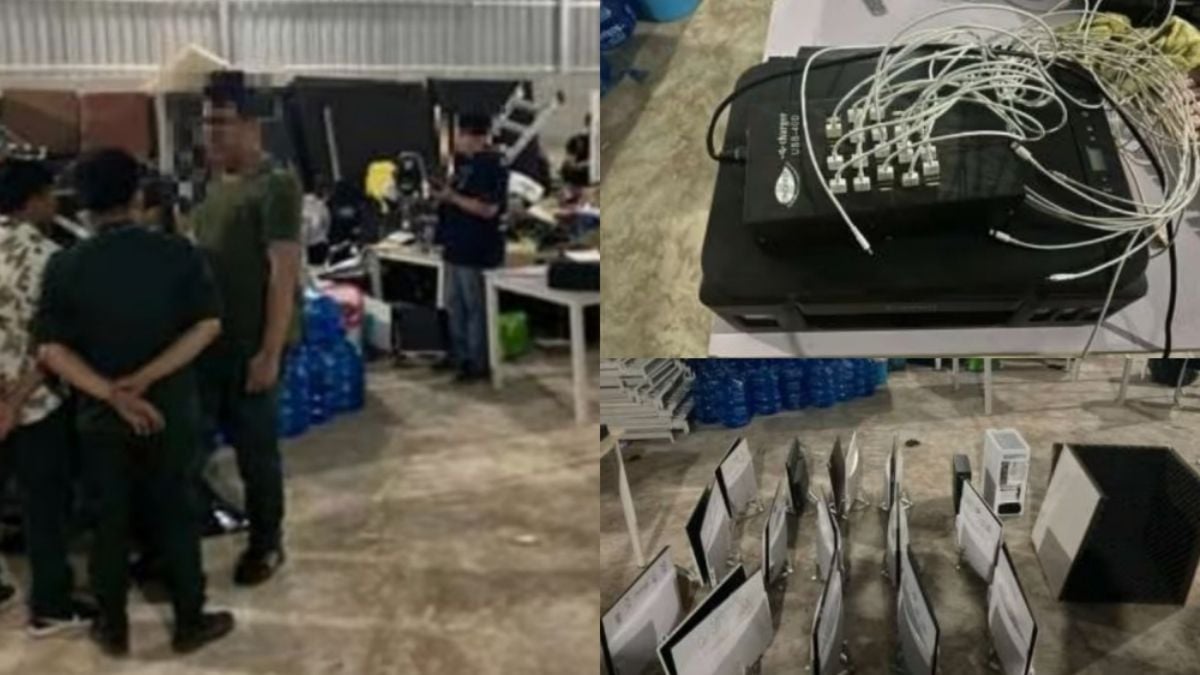
According to court documents, the compound was guarded by around 15 security personnel and several guard dogs.
Inside, Firdaus observed approximately 60 people carrying out different forms of scams, including internet romance fraud.
Prosecutors said Firdaus and Jerome were instructed to telephone Singapore residents while falsely claiming to represent the Singapore Cyber Emergency Response Team, or SingCERT, and to raise purported cybersecurity concerns.
Deputy Public Prosecutor Xavier Tan told the court: “They were instructed to make calls to Singapore phone numbers and claim that they were from the ‘Singapore Cyber Emergency Response Team’, and that they were calling regarding issues related to cybersecurity.”
“If the person they called believed them, they were to transfer the call to another line for one of their colleagues to talk to the victims.”
If victims ultimately transferred money, Firdaus would receive a commission linked to successful referrals generated through his calls.
Return to Singapore
Firdaus remained at the scam centre for about one month before being hospitalised for an undisclosed medical reason.
The syndicate paid his treatment costs before he returned alone to Singapore following his recovery.
After his return, prosecutors said Lim requested information concerning the Singapore Police Force and the Monetary Authority of Singapore, including publicly available material and photographs that could be used to support scam operations.
According to the prosecution, Firdaus knew the information would facilitate fraudulent schemes and nevertheless helped obtain it.
Collection of scam proceeds
Around 19 April 2025, Lim allegedly asked Firdaus to collect packages containing money from victims and pass them to another individual.
Court documents stated that Firdaus understood the funds represented criminal proceeds and knew Lim remained based in Cambodia with links to transnational cheating syndicates.
Despite this knowledge, he accepted the assignment.
Between 19 April and early May 2025, Firdaus travelled to locations including Raffles Place, Jurong West and Ang Mo Kio to collect money from victims of government official impersonation scams.
In total, he handled S$656,788 collected from at least 14 victims and received at least S$1,000 for performing the task.
Sentencing submissions
Court documents did not disclose how the offences were uncovered, but Firdaus was subsequently arrested and charged in 2025.
Seeking sentence, Deputy Public Prosecutor Xavier Tan urged the court to impose up to six years and three months' imprisonment together with an enhancement of up to 267 days linked to Firdaus' breach of his remission order.
The prosecutor said: “The crime group was well organised, as seen by its scale and number of members, training programme, and even security of its premises.”
“There is also a significant negative impact caused to society as a result of the group, given the pervasiveness of such scams.”
Defence lawyer Tony Chua sought a lighter sentence, telling the court that Firdaus suffers from a heart-related medical condition and had spent three days in a coma while in remand.