Two Russian nationals arrested in Bali over alleged 7.8kg hashish smuggling case
Indonesian authorities have arrested two Russian nationals suspected of smuggling 7.8 kilograms of hashish from Thailand to Bali, following a joint operation involving narcotics, customs, immigration and police agencies.
- Two Russian nationals were arrested in Bali over the alleged smuggling of 7.8 kilograms of hashish.
- Authorities said the narcotics were transported from Thailand through Indonesia before reaching Bali.
- Investigators are examining possible links to a broader international drug trafficking network.

Indonesian authorities have arrested two Russian nationals suspected of smuggling 7.8 kilograms of hashish from Thailand to Bali, the National Narcotics Agency, known as BNN, said.
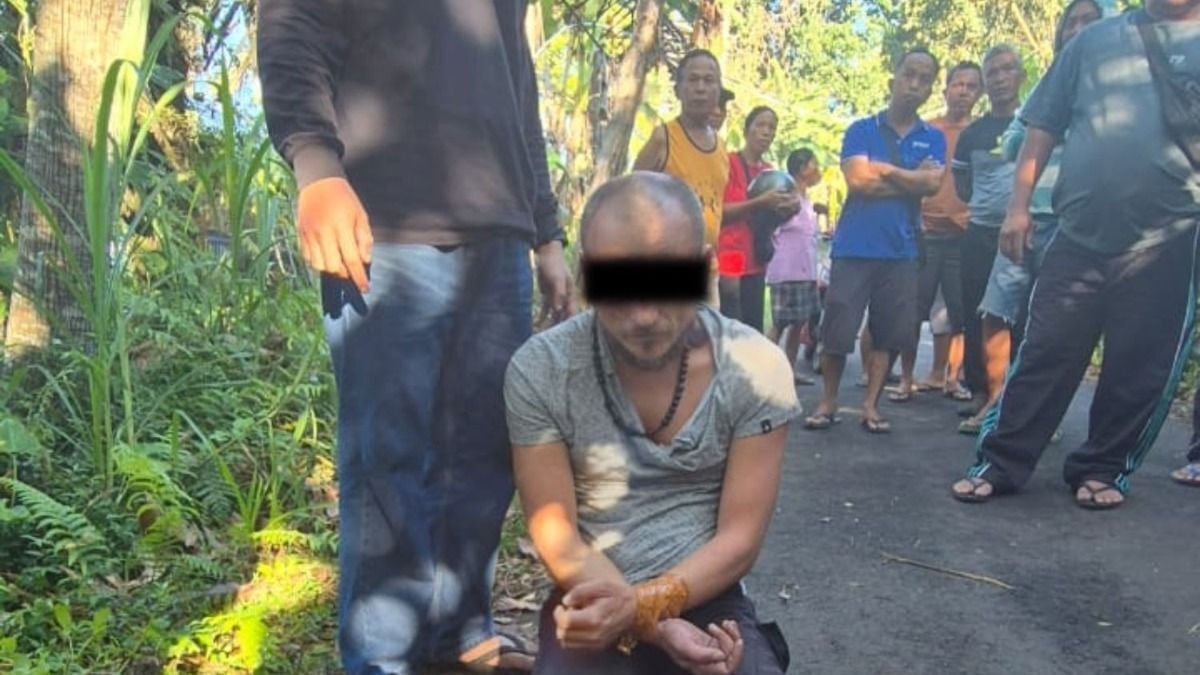
The suspects were identified only by their initials, KK, aged 52, and SK, aged 40. They were arrested during a joint operation in Kayang Hamlet, Kayubihi Village, Bangli District, Bangli Regency, Bali, on Friday, 5 June 2026.
BNN chief Police Commissioner General Suyudi Ario Seto said officers seized 7.8 kilograms of hashish, described as a solid form of cannabis, along with passports, mobile phones and one car.
“We have secured evidence in the form of narcotics, namely hashish, with a gross weight of 7.8 kilograms, as well as non-narcotic evidence including passports, mobile phones and one four-wheeled vehicle,” Suyudi said in a statement on Sunday, 7 June 2026.
The case was first detected after Soekarno-Hatta Customs and Excise received information about a suitcase suspected of containing narcotics. The suitcase was allegedly carried by KK, who had arrived from Thailand at Soekarno-Hatta International Airport, Indonesia’s main international gateway near Jakarta.
After arriving at the airport, KK reportedly continued his journey by land in a rental car to Ketapang Port in Banyuwangi, East Java. From there, he crossed by ferry to Gilimanuk Port in Jembrana Regency, Bali.
Authorities said KK arrived in Gilimanuk at around 3am Central Indonesian Time. He was then picked up by SK, also a Russian national. The two continued their journey towards Bangli, a regency in central Bali.
Officers monitored their movements from Gilimanuk to Bangli. According to BNN, SK attempted to flee after dropping off KK and the suitcase suspected of containing narcotics. During the pursuit, SK allegedly drove at high speed and recklessly, hitting several local residents before officers stopped the vehicle.
SK was arrested in Kayang Hamlet, while KK had earlier been secured along with the suitcase he was carrying.
The operation involved BNN, the Directorate General of Customs and Excise, the Ministry of Immigration and Corrections, the Indonesian National Police, and Bali Regional Police.
BNN said the hashish was allegedly intended for distribution in Bali. Investigators are continuing to examine the possible involvement of other suspects and whether the case is linked to a wider international narcotics network.
The Head of BNN’s Public Relations and Protocol Bureau, Commissioner General Putu Putera Sadana, said the arrest was an initial step in the investigation.
“This case is still under investigation and we are continuing to develop it. If other suspects or additional evidence are found, we will report further developments,” Putu said in Denpasar on Sunday.
BNN has not yet disclosed the detailed roles of each suspect or the operational pattern of the suspected network. Investigators are still tracing the alleged distribution route, the origin of the narcotics, and other parties who may be connected to the case.
When asked about the possibility of other networks operating in Bali, Putu said investigators were still collecting evidence and statements.
“Hopefully, we can uncover it soon. We do not want to speculate because the entire process must be based on data, facts and a scientific approach,” he said.
BNN said the investigation is being carried out under Indonesia’s Law Number 35 of 2009 concerning Narcotics.
Hashish, often known as hash, is a concentrated cannabis product made from the collected and compressed resin of the cannabis plant. It is usually solid and brown in colour, and may appear in the form of blocks, sticks or balls.