Singapore backs continued investment ties as Indonesia centralises commodity exports
Singapore has pledged continued investment cooperation with Indonesia after Jakarta introduced a single-gate export system for strategic commodities, placing coal, palm oil and ferroalloy exports under a state-appointed state-owned enterprise from 2027.
- Singapore said it will continue supporting investment and trade cooperation with Indonesia.
- Indonesia will centralise selected commodity exports through PT Danantara Sumberdaya Indonesia.
- Full implementation is scheduled for 1 January 2027 after a transition period.

Singapore has signalled its intention to maintain close economic cooperation with Indonesia following Jakarta's decision to centralise exports of several strategic natural resource commodities through a state-owned enterprise under a newly introduced single-gate export system.
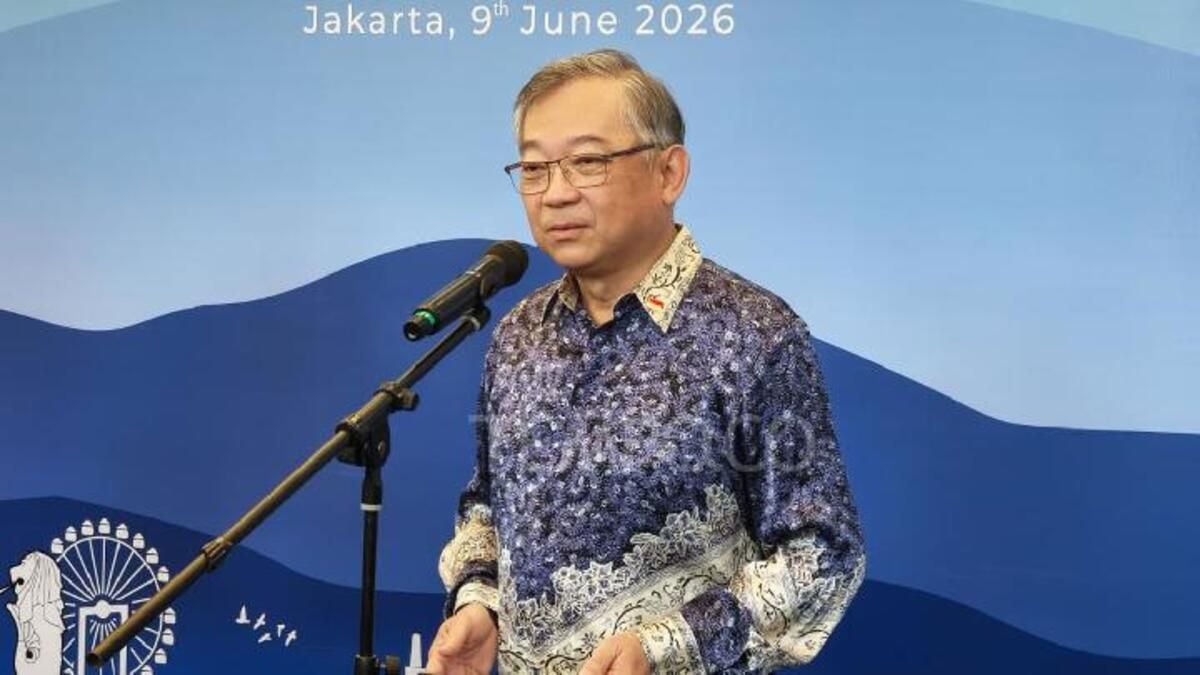
Speaking in Jakarta on Tuesday after the 16th Indonesia-Singapore Six Bilateral Economic Working Groups Ministerial Meeting, Singapore's Deputy Prime Minister and Minister for Trade and Industry, Gan Kim Yong, said every country had its own priorities when designing trade and export policies.
"Singapore will work together with Indonesia to ensure that Indonesia remains an attractive investment destination for Singapore and our investors," Gan told reporters.
His remarks came after Indonesia formally introduced a regulatory framework that will require exports of selected strategic commodities to be conducted through a specially designated state-owned enterprise, PT Danantara Sumberdaya Indonesia (PT DSI).
The policy is intended to strengthen state oversight of exports, improve transparency in commodity trading, and prevent practices such as under-invoicing and transfer pricing that officials say have reduced export revenue reporting in the past.
New regulation establishes single export gateway
The legal basis for the policy was established through Government Regulation No. 24 of 2026 on the Governance of Exports of Strategic Natural Resource Commodities.
The regulation was signed by Indonesian President Prabowo Subianto on 20 May and came into force the same day following its promulgation by State Secretary Minister Prasetyo Hadi.
Under the regulation, commodities designated as strategic natural resources may only be exported through an appointed export state-owned enterprise. The government has assigned PT DSI to carry out that role.
The first phase of implementation covers three major Indonesian export commodities: coal, palm oil and ferroalloys, an iron alloy used in steel production and industrial manufacturing.
Article 3 of the regulation grants PT DSI authority to manage exports of designated commodities and to determine commodity selling prices under the export mechanism. The regulation also permits the company to establish what it describes as a reasonable margin in accordance with prevailing laws and regulations.
The government has said the system is intended to ensure export values accurately reflect actual market transactions while reducing opportunities for manipulation through transfer pricing arrangements and under-reported export invoices.
Transition period before full implementation
Indonesia has established a transition period running from 1 June to 31 December 2026.
During this period, exporters may continue operating under existing contractual arrangements with overseas buyers. However, all export activities involving the designated commodities must now be reported to PT DSI through the Customs Excise Information System and Automation platform, known as CEISA 4.0, which is operated by the Directorate General of Customs and Excise under the Ministry of Finance.
According to Coordinating Economic Affairs Minister Airlangga Hartarto, companies exporting coal, ferroalloys and palm oil are required to begin reporting through the new mechanism immediately.
The government plans to evaluate implementation during the first three months before the policy becomes fully mandatory on 1 January 2027.
Article 7 of the regulation states that exports of strategic natural resource commodities must be conducted through the export state-owned enterprise no later than 31 December 2026, effectively making PT DSI the sole export intermediary from the beginning of next year.
Government seeks to reassure businesses
Indonesian officials have sought to reassure businesses that the new policy will not alter existing mining licences, export permits or commercial contracts.
Energy and Mineral Resources Minister Bahlil Lahadalia said there would be no changes to regulations governing mining companies.
"For our friends in the existing mining business, there will be no changes to any regulations," Bahlil said during a parliamentary briefing in Jakarta.
He added that future mining activities would continue to operate under the same legal framework, while maintaining government priorities related to downstream industrial development and value-added processing.
Officials have repeatedly stressed that PT DSI will not interfere with existing commercial agreements signed before the introduction of the new reporting requirements.
Danantara rejects claims it will act as export broker
Dony Oskaria, who also oversees operations within the state investment management agency Danantara, said PT DSI's primary role was to improve transparency and accountability in natural resource exports.
According to Dony, the company will focus on verifying export transactions, prices and quantities while ensuring that under-invoicing and transfer pricing practices do not occur.
"Our task is to ensure that under-invoicing and transfer pricing do not occur in the export of the natural resources we own," he said.
Dony rejected suggestions that PT DSI would function as a traditional export broker by purchasing commodities and reselling them at a profit.
He said the company would instead charge service fees associated with verification and compliance activities, including export inspections and transaction validation.
"The business then has legal standing. What they export has been verified, both in terms of price and quantity," Dony said.
He further emphasised that international benchmark prices would continue to guide commodity transactions and that PT DSI would not arbitrarily set prices outside prevailing market conditions.
Danantara management has also stated that pricing methodologies will remain transparent and will consider differences in commodity quality, specifications, logistics costs and contractual structures when assessing transaction values.
Singapore focuses on supply chain cooperation
Despite the regulatory changes, Singapore indicated it sees continued opportunities for cooperation with Indonesia.
Gan said both countries were discussing ways to strengthen supply chain resilience and ensure trade flows continue smoothly in both directions.
"That is one of the reasons why we are discussing strengthening the supply chain resilience between Singapore and Indonesia," he said.
His comments came after bilateral talks that resulted in six new commercial agreements between companies from both countries.
Singapore is one of Indonesia's largest foreign investors and a major trading partner.
The Indonesian government has repeatedly stated that the new export system is designed to improve governance and transparency rather than restrict foreign investment or disrupt existing business relationships.