Death toll rises to 55 as search efforts continue after Mindanao earthquake
Rescue teams across southern Philippines are continuing search and recovery operations after a magnitude 7.8 earthquake struck off Mindanao, with 55 confirmed dead, more than 1,100 injured and 31 people still missing.
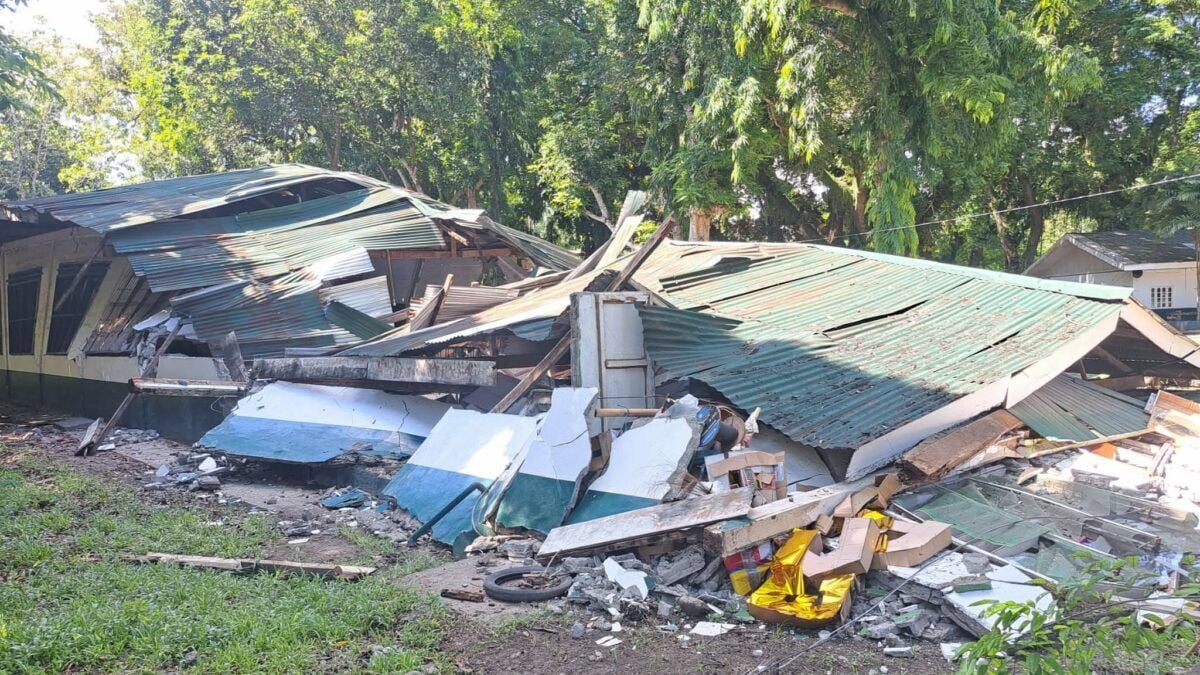
- The confirmed death toll has risen to 55, with 31 people still missing.
- Nearly 393,000 people have been affected across four regions of Mindanao.
- Military and air force units have expanded relief and recovery operations.

Rescue teams in the southern Philippines continued search and recovery operations on Friday after a powerful magnitude 7.8 earthquake struck off the coast of Mindanao earlier this week, with the confirmed death toll rising to 55 and dozens of people still missing.
Authorities said persistent aftershocks and adverse weather conditions were hampering efforts to reach affected communities and locate those unaccounted for following the earthquake, which struck offshore near Maasim in Sarangani Province on 8 June.
The tremor triggered landslides, damaged thousands of homes, disrupted infrastructure across several regions of Mindanao, and prompted tsunami warnings throughout parts of Southeast Asia and the Pacific.
Death toll increases as search continues
According to the latest figures released by Philippine disaster authorities on Friday, the earthquake has killed 55 people, injured 1,120 and left 31 others missing.
The updated toll reflected eight additional deaths reported by local governments as information from affected areas continued to be consolidated.
In Sarangani Province, disaster management chief Rene Punzalan said emergency crews were continuing to search for those missing despite increasingly difficult conditions.
Many roads blocked by landslides have now been reopened, but helicopters remain essential for delivering food, drinking water and other supplies to isolated communities that are still without electricity.
“Aftershocks are still slowing us down, plus it also rained last night, so we have to stop the operation for a while,” Punzalan said, referring to efforts involving heavy machinery clearing large boulders from roads.
He acknowledged that hopes of finding survivors beneath debris were fading as more time passed after the earthquake.
“Many days have passed since the earthquake, so it's going to be a miracle if any of them can be rescued alive,” he said. “Our goal is just to retrieve their bodies.”
Nearly 393,000 people affected
The National Disaster Risk Reduction and Management Council (NDRRMC) reported that 86,135 families, equivalent to 392,806 people, have been affected across 352 villages in the Zamboanga Peninsula, Davao Region, Soccsksargen and the Bangsamoro Autonomous Region in Muslim Mindanao (BARMM).
Authorities said 2,409 families, or 10,783 people, remain inside 31 evacuation centres, while another 7,480 families comprising 30,265 individuals are receiving assistance outside evacuation facilities. Many others have sought shelter with relatives and friends.
Damage assessments have identified 19,095 affected homes, including 15,610 classified as partially damaged and 3,845 destroyed or rendered uninhabitable.
Thousands of aftershocks recorded
The Philippine Institute of Volcanology and Seismology (Phivolcs) reported that the earthquake had generated 3,860 aftershocks as of 9 a.m. on Friday.
Of those, 966 have been plotted by monitoring stations and 64 were strong enough to be felt by residents in affected communities.
The aftershocks ranged in magnitude from 1.2 to 6.4.
According to Phivolcs, the earthquake originated from movement along the Cotabato Trench and occurred at 7:37 a.m. local time on 8 June off the coast of Maasim in Sarangani Province.
The agency has warned that aftershocks could continue for several weeks and possibly for up to a month following the main earthquake.
Earlier reports indicated that many residents chose to sleep outdoors, on roadsides and in open spaces, fearing further ground movement and possible building collapses.
Military expands relief operations
The Philippine Army has deployed personnel, equipment and vehicles to support humanitarian operations across affected areas.
Army spokesperson Col. Louie Dema-ala said humanitarian assistance and disaster response teams have been clearing blocked roads, conducting damage assessments and assisting local authorities throughout Sarangani, General Santos City and Davao Occidental.
Emergency response units have been operating in the communities of Labangal, Calumpang, Apopong and Fatima in General Santos City.
A mobile water purification system was initially installed at General Santos Medical Center to provide clean drinking water for patients and medical staff before being transferred to Barangay Calumpang, where it continues to serve affected residents.
Additional teams from the 603rd Infantry Brigade are assisting authorities in Kiamba, Maitum, Maasim, Lake Sebu, T’boli, Lebak, Kalamansig and Palimbang.
Meanwhile, two urban search-and-rescue teams from the 525th Combat Engineer Battalion remain engaged in search, rescue and retrieval operations in Davao Occidental.
Air Force delivers emergency supplies
The Philippine Air Force has also intensified relief missions using military transport aircraft and helicopters.
Air Force spokesperson Col. Ma. Christina Basco said a total of 1,000 “ChariTimba” relief packs supplied by the Philippine Charity Sweepstakes Office were airlifted to General Santos City on Thursday.
A C-295 aircraft transported 270 relief packs, while a C-130 aircraft delivered the remaining 730.
In separate missions, an S-70i Black Hawk helicopter delivered 480 family food packs and 450 packs of bottled water to affected communities in Davao Occidental, Davao Oriental and Sorsogon.
Another Black Hawk helicopter conducted a medical evacuation flight, transporting injured residents from Sarangani Province to Cotabato for urgent treatment.
“These operations underscore the PAF’s continued commitment to rapid response, lifesaving airlift capability, and coordinated disaster relief efforts in support of national humanitarian operations,” Basco said.
Government announces reconstruction funding
President Ferdinand Marcos Jr. visited affected areas in General Santos City on Wednesday, inspecting damaged infrastructure and aid distribution centres.
During the visit, he announced that the government would allocate 100 million Philippine pesos (approximately US$1.8 million) for the reconstruction of the city hall building.
The funding is expected to form part of broader recovery and reconstruction efforts as authorities continue assessing the full scale of damage caused by one of the strongest earthquakes to strike the southern Philippines in recent years.
Emergency operations remain ongoing across Mindanao as rescue teams search for the missing, restore access to isolated communities and provide assistance to hundreds of thousands of residents affected by the disaster.