Jakarta ranks third globally for worst air quality as pollution reaches unhealthy levels
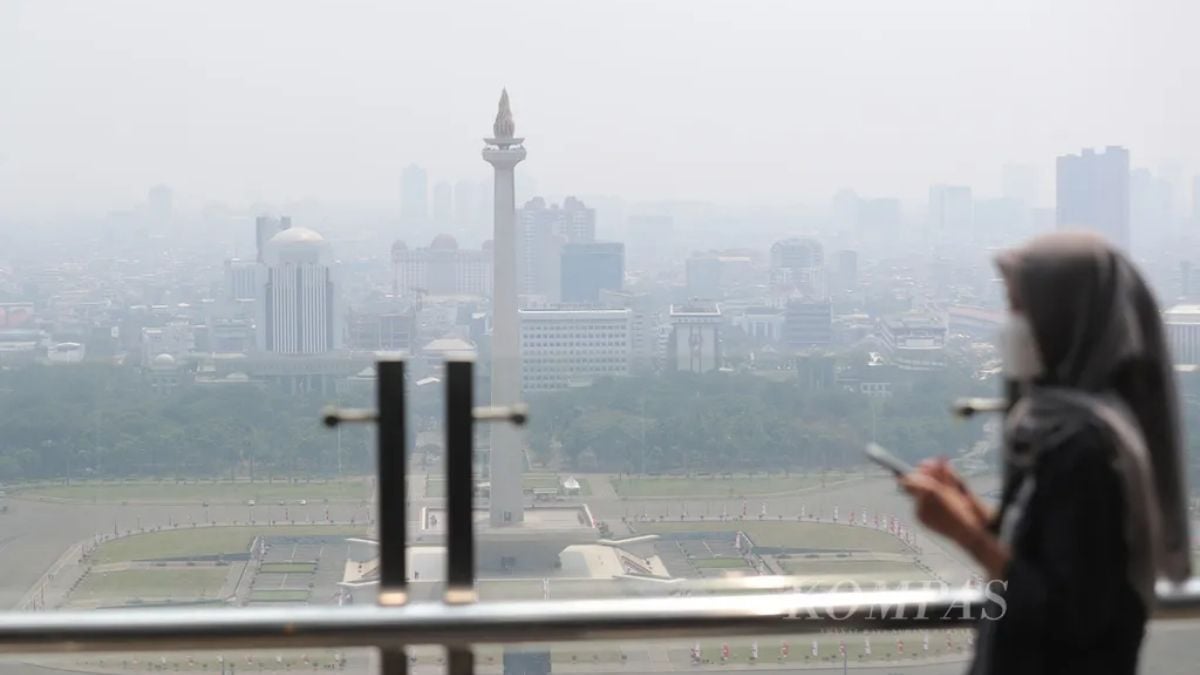
Jakarta recorded unhealthy air quality on Thursday morning, ranking third among the world's most polluted cities, according to IQAir, as authorities continued preparations for an early warning system aimed at improving pollution forecasting and protecting vulnerable residents.
- Jakarta recorded an AQI of 161, ranking third globally for poor air quality.
- Authorities are developing an Early Warning System to improve pollution forecasting.
- The system aims to help vulnerable residents take preventive health measures.

Jakarta's air quality fell into the unhealthy category on Thursday morning, making it the city with the world's third worst air quality, according to air quality monitoring platform IQAir, while local authorities continued developing an early warning system to improve pollution forecasting and public health protection.
According to IQAir data at 6:05 a.m. Western Indonesian Time (WIB), Jakarta recorded an Air Quality Index (AQI) of 161, placing it in the unhealthy category, with a PM2.5 concentration of 57 micrograms per cubic metre.
The reading indicates air quality that is unhealthy for sensitive groups, as it can harm people and sensitive animals, while also affecting plants and aesthetic conditions.
Residents were advised to avoid outdoor activities. Those who need to go outside were encouraged to wear masks and keep windows closed to reduce exposure to polluted outdoor air.
IQAir ranked Kuwait City as having the world's worst air quality with an AQI of 185, followed by Delhi at 169. Kinshasa ranked fourth with an AQI of 160, while Johannesburg placed fifth at 156.
According to the reports, air quality classified as "good" corresponds to a PM2.5 range of 0–50 and is considered to have no adverse effects on human or animal health, plants, buildings or aesthetics.
The "moderate" category ranges from 51–100, where air quality generally does not affect human or animal health but may affect sensitive plants and aesthetic conditions.
The "very unhealthy" category ranges from 200–299, indicating air quality that may adversely affect the health of certain segments of the exposed population.
The highest category, "hazardous", ranges from 300–500 and generally refers to air quality that can cause serious health effects across the population.
Meanwhile, the Jakarta Provincial Government and the Meteorology, Climatology and Geophysics Agency (BMKG) are preparing an air quality Early Warning System (EWS) to provide more accurate forecasts of air pollution.
The development of the EWS forms part of the provincial government's long-term strategy to reduce the impact of air pollution and improve residents' quality of life.
Authorities said the system is expected to provide significant benefits, particularly for groups most vulnerable to air pollution, including children, older people, pregnant women and individuals with respiratory conditions such as asthma and other lung diseases.
With more accurate and accessible air quality forecasts, residents will be able to take preventive measures when pollution is expected to worsen, including wearing masks outdoors, limiting physical activity in open areas and reducing exposure to polluted air that could pose health risks.