Sanders introduces bill for 50% tax on largest AI firms to fund US$7 trillion public wealth fund
US Senator Bernie Sanders has introduced the American AI Sovereign Wealth Fund Act, which would impose a one-time 50% equity tax on the largest AI companies to create a fund estimated at US$7 trillion, paying annual dividends to every American.
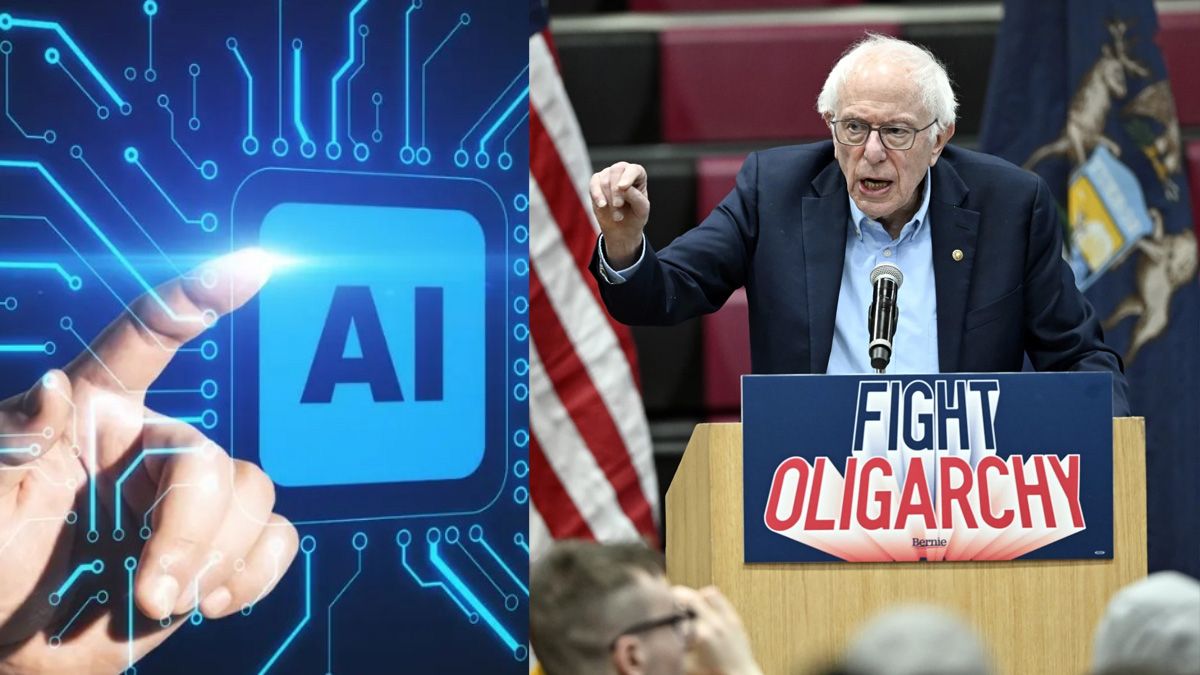
- Sanders proposes a one-time 50% equity tax on the largest AI companies in America.
- The resulting sovereign wealth fund, estimated at US$7 trillion, would pay annual dividends to citizens.
- An independent seven-member commission would manage the fund and hold voting shares.

Senator Bernie Sanders has introduced legislation that would transfer a substantial ownership stake in the largest artificial intelligence (AI) companies to the American public, financed through a one-time tax on company stock.
The American AI Sovereign Wealth Fund Act, introduced on Thursday, 18 June 2026, would impose a one-time 50% tax on the equity of the largest AI companies. The stock would be deposited into a newly created sovereign wealth fund.
Sanders, an independent senator from Vermont, estimates the fund would be worth around US$7 trillion at current valuations. He argues it would generate hundreds of billions of dollars annually for direct payments and public programmes.
"The benefits cannot simply go to the handful of wealthy corporations. They will be shared by the American people," Sanders said in an interview.
The tax would apply to AI companies recording US$200 million or more in annual gross receipts related to AI activities. New companies reaching that benchmark in future would also become subject to the tax.
Rather than collecting cash, the proposal would require companies to transfer stock, effectively making the public a major shareholder in the country's largest AI firms.
How the fund would operate
The legislation would create an Independent Commission for Democratic AI to manage the fund in the public interest. The commission would use its voting shares to block decisions deemed harmful to the public and to push for policies considered beneficial.
The commission would consist of seven members nominated by the President and confirmed by the Senate, with nominees drawn from a bipartisan list provided by Congress. No more than four members could come from any single political party.
According to the bill, the members would include a chair, a vice chair, and representatives covering labour interests, large fund management, AI safety, privacy and public safety. Commissioners would be mandated to promote worker welfare, public safety, fair competition, environmental sustainability and financial solvency.
The fund would distribute 5% of its market value each year as a dividend. Sanders said this would initially provide direct payments of more than US$1,000 to every American.
If the companies continue to grow, Sanders said the proceeds could fund health care, education, housing and environmental measures. He argued taxpayers would not bear losses if valuations fell.
"We're not going to lose any money, even if there is a bust in the bubble," Sanders said. The bill specifies that the fund cannot be used to bail out AI companies.
Structural and enforcement measures
The Act would require large companies operating both AI and non-AI businesses to separate those operations within 90 days of enactment, ensuring the public receives a stake only in the AI business.
The tax would be imposed 90 days after enactment, with the Treasury Secretary granted regulatory authority to implement it. The legislation includes anti-inversion rules to prevent companies from moving offshore to avoid the tax.
A third-party reporting model would require purchasers of more than US$25 million of AI activities to disclose the transaction to the Internal Revenue Service. The bill also creates penalties for underpayment or failure to file.
Background and wider interest
Sanders framed the proposal as a response to concentrated wealth, noting that the eight richest Americans together hold more than US$2.9 trillion. He argued AI was built on collective human output, including books, videos, songs and conversations used to train models.
"As a society, we can no longer sit back and allow a handful of Big Tech oligarchs to determine the future of this revolutionary technology with no democratic input," Sanders said.
The idea of giving the public a stake in AI has drawn interest across the political spectrum. President Donald Trump has spoken about the government owning a stake in AI companies, describing it as almost a partnership with the public.
OpenAI, led by Sam Altman, proposed in April creating a public wealth fund providing every citizen with a stake in AI-driven growth. Anthropic, recently valued at US$965 billion, has expressed openness to similar ideas, with chief executive Dario Amodei suggesting universal basic income could be financed through taxes on relevant companies.
Trump attended an AI-focused session at the G7 summit in France on Wednesday alongside industry leaders including Altman and Amodei.
Sanders' proposal is considerably more aggressive than these concepts. According to people present at a meeting between Sanders and Altman, the two remained far apart on the size of the stake the public should receive.
Sanders said figures sympathetic to public ownership were offering a limited concession. "What we're talking about are two very different things," he said.
He indicated he would make AI ownership and wealth inequality a central theme on the campaign trail. The issue is being raised by other candidates ahead of the midterm elections, including Michigan Senate candidate Mallory McMorrow and New York House candidate Alex Bores.
Sanders noted that sovereign wealth funds are common internationally, citing examples from Norway to Alaska. The Alaska Permanent Fund, with over US$89 billion in assets, paid a dividend of US$1,000 to every resident in 2025.