US exchange student jailed in Singapore for stalking and hacking former friends’ Telegram accounts
An American exchange student has been sentenced to 20 weeks’ jail after hiring a dark web hacker to access two teenage girls’ Telegram accounts and later stalking another former friend in Singapore.

- A 23-year-old American exchange student was jailed for hacking former friends’ Telegram accounts and stalking another teenager.
- He hired a dark web hacker using Bitcoin payments to obtain access to private conversations.
- The court considered his mental health condition but found him responsible for harm caused to victims.

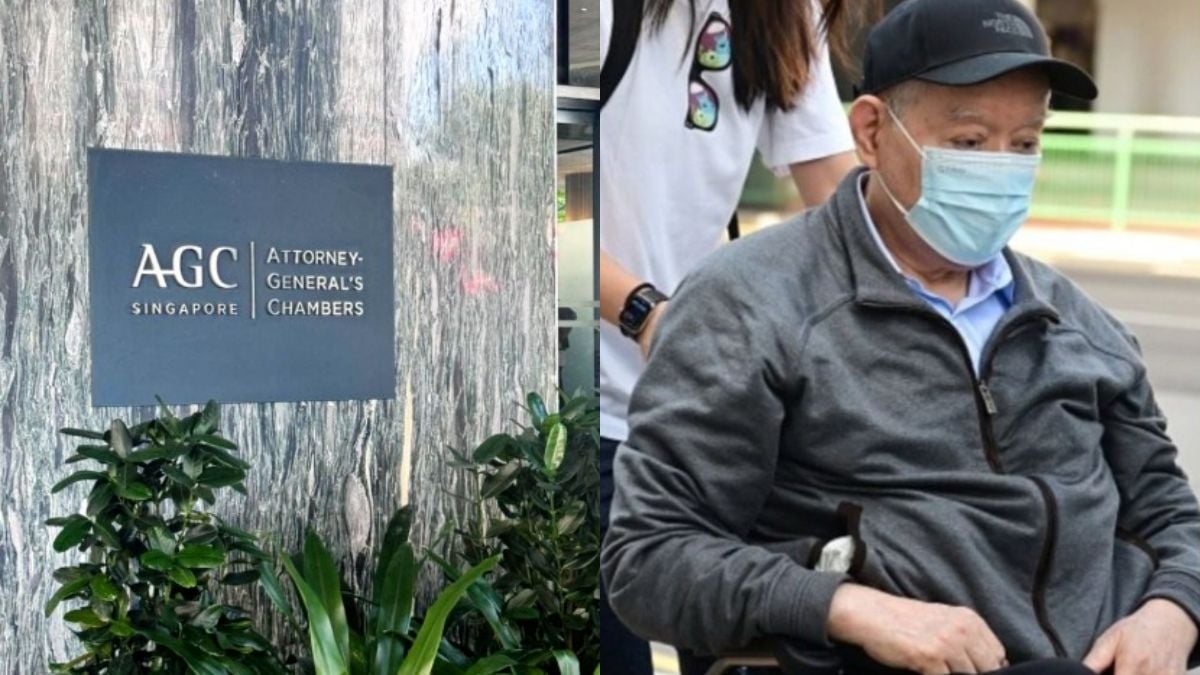
SINGAPORE: An American exchange student has been sentenced to 20 weeks’ jail on 19 June 2026 for hacking into former friends’ Telegram accounts and stalking another teenage girl.
According to state media CNA, the 23-year-old man, identified as Kevin Gao, hired a hacker from the dark web to obtain access to the Telegram accounts of two girls who were 17 at the time.
He wanted to read their conversations to understand why they had stopped being friends with him.
Gao had met all three victims online through communication platform Discord and gaming platform Roblox.
Deputy public prosecutor Ashley Chin sought seven to nine months’ jail, describing Gao’s actions as “egregious and escalating”.
She highlighted that all three victims were below 18 years old at the time of the offences.
Gao’s lawyers, Victor Lau and Ong Hui Wen from Drew and Napier, argued for a two-month jail term, citing his mental health condition and circumstances as a young university student living abroad.
Mental health issues raised during sentencing
The defence said both a private psychiatrist and a doctor from the Institute of Mental Health (IMH) assessed Gao as suffering from major depressive disorder with anxious distress.
According to his lawyers, the IMH doctor found that Gao’s condition may have contributed to his offending behaviour.
Lau told the court that feelings of worthlessness and heightened anxiety significantly affected Gao’s judgment and reasoning capacity, leading to poor decision-making.
The defence also told the court that Gao had engaged in self-harm twice.
He cut himself with glass in August 2024 and later attempted suicide while in remand in January 2025.
Lau said the sudden breakdown of his friendships with the victims triggered Gao’s actions.
He described Gao’s behaviour as “erratic, subnormal and demonstrates a lack of control”.
The defence also stressed that Gao was a young university student isolated in a foreign country and argued that the age difference between him and the victims was not significant.
Lau urged the court to place greater emphasis on rehabilitation rather than deterrence.
He added that Gao would be deported immediately after completing his sentence.
“Both doctors opined that once Kevin is back in his home country with the requisite familial and social support, his risk of reoffending is low,” Lau said.
Court rejects characterisation of conduct as erratic
Chin disagreed with the defence’s description of Gao’s behaviour as merely erratic.
She pointed out that Gao had taken deliberate steps to hire Russian hackers to access Telegram accounts.
She also highlighted that Gao attempted to call his third victim at least 1,000 times.
The IMH report noted that Gao was not completely deprived of his ability to control his actions and understood that his conduct was wrong, Chin said.
District Judge Ong Hian Sun considered Gao’s mental health condition but agreed with the prosecution that he remained responsible for the harm caused to the three young victims.
The judge sentenced Gao to 20 weeks’ jail.
Friendship breakdown led to Telegram account hacking
Gao first met two of the victims online in 2020 through Discord, and they became online friends.
In 2022, one of the girls began distancing herself because she no longer wanted to continue the friendship.
Gao remained friends with the second girl.
His lawyers said he travelled to Singapore twice a year to visit her, spending time together at tourist attractions and sometimes meeting in the presence of her mother.
Gao arrived in Singapore in August 2024 for an exchange programme at Nanyang Technological University, which was scheduled to end in December 2024.
That month, the second girl also stopped responding to him because she no longer wanted to remain friends.
The court heard that Gao went to her home several times between 1 August and 12 August 2024 in an attempt to confront her about ending contact.
He also approached her mother, who advised him to seek therapy.
The girl later sent Gao a final message stating: “Hello. We cannot be friends anymore. You have caused me a lot of mental distress over the years. Please move on with your life, do stop contacting me or my mom.”
She subsequently made a police report.
Gao received a stern warning for unlawful stalking about a month later.
Dark web hacker hired using Bitcoin payments
After becoming upset that the girl reported him to police and remaining curious about why she had ended their friendship, Gao searched for hacking services on Telegram.
The court heard that he intended to access both girls’ Telegram accounts to read their messages.
His search led him to a Russian hacker forum on the dark web, where a hacker named “Wracker” advertised services for US$1,500 in Bitcoin.
Gao contacted Wracker through Telegram and asked for live access to the two accounts.
The hacker agreed to provide the service for US$3,000 and received the two girls’ Telegram usernames.
In September 2024, the second girl received three messages from a Telegram account called “Security”.
The messages claimed there had been attempts to log into her account from different IP addresses.
The final message contained a link directing her to an authentication process to prevent “identity leaks”.
The girl believed the account was an official Telegram security feature and entered a one-time password received through the process.
The court heard that the fake “Security” account and website were designed to resemble Telegram services.
The hacker or associated individuals then obtained her Telegram credentials.
The first girl received similar messages and also entered her credentials, allowing the hacker to access her account.
Private conversations exposed through public Telegram channel
After completing the hacking work, Wracker sent Gao two links that supposedly provided live access to the girls’ Telegram accounts.
Gao discovered he could only access the second girl’s account.
He later negotiated with the hacker to receive an archive of her chat logs and media attachments for a reduced payment of US$2,500 in Bitcoin.
Between 24 September 2024 and 26 September 2024, Gao accessed the second girl’s account.
He saved the chat logs and media files to his personal computer.
He read conversations between the two girls and discovered that private messages between them had been shared with other mutual friends.
Angered by this discovery, Gao asked the hacker to create a Telegram channel and upload the messages.
On 7 October 2024, Wracker or associates created a public Telegram channel containing messages between the two girls.
The first girl received a link to the channel and was warned that others could find it by searching the second girl’s Telegram username.
After recognising the username, the first girl informed the second girl.
Although the messages did not contain sensitive information about the second girl, she became alarmed and made a police report.
Further stalking offence while on bail
While on bail for the earlier offences, Gao was caught stalking a third victim in July 2025.
The third girl had also been a mutual online friend and met Gao through Roblox in March 2021.
They remained in intermittent online contact until August 2024, when Gao arrived in Singapore for his exchange programme.
The court heard they had agreed not to exchange photographs of themselves for privacy reasons and had never met in person.
Gao knew which polytechnic the girl attended and had access to her PayPal address and email because she had purchased items from him in 2021.
He also learnt her address from an online seller who accidentally disclosed it after both had bought items from the same seller.
Between April 2025 and September 2025, Gao physically stalked the girl at least eight times while she travelled to and from school.
In July 2025, he followed her from Buona Vista MRT station to a classroom in one of her school buildings.
The girl, who already suspected she was being followed, confronted Gao through text messages.
Gao admitted stalking her because he wanted to see her.
He apologised, asked for forgiveness and sent her money through PayPal.
The victim told him she was “scared for her life”, returned the money and blocked him on Telegram and Discord.
About a week later, Gao called her more than 1,000 times over two weeks using 23 different phone numbers.
The harassment caused the victim to feel anxious, frightened and distressed.
She became reluctant to attend school, struggled to concentrate in class and experienced impacts on her grades.
The court heard that she suffered a panic attack and multiple emotional breakdowns.
She eventually moved out and registered a new phone number and email address.