DRC Ebola outbreak surpasses 1,000 cases as children face growing risk
The Democratic Republic of the Congo's latest Ebola outbreak has become the fastest-growing first-month Ebola epidemic recorded in Africa, with more than 1,000 confirmed cases and nearly three million children and adolescents at risk in the country's conflict-affected east.
- Confirmed Ebola cases exceeded 1,000 within a month of the outbreak declaration.
- Nearly three million children and adolescents are considered at risk in eastern DRC.
- Conflict, displacement and misinformation are hindering containment and response efforts.

The Democratic Republic of the Congo (DRC) is facing the fastest-growing Ebola outbreak recorded in Africa during the first month of an epidemic, according to the World Health Organization (WHO), as confirmed cases surpassed 1,000 and humanitarian agencies warned that nearly three million children and adolescents are at risk in the country's conflict-affected east.
Dr Abdirahman Mahamud, Director of Health Emergency Alert and Response Operations at WHO, said that as of Monday, 1,048 confirmed cases and 267 deaths had been reported since the outbreak was declared on 15 May.
“This is the largest number of confirmed cases in the first month of an Ebola disease outbreak in Africa,” he said.
The current outbreak is caused by the Bundibugyo species of the Ebola virus, one of several strains known to cause Ebola disease. According to WHO, there are currently no approved vaccines or specific treatments for the Bundibugyo strain, although experimental vaccines and therapeutics are undergoing evaluation.
Dr Mahamud said the outbreak had progressed at a significantly faster pace than previous Ebola emergencies. It took only 37 days to reach 250 deaths during the current outbreak, compared with 78 days during the 2014–2016 West Africa outbreak and 130 days during the 2018–2019 Ebola outbreak in eastern DRC.
The outbreak is centred in Ituri Province, where more than 90 per cent of reported cases have been recorded, although infections have also been confirmed in North Kivu and South Kivu provinces. Linked cases have additionally been reported in neighbouring Uganda.
Despite the rapid spread of the virus, WHO said response capacity has expanded considerably in recent weeks. Treatment capacity has increased from only a handful of beds at the start of the outbreak to more than 500 beds across 19 health zones.
Laboratory testing has also been significantly strengthened. Testing capacity has risen from approximately 30 tests per day in Kinshasa at the beginning of the outbreak to more than 2,000 tests daily through a network of eight decentralised laboratories operating across Ituri, North Kivu and South Kivu.
Humanitarian agencies warned that the outbreak extends far beyond a public health emergency.
Ugochi Daniels, Deputy Director General for Operations at the International Organization for Migration (IOM), said families in affected communities were carrying "immense burdens" as the disease spreads through areas already affected by insecurity and displacement.
“Everyday life has become fraught with risk,” Daniels said. “The journey to feed your family or earn a living can also become a journey into danger.”
“The virus has become more than a health crisis. It touches every aspect of daily life, bringing uncertainty and fear.”
The outbreak is concentrated in areas where people frequently cross borders for trade, work and family reasons. Daniels said maintaining surveillance across both formal and informal border crossings remains critical to containing the disease.
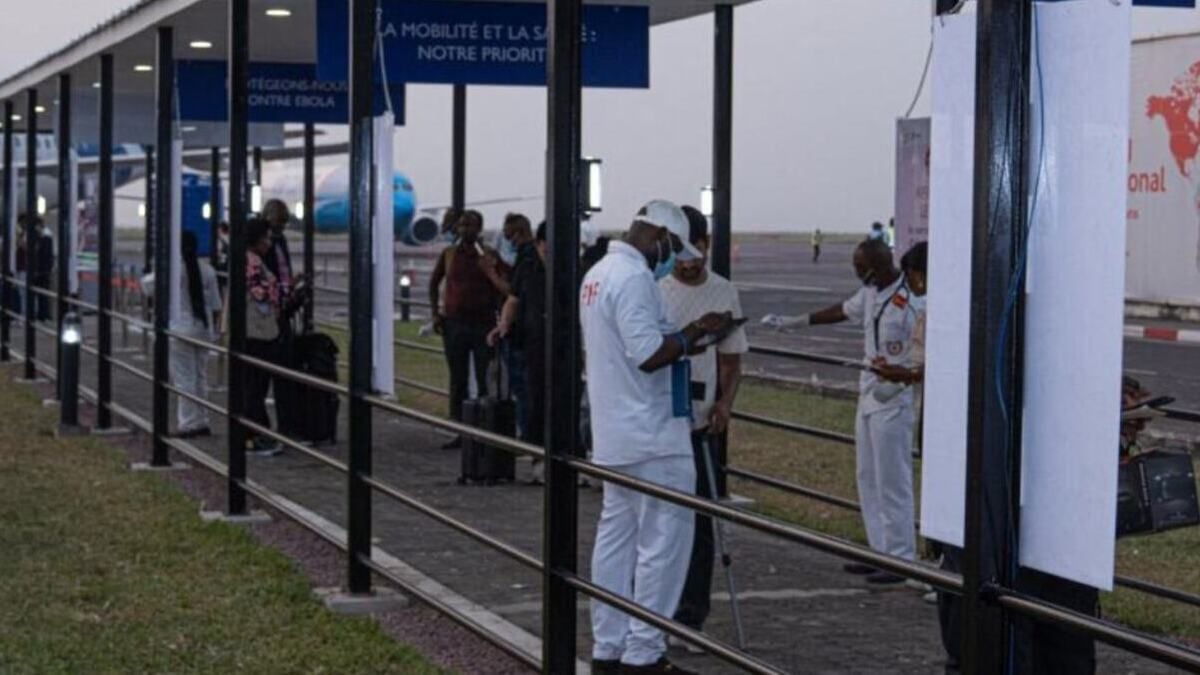
Since response efforts began, IOM and its partners have screened more than one million travellers at border crossings and along major mobility corridors across the region.
The agency said that of the US$55.8 million required to support cross-border coordination and surveillance in 11 countries over the next six months, approximately US$35 million remains unfunded.
“What is needed in order for us to get ahead of the outbreak is a collective commitment to ensure that the effort is now fully resourced,” Daniels said.
The outbreak has prompted a visit by WHO Director-General Tedros Adhanom Ghebreyesus, who travelled to the DRC to demonstrate support for affected communities and response teams.
Ahead of his visit to Bunia, the capital of Ituri Province, Tedros addressed the Congolese people, recalling his experiences during the country's devastating 2018–2020 Ebola outbreak in eastern Congo.
Between 2018 and 2020, Tedros visited North Kivu 14 times, travelling to communities including Beni, Butembo, Katwa and Goma during one of the deadliest Ebola outbreaks ever recorded. That epidemic resulted in 3,470 reported cases and 2,287 deaths.
He said the challenges facing Ituri today resembled those encountered during the earlier outbreak, including armed conflict, displacement, attacks on health facilities and widespread mistrust.
Tedros also called for a ceasefire in affected areas, saying insecurity continues to hamper efforts to reach patients, protect healthcare workers and transport laboratory samples.
The impact on children has emerged as one of the most serious aspects of the outbreak.
According to UNICEF, nearly three million children and adolescents are at risk in eastern DRC. Children account for approximately 15 per cent of confirmed infections but more than a quarter of Ebola-related deaths, making them almost twice as likely to die from the disease as adults.
“Children are especially vulnerable because they depend on caregivers and cannot distance themselves from a sick parent or sibling in the same way that an adult can,” UNICEF Executive Director Catherine Russell said.
More than 130 children in Ituri have already lost one or both parents to Ebola. UNICEF said many are struggling to cope with grief while also facing widespread rumours and misinformation surrounding the disease.
The agency has provided psychosocial support and alternative care arrangements for 135 children orphaned by the outbreak and has opened a nursery to care for children separated from parents or caregivers.
Humanitarian organisations said misinformation continues to undermine containment efforts.
Paolo Cravero, Senior Officer for Communications and Media Relations at the International Federation of Red Cross and Red Crescent Societies (IFRC), said response teams have faced resistance and violence while carrying out safe and dignified burials, a key component of Ebola control measures.
“Like in any crisis, any outbreak, such as Ebola, the tension tends to grow,” Cravero said. “And we have seen violence against our volunteers at safe and dignified burial sites.”
He said a lack of trust in response efforts and the spread of rumours were creating additional challenges for health workers and volunteers attempting to contain the outbreak.
Meanwhile, WHO has expanded preparedness measures inside Bunia Central Prison in Ituri, where around 2,000 inmates are housed in crowded conditions. Working with DRC health authorities and the United Nations peacekeeping mission MONUSCO, the agency has established a four-bed Ebola isolation and care unit designed to treat suspected cases and reduce transmission risks.
Tedros said the DRC had overcome 16 Ebola outbreaks before the current emergency and pledged that WHO would remain engaged until the crisis is brought under control.
“Our teams are already on the ground, and they will stay for as long as necessary,” he said. “And when this outbreak is over, we will not quietly disappear.”