WHO chief visits DR Congo as Bundibugyo Ebola outbreak spreads across eastern provinces
WHO Director-General Tedros Adhanom Ghebreyesus has travelled to eastern DRC as the country confronts its 17th Ebola outbreak, with Ituri province accounting for more than 90% of reported cases.
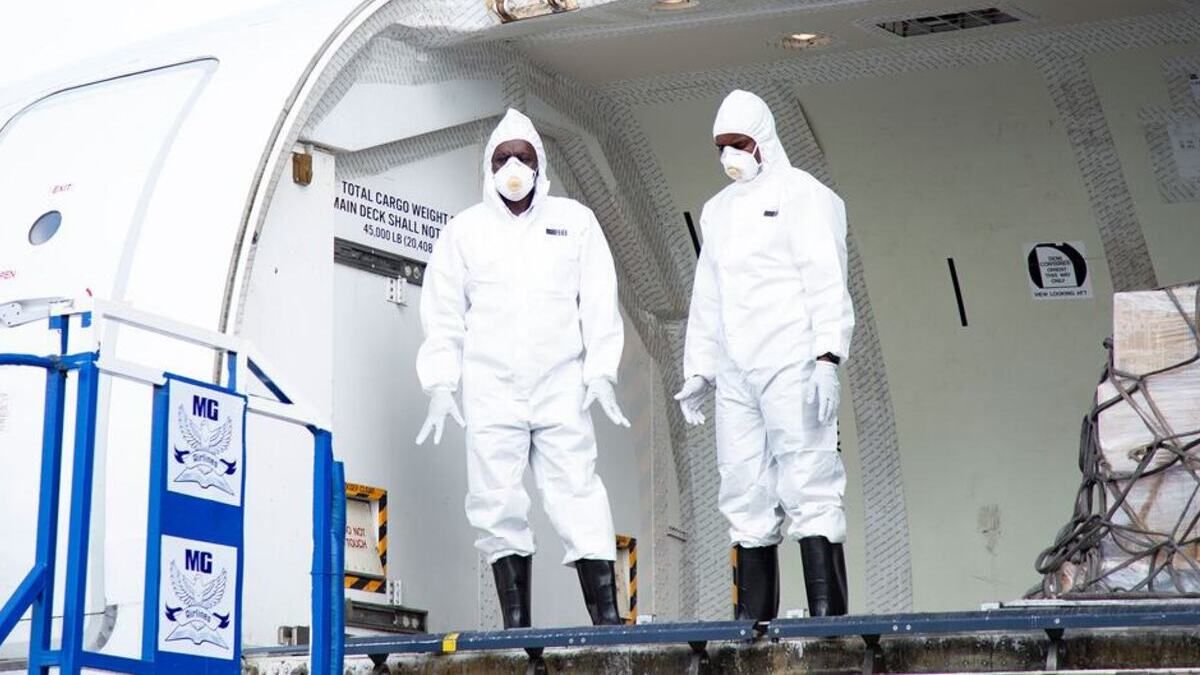
- WHO says more than 90% of Ebola cases have been reported in Ituri province.
- The Bundibugyo Ebola strain currently has no approved vaccine or specific treatment.
- Tedros called for a ceasefire, warning insecurity is obstructing the outbreak response.

World Health Organisation Director-General Tedros Adhanom Ghebreyesus has arrived in the Democratic Republic of Congo in a show of support as the country confronts its 17th recorded Ebola outbreak, with Ituri province bearing the heaviest burden.
The outbreak, confirmed in May 2026, is caused by the Bundibugyo species of Ebola virus, one of several known strains of the virus that causes Ebola disease.
According to the WHO, there are currently no approved vaccines or specific treatments for the Bundibugyo strain, although experimental vaccines and therapeutics are undergoing evaluation and testing.
According to the latest figures reported by health authorities and listed by the US Centers for Disease Control and Prevention, the DRC had recorded 1,077 suspected cases, 121 confirmed cases, 246 suspected deaths and 17 confirmed deaths as of 27 May.
Uganda had reported seven confirmed cases and one confirmed death.
The CDC said the outbreak in DRC had been confirmed in Ituri, Nord-Kivu and Sud-Kivu provinces, with linked cases also reported in Kampala.
Bundibugyo outbreak spreads across eastern DRC
Tedros addressed the people of DRC, especially the people of Ituri, in a message before travelling to Bunia.
He said he was not writing only as the head of the WHO, but as someone who had personally visited eastern DRC during earlier Ebola emergencies.
From 2018 to 2020, Tedros said he travelled 14 times to North Kivu, visiting Beni, Butembo, Katwa, Goma and other communities during one of the most complex Ebola outbreaks in history.
That outbreak affected North Kivu, South Kivu and parts of Ituri, and was marked by insecurity, displacement, attacks on health facilities and deep mistrust in some communities.
The 2018–2020 eastern DRC outbreak remains one of the deadliest Ebola outbreaks ever recorded. It resulted in 3,470 reported cases and 2,287 deaths.
Tedros said people in North Kivu gave him the name “Dr Paluku” after learning that he was the firstborn child in his family. He described the name as a bond with the communities he had met during the outbreak.
Tedros recalls earlier Ebola crisis in eastern Congo
The WHO chief said the challenges facing Ituri today were similar to those he had seen in North Kivu and surrounding areas during the earlier crisis.
He referred to armed conflict, attacks on health workers, disrupted supply routes and the difficulty of responding to disease while people were fleeing violence.
The current outbreak has again placed eastern DRC at the centre of a health emergency. WHO said the 2026 outbreak was officially declared by DRC authorities on 15 May after laboratory confirmation of Bundibugyo virus disease in eight samples.
By 21 May, WHO had reported 746 suspected cases and 176 deaths among suspected cases in DRC, with transmission concentrated in Ituri, North Kivu and South Kivu.
Tedros said more than 90% of cases had been reported in Ituri, with smaller numbers in North Kivu and South Kivu.
He acknowledged that people in Ituri were already facing malaria, hunger, insecurity and displacement before the arrival of Ebola.
He also appealed directly to young people, health workers, community leaders, traditional healers, religious leaders and business leaders to help share information, reduce fear and encourage early reporting of symptoms.
Health workers have been among those affected. WHO reported four health worker deaths as of 21 May, while response teams were working to strengthen surveillance, laboratory confirmation, infection prevention, clinical care, safe burials and community engagement.
Tedros also called for a ceasefire in the affected region, saying conflict and displacement were making it harder to reach patients, protect health workers and transport laboratory samples.
WHO has identified insecurity in Ituri as one of the main obstacles to the response.
Conflict complicates containment efforts
The outbreak has raised concern because the Bundibugyo species differs from the Ebola Zaire species responsible for most previous DRC outbreaks.
Vaccines and treatments are available for Ebola Zaire, but there is currently no approved vaccine or treatment specifically for Bundibugyo virus disease.
Africa CDC Director-General Jean Kaseya said a vaccine and medicine against the Bundibugyo strain could be available by the end of 2026, adding that African leaders were prepared to invest in the effort.
The current emergency follows other recent Ebola outbreaks in DRC.
The country’s 16th Ebola outbreak, in Kasai Province in 2025, recorded 64 cases, including 53 confirmed and 11 probable cases, and 45 deaths before it was declared over on 1 December 2025.
Before that, an outbreak declared in Beni, North Kivu, in August 2022 involved one confirmed case, a 46-year-old woman who died, and was declared over on 27 September 2022.
Tedros said DRC had overcome 16 Ebola outbreaks before the current emergency.
He said WHO teams were already on the ground and would remain for as long as needed.
“Our teams are already on the ground, and they will stay for as long as necessary,” he said in his message. “And when this outbreak is over, we will not quietly disappear.”