Australia plans tougher online safety laws as under-16 social media ban faces enforcement challenges
Australia will strengthen its online safety framework, with Prime Minister Anthony Albanese signalling tougher laws, a digital duty of care for platforms and new action against AI "nudify" applications.
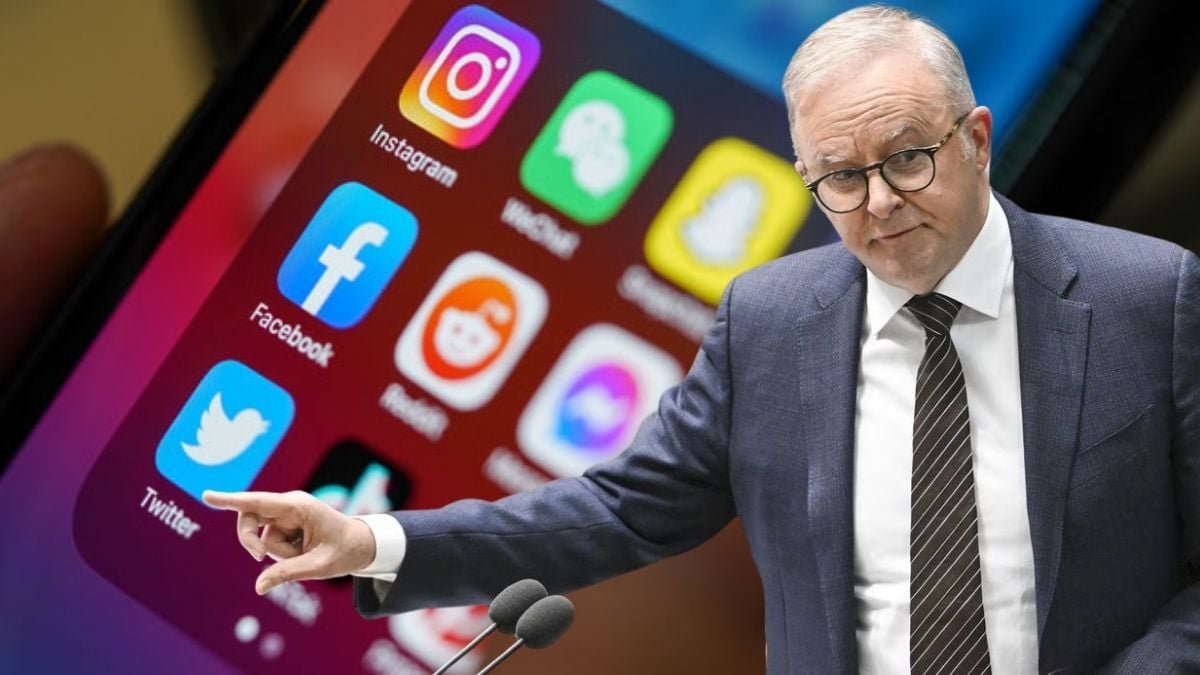
- Australia is preparing stronger online safety laws and considering a digital duty of care for platforms.
- Anthony Albanese warned algorithms can drive users towards increasingly extreme and harmful content.
- Concerns persist over enforcement of the under-16 social media ban despite substantial available penalties.

Australia will strengthen its world-first social media restrictions for children under 16 and tighten broader online safety laws, Prime Minister Anthony Albanese said on Thursday, as concerns grow over children's continued access to major platforms, harmful online content and artificial intelligence-powered applications capable of generating sexually explicit images.
The planned measures come more than six months after Australia's landmark social media age restrictions took effect, with government data, regulator findings and new academic research suggesting many underage users continue to access restricted platforms despite legal obligations placed on technology companies.
Government signals stronger online safety laws
Speaking during Question Time in parliament, Albanese said the government was treating stronger online safety measures as a priority and warned that existing powers may not be sufficient to address the influence of technology companies.
"There is more to do," Albanese said.
"We're working on that as a priority because this is something that other generations didn't have to deal with, which is why it is complex."
He said Australia could not allow technology companies to operate without greater accountability.
"We can't allow the power that these companies, which are unaccountable, which get massive amounts of … profit and have extraordinary power. We need to make sure that Australians are in charge of this."
Albanese said legislation already allows penalties of up to A$49.5 million (US$32 million) for companies that fail to comply with the under-16 social media ban, but indicated further reforms were needed.
"We need to be courageous about this," he said. "There's more to do."
According to The Sydney Morning Herald, a government source confirmed that a "significant" announcement on the government's next steps is expected within days.
Digital duty of care under consideration
Albanese said the government was considering a broader digital duty of care, a proposal that would legally require online platforms to identify, manage and mitigate foreseeable harms across their services.
The proposal would move regulation beyond simply removing harmful content after it appears and instead require platforms to proactively manage risks across recommendation systems, algorithms, bots and platform design.
The proposal remains under consultation through a government issues paper.
The prime minister made the comments after independent Wentworth MP Allegra Spender asked whether Australians should have the ability to opt out of online algorithms.
Although Albanese did not commit to introducing such a right, he said algorithms were a key concern because they increasingly directed users towards more extreme content.
"So, they start off in a mainstream position talking about ethnicity perhaps or faith, and they end up over a period of time receiving in their inbox — not just children, adults as well — Nazi-level propaganda with calls for violence," he said.
He also linked online content to broader concerns over sexual violence among young Australians.
"We're seeing increased presentations in our hospitals of young women who have been choked, strangled," Albanese told parliament.
"We see anal tearing growing at an extraordinary, horrific rate because what too many young men are seeing online is normalising behaviour that is anything but normal."
"We need to be conscious as a parliament about this. We need to be courageous about this."
AI "nudify" apps draw increased scrutiny
Albanese singled out the emergence of artificial intelligence-powered "nudify" applications, saying the government was actively considering tougher measures to address the technology.
Separately, the eSafety Commissioner announced that three additional AI-powered nudifying services widely used in Australia had withdrawn from the country following enforcement action.
eSafety Commissioner Julie Inman Grant said the applications were increasingly being used to create abusive and exploitative material.
"They are not harmless tools," she said.
"They are increasingly being used to generate degrading and abusive content, including sexual exploitation material involving children as we've seen time and time again in our schools."
According to ABC, although the websites' landing pages remain accessible, their content has been blurred and users can no longer access the services. The operators told eSafety they would remain offline until appropriate age-assurance measures are introduced.
Compliance concerns remain
Australia's under-16 social media restrictions took effect in December, requiring platforms including Meta's Facebook and Instagram, TikTok, Snapchat, YouTube, Twitch, Kick and X to prevent Australians under 16 from holding accounts and to take reasonable steps to stop minors from signing up.
Despite the legislation, questions remain over how effectively the restrictions are being enforced.
Earlier this month, eSafety Commissioner Julie Inman Grant described the legislation as having only "very thin scaffolding" and said the regulator lacked sufficient enforcement powers.
"I don't have potent powers," she said.
She added that a regulator was "only as good as the tools and the resources that they're given."
Labor had previously warned the commissioner would "throw the book" at companies that failed to comply with the law, but no financial penalties have yet been issued despite apparent non-compliance.